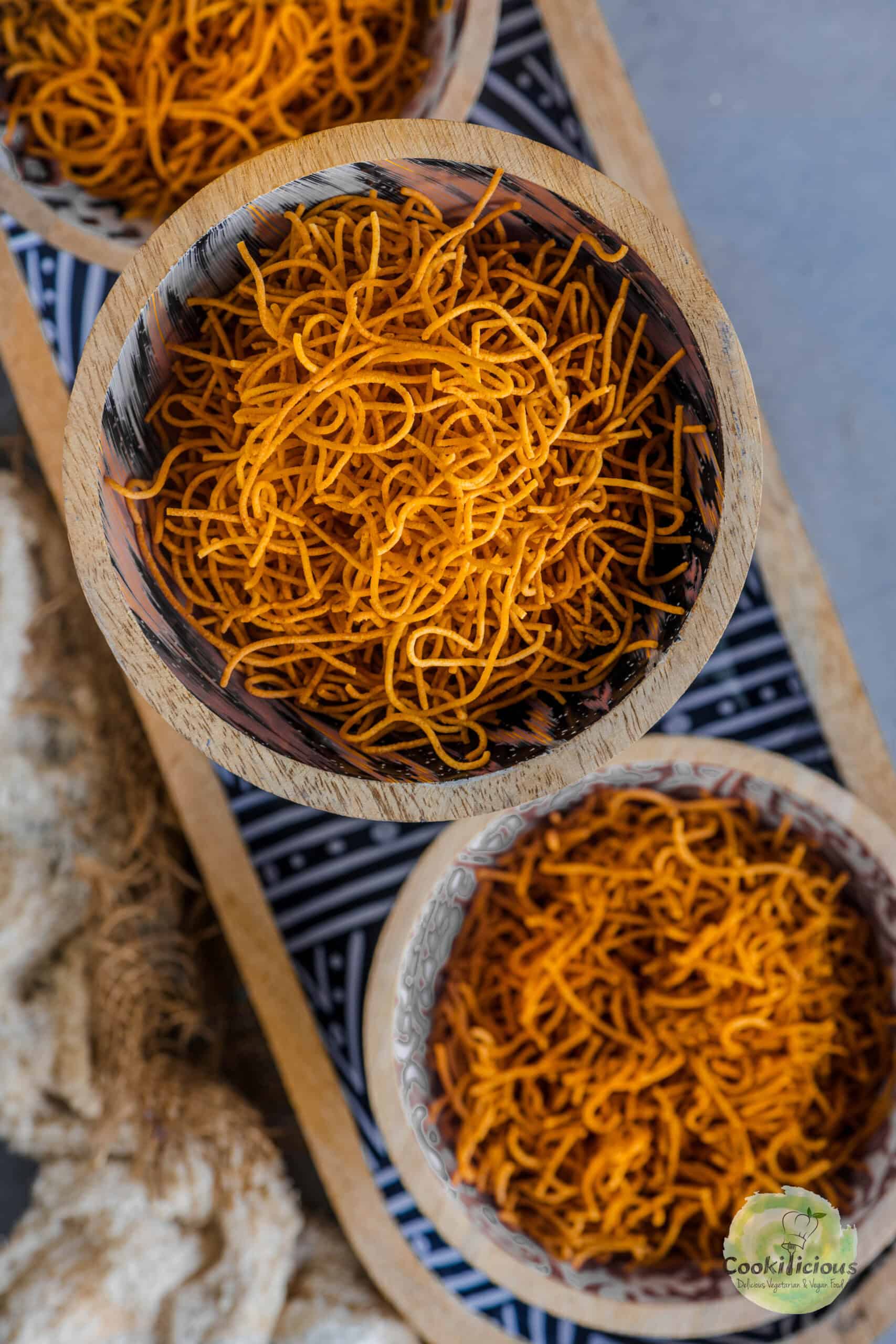
Sev Recipe (Omapodi) – Crispy Homemade Besan Sev
This easy sev recipe makes crispy, golden omapodi, the classic South Indian besan sev flavored with ajwain. Made with my mother-in-law’s family recipe of chickpea flour, rice flour and a little warm ghee, this homemade sev is extra crunchy without any baking soda. It’s vegan and gluten-free, and it’s a perfect Diwali snack recipe for tea time, chaat or gifting!
Servings 6 people
Calories 288.11kcal
Equipment
Ingredients
To Make Omam Water
- 1 tablespoon ajwain
- 1 cup warm water
- 1.5 teaspoon salt
To Prepare The Sev
- 2 cups besan
- 1 cup rice flour
- 2 teaspoon red chilly powder
- ½ teaspoon GF asafoetida
- 1 tablespoon vegan ghee, warm or vegetable oil/ghee
- oil for frying
Instructions
To Make Omam Water
- Soak the ajwain. In a small bowl, soak the ajwain (omam, or carom seeds) in warm water for 10 minutes to release its aroma.
- Strain the water into a bowl and set it aside. This ajwain-infused water gives omapodi its signature flavor. Stir the salt into the strained water. My mother-in-law’s tip: dissolving the salt in the water spreads it evenly through the dough. Don’t throw away the soaked seeds! Add them to dals and curries for a mild, aromatic touch.
To Make The Sev
- Mix the flours. In a large mixing bowl, combine the sieved chickpea flour (besan) and rice flour. Priya's tip: Sieving removes lumps, so the dough passes smoothly through the sev maker.
- Add the red chili powder, asafoetida and warm vegan ghee, and rub them into the flour with your fingertips. My mother-in-law’s tip: the warm ghee keeps the homemade sev light and crispy.
- Gradually pour in the salted omam water, kneading as you go, until you have a smooth, soft, non-sticky dough. If it feels sticky, add a spoonful of besan. If it’s dry or cracking, sprinkle in a little water.
- Fit your sev maker (idiyappam or murukku press) with the small, fine-hole plate, and grease the inside with oil. Shape a portion of the dough into a cylinder and place it in the press. My mother-in-law’s tip: cover the rest of the dough with a damp cloth so it doesn’t dry out.
- Heat oil in a deep kadai or frying pan over medium-high heat, then lower it to medium. To test, drop in a small piece of dough. If it rises steadily to the top, the oil is ready. Hold the sev maker just above the oil and press the dough out in a circular motion to form a large round of omapodi.
- Fry one round at a time, and don’t overcrowd the pan, so the oil stays hot and the sev cooks evenly.
- Fry the sev until the sizzling and bubbles slow down, then gently flip it to fry the other side. Take it out while it’s still light golden, since overcooked sev turns dark and bitter. Lift it out with a slotted spoon and drain it on paper towels. Repeat with the rest of the dough. Priya’s tip: handle the sev gently so the strands don’t break. It will feel slightly soft at first but turns crispier as it cools.
- Let the sev cool completely, then break it into pieces or leave it in rounds. Store your crispy sev in an airtight container. Priya’s tip: don’t break the sev into very small pieces. Larger pieces stay crunchy longer and look better on a snack platter.
Notes
- Pick your thickness: use the small fine-hole plate for thin sev, or a larger plate for thicker mota sev.
- Make the dough fresh: knead it just before frying. Leftover sev dough doesn’t refrigerate well, so fry it all in one go.
- Press a single, even layer: don’t pile the dough in one spot while pressing. A thin, even round fries quickly and evenly, all the way through.
- Clean the sev maker right away: soak the press and plate in warm water as soon as you’re done. Dried besan dough is much harder to scrub out of the tiny holes.
Nutrition
Calories: 288.11kcal | Carbohydrates: 46g | Protein: 11.05g | Fat: 6.27g | Saturated Fat: 1.95g | Polyunsaturated Fat: 1.44g | Monounsaturated Fat: 1.46g | Cholesterol: 6.4mg | Sodium: 618.29mg | Potassium: 372.89mg | Fiber: 6.18g | Sugar: 4.43g | Vitamin A: 214.5IU | Vitamin C: 0.04mg | Calcium: 24.36mg | Iron: 2.19mg