
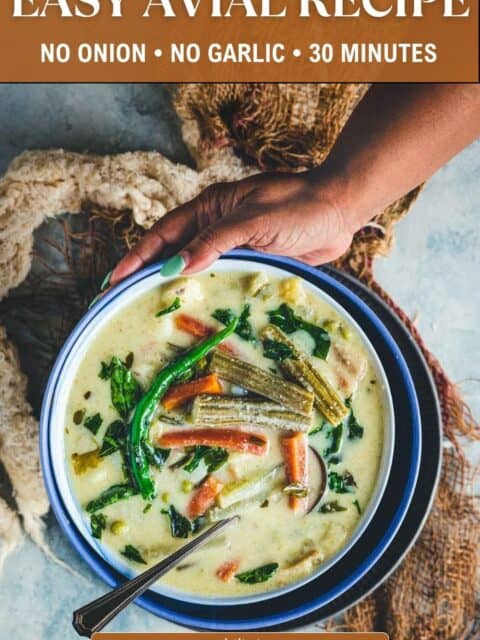
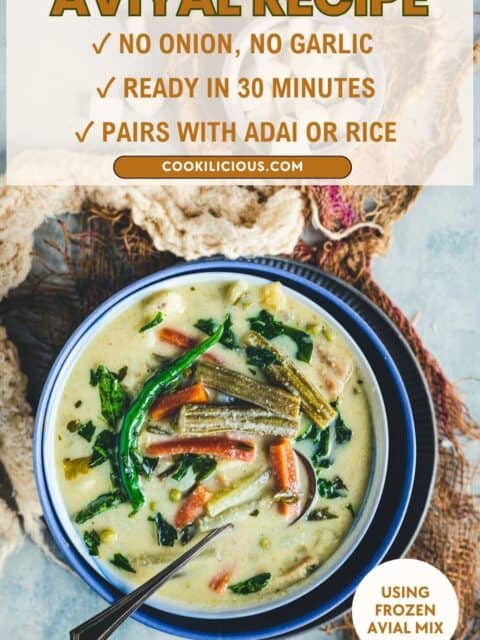
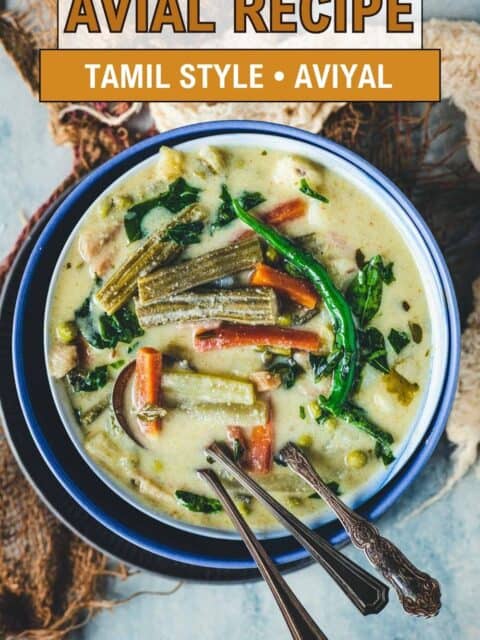
Being a Tamilian, Avial was made on every festive occasion in our home. It was my dad's favorite dish, so mom made this Tamil-style aviyal whenever she got the chance. I remember watching her carefully pick out the different vegetables at the market, come home, and chop each one by hand before starting on the avial recipe. Even though the recipe itself is simple, the real effort lies in procuring and prepping all those different vegetables.
Over the years, I've found an easier way to make our family's aviyal recipe - using frozen, pre-cut avial mix vegetables instead of chopping everything fresh. This premix often includes vegetables that can be genuinely hard to find otherwise, like yam or drumstick, which makes it an especially convenient option if your local grocery store or Indian market doesn't carry them fresh.
It's a real time-saver that doesn't compromise on the authentic taste of this South Indian curry, and it means you can enjoy avial on a regular weeknight, not just for special occasions. Serve this Tamil-style avial recipe with adai or alongside steamed rice.
Jump to:
🔍 Quick Look: Tamil-Style Avial Recipe
- 🌍 Cuisine: Tamil, South Indian
- ⏱️ Prep Time: 10 minutes
- 🍳 Cook Time: 30 minutes
- 🕒 Total Time: 40 minutes
- 👥 Servings: 4 people
- 📊 Calories: ~ 260.44 kcal per serving (based on nutrition panel)
- 🔥 Cook Method: Stovetop
- 👩🍳 Flavor Profile: Mildly flavored, savory curry
- ⭐ Difficulty: Simple and easy to make
What Is Avial
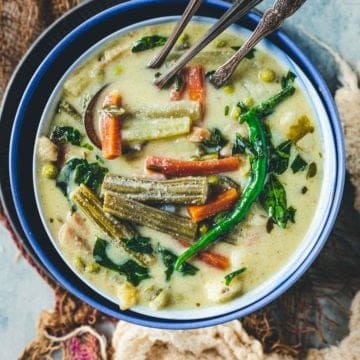
Avial (also spelled aviyal) is a popular South Indian curry recipe made with mixed vegetables cooked in a creamy coconut and yogurt gravy. Unlike most Indian curries, this avial recipe calls for a specific set of vegetables and requires no tempering or any masala (spice blends like sambar powder), which gives it a distinct comforting flavor. It's a beloved dish across South India - in Kerala, it's a must-have part of the Onam Sadya feast, while in Tamil Nadu, it's a regular feature at weddings, festivals, and other happy occasions.
This Tamil-style avial recipe is naturally vegetarian and gluten-free, and comes together in under 30 minutes - making it just as easy to whip up on a busy weeknight as it is for a festive spread. It's traditionally served alongside steamed rice. My dad used to love the Adai Avial combo. I personally feel that avial tastes best when it's slightly spicy and creamy, with the vegetables holding their shape rather than turning mushy.
The Legend Behind Avial (Aviyal)
There's an interesting legend behind the invention of avial (or aviyal, depending on how you spell it). According to the epic Mahabharata, this dish was invented by Bheem, one of the five Pandava brothers. As the story goes, during their years of exile, the Pandavas took turns cooking for the group. One day when it was Bheem's turn, there weren't enough vegetables on hand to prepare a proper meal for all.
So he simply mixed together whatever vegetables he had, boiled them, and finished the dish with curd and coconut - and that, as the legend goes, is how this South Indian curry recipe came to be. I honestly don't know how much truth there is to this story, but it certainly makes for a fun bit of history behind such a simple, and humble dish.
Regional Variations of Avial (Kerala vs. Tamil Style)
Depending on the region you're from, your recipe for avial will change slightly. There's no right or wrong way to make avial - you do what you like. The color, the ingredients, and even the texture can shift depending on whether you're in Kerala, Tirunelveli, Palakkad, or Tamil Nadu - and since this recipe for avial has been passed down through generations, it naturally picks up small tweaks along the way.
Despite my mom and MIL both being Tamil Brahmins, they each make aviyal a little differently. Here's a breakdown of the variations I've come across:
- In southern Kerala, turmeric powder is added, giving the avial a yellow color, with sourness coming from mango or tamarind.
- In northern Kerala, turmeric is skipped, and the sourness comes from yogurt instead. This version also skips tempering entirely, and cumin seeds aren't added while grinding the coconut.
- In Tamil Nadu (based on how my family makes it), we don't add turmeric, which is why our aviyal turns out white or pale green rather than yellow. We also don't do any tempering in the end.
- Our Tamil-style recipe for avial also uses yogurt, includes cumin seeds while grinding the coconut, and finishes with a drizzle of coconut oil at the end.
- My aunt's version takes it a step further - she soaks tur dal and blends it in with ginger when grinding the coconut paste.
- In Palakkad, raw mango is typically used for sourness instead of yogurt, giving this version its own distinct tang.
- The consistency itself varies too: some make it thick with long-cut vegetables, while others (like me) keep it a little thinner so it's easier to serve over rice.
Why make it
- ♻️ A great way to use up leftover veggies sitting in your fridge
- ⏱️ No boiled lentils, special spice blends, or tadka needed - unlike Tiffin Sambar or Paruppu Rasam, which speeds up the cooking process
- 🧄 A no onion, no garlic recipe, making it perfect for festive occasions or fasting days when these are avoided
- 🫗 The primary cooking method is boiling, so this avial recipe uses very little oil
- 🌿 Some of the vegetables used here aren't ones you'd eat every day, so this dish brings in new flavors and nutrients you might otherwise miss
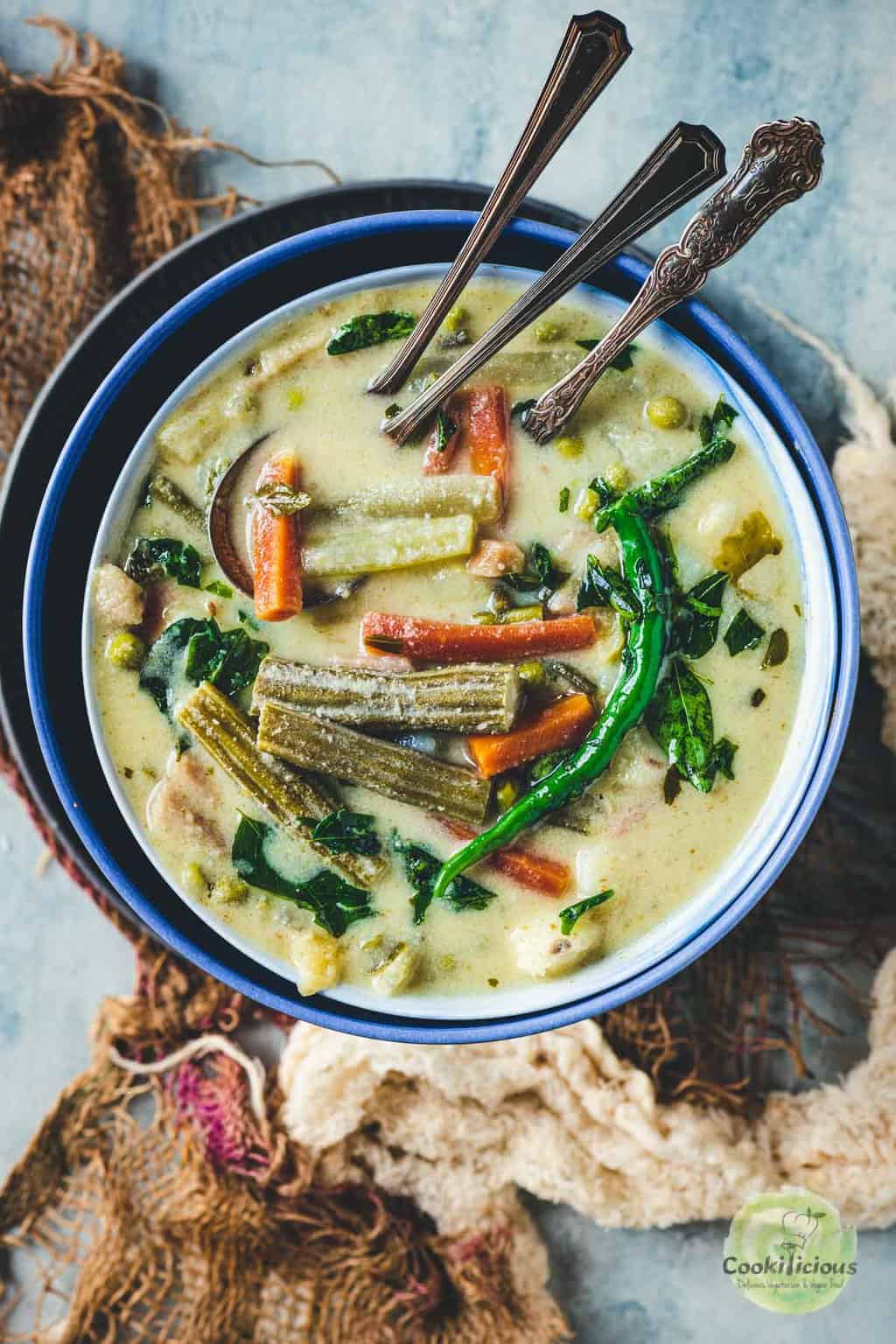
- 🎨 Visually stunning, thanks to the mix of vegetable colors against the creamy coconut gravy
- 👩🍳 Genuinely easy and simple to make, even for a beginner
- 🌱 Naturally vegetarian and gluten-free
- 🍚 A one-pot meal ready in under 30 minutes
- 🥘 Comes together easily with a frozen avial premix, making this Tamil-style aviyal recipe weeknight-friendly, not just for special occasions
- 🍽️ Pairs perfectly with adai or steamed rice for a complete, satisfying meal
Ingredients needed 🧾
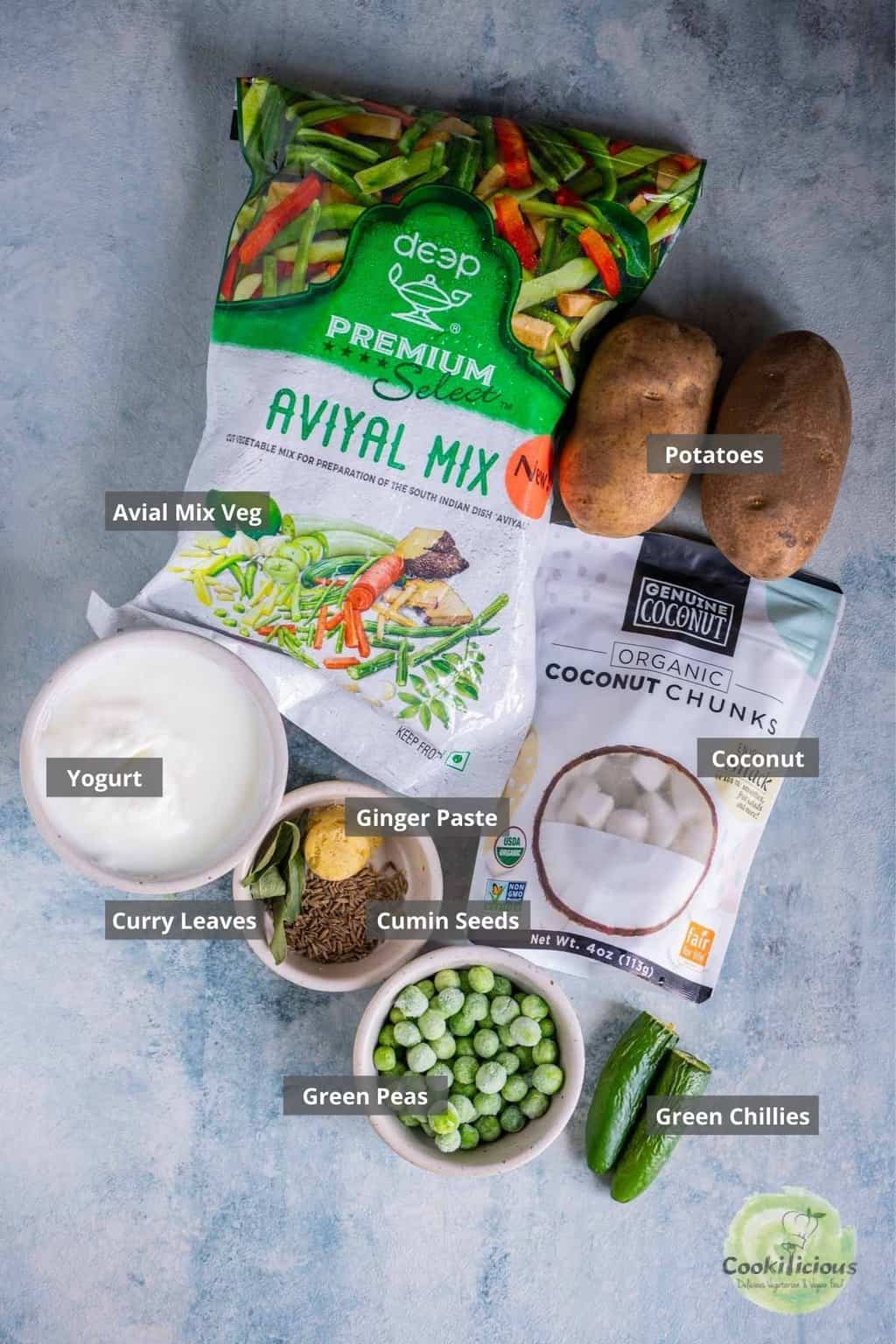
Avial Vegetables 🥕- This Tamil-style avial recipe calls for a mix of vegetables - white pumpkin (poosanikai - I also use it to make poosanikai kootu), carrots, green beans, raw plantain (vazhaikkai - which I also use to make vazhakai poriyal), potatoes, chow-chow, brinjal, colocasia (arbi/seppan kilangu), drumstick, yam (senai), cluster beans, green peas, ash gourd, and snake gourd . That said, feel free to use whatever vegetables you have on hand - this avial recipe is forgiving that way.
To make things easier, look for a pre-cut avial mix in the frozen section of your nearest Indian grocery store. It usually has most, if not all, of these vegetables ready to go, which saves a ton of prep time without compromising on flavor. Remove garlic and raw mango from the packet if you don't want to add it.
Spices - This recipe for avial is incomplete without curry leaves, green chillies, ginger, and cumin seeds. They form the base flavor here.
Coconut - both coconut oil and fresh or dried unsweetened coconut flakes go into this recipe, giving the aviyal its signature richness and flavor.
Yogurt - use homemade dahi, plain unsweetened yogurt, or Greek yogurt for the tangy, creamy base avial is known for.
🔪 How to make Avial
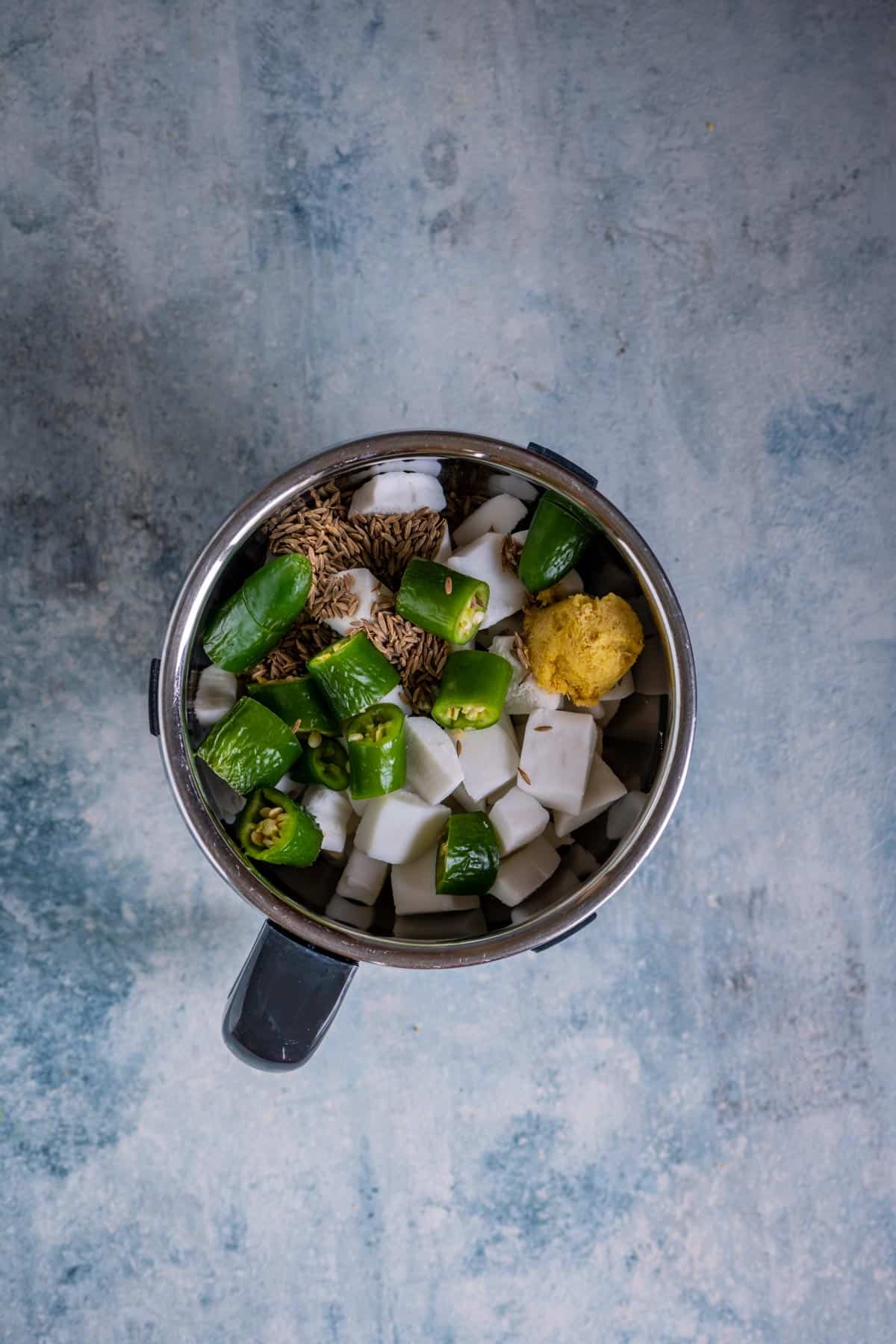
- Step 1: Make the coconut paste. Add fresh coconut, cumin seeds, ginger, and green chillies to a blender jar.
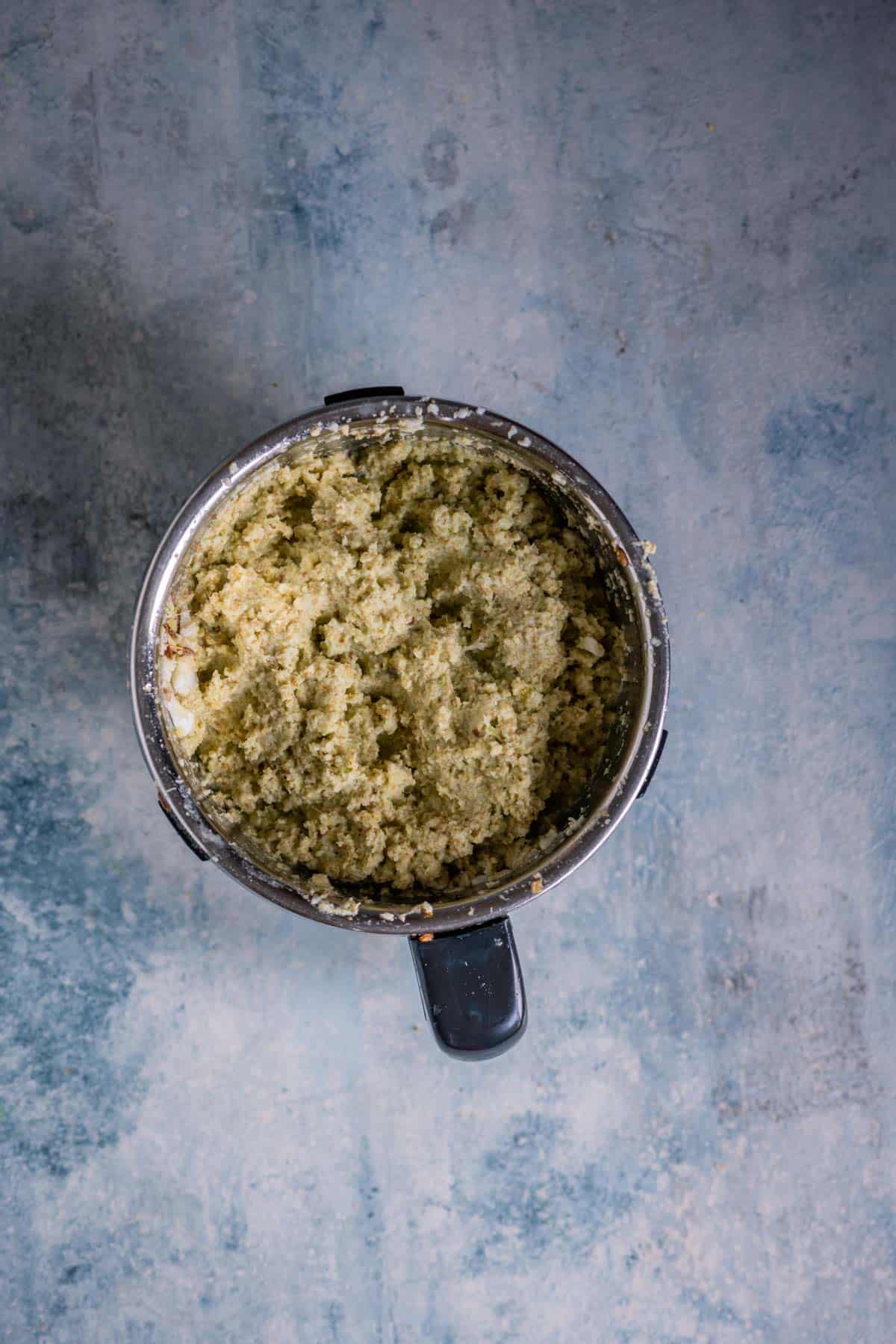
- Step 2: Grind it smooth. Blend into a smooth paste, adding a little water as needed to help it along.
Want to save this recipe?
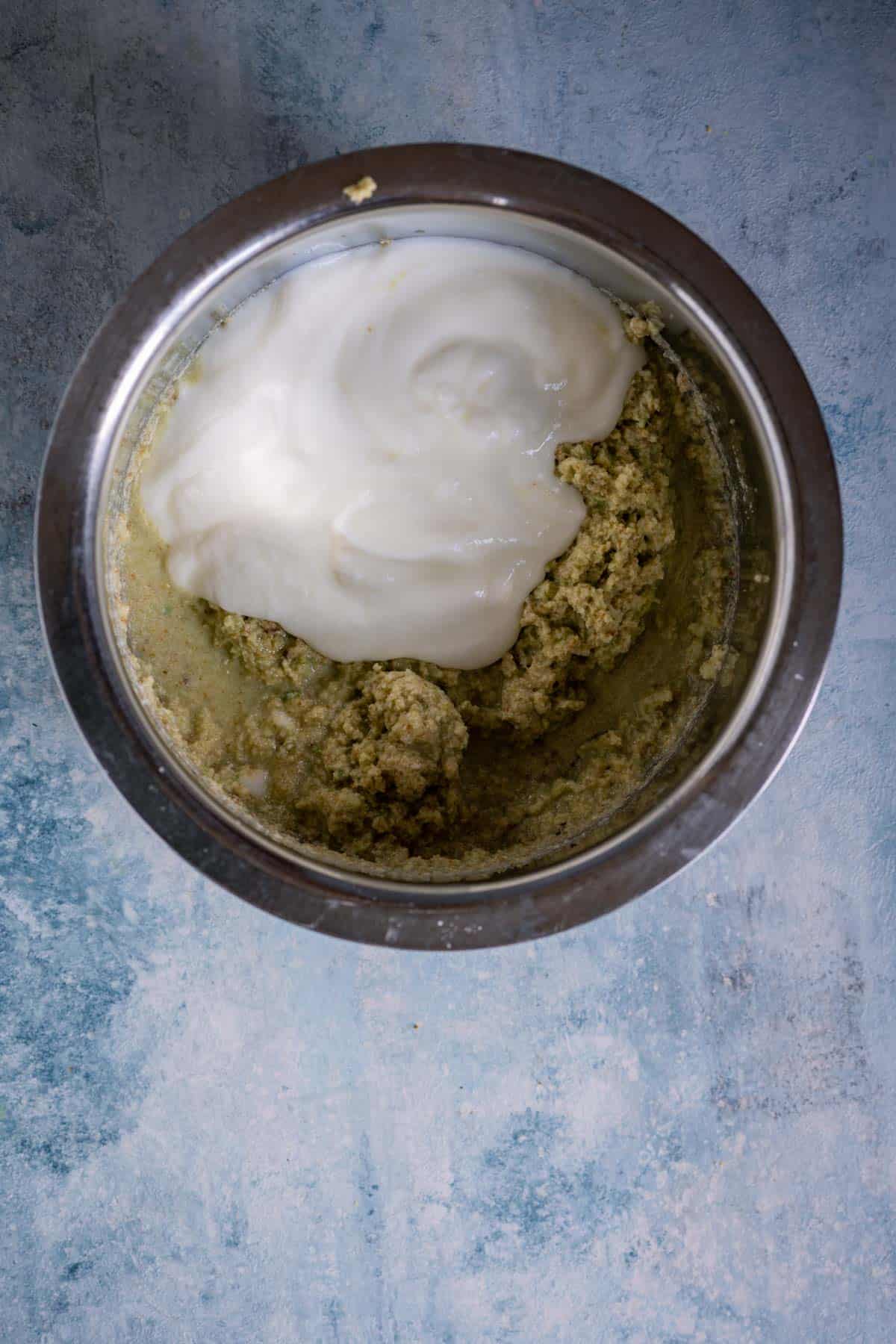
- Step 3: Whisk in the yogurt. Transfer the ground coconut paste to a bowl, add the yogurt, and whisk together well. There should be no lumps. Set aside.
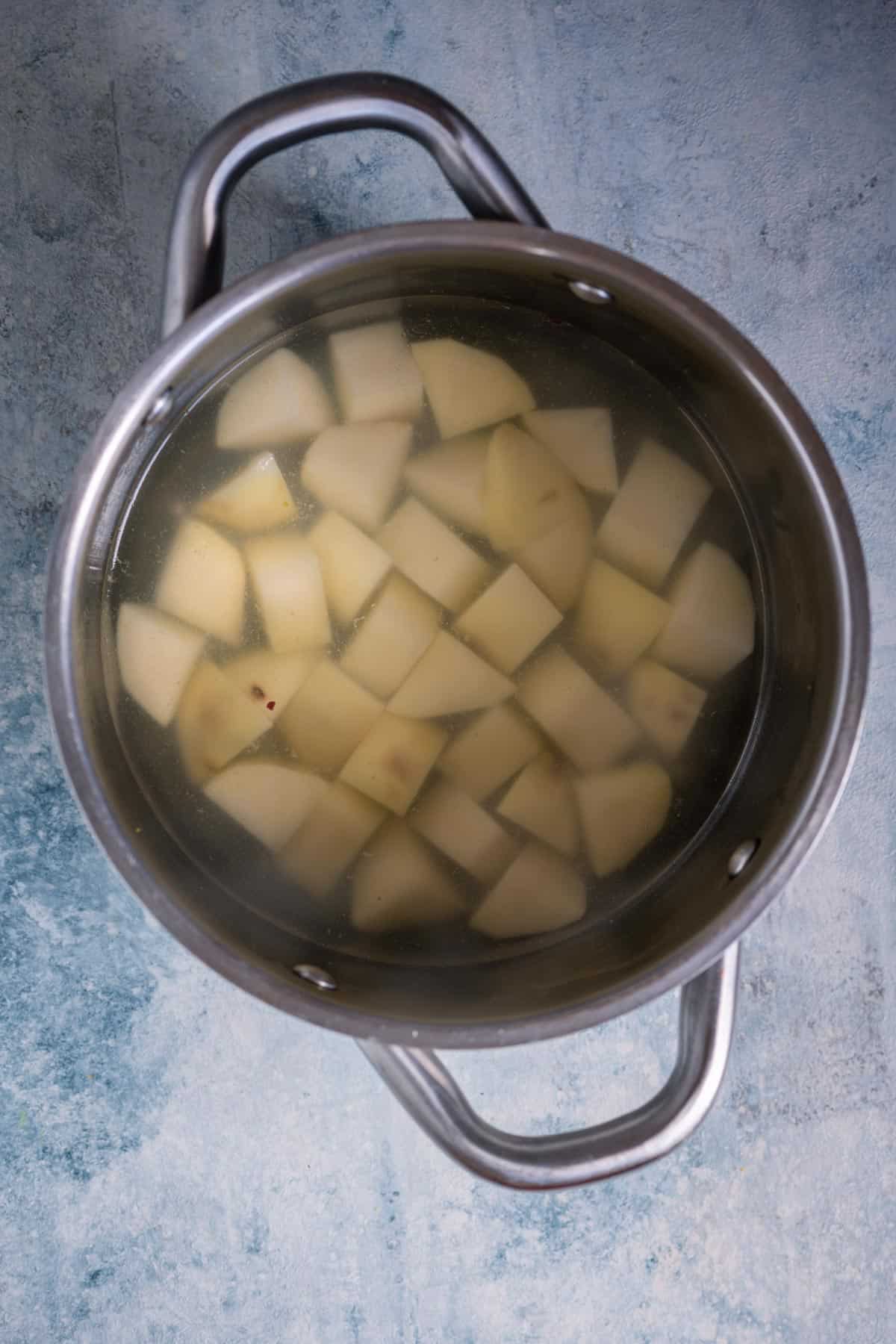
- Step 4: Start cooking the vegetables. In a pot, add water and salt and bring to a boil. Add the longer-cooking vegetables first - like potatoes and raw plantain, if using. Cover and cook for 7-8 minutes. Priya's tip: the potatoes should be about 80% done at this point - a knife should slide through easily, but don't let them cook all the way through yet.
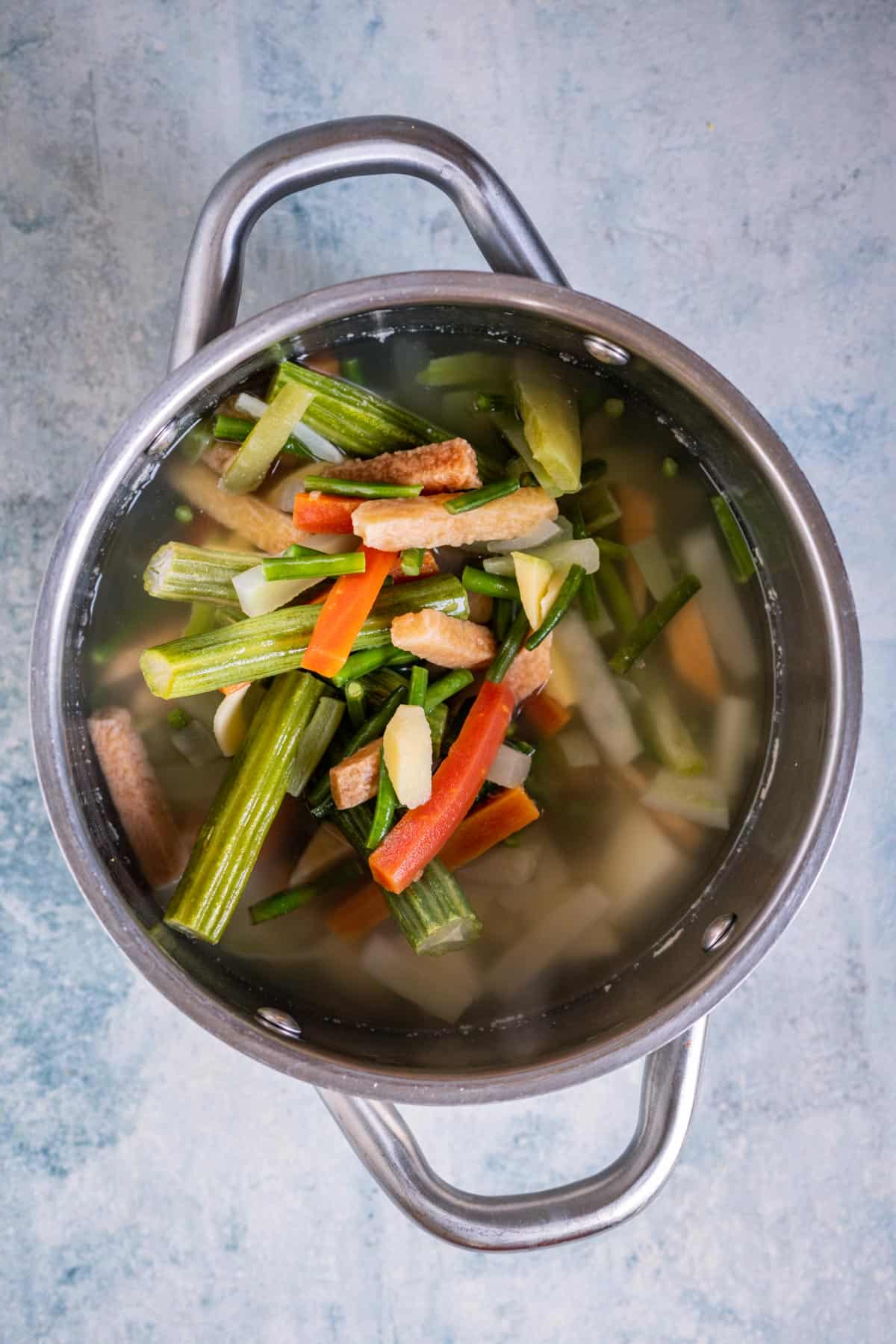
- Step 5: Add the remaining vegetables. Add the rest of the vegetables (or your pre-cut frozen avial mix) and bring back to a boil on medium flame. Cook until just tender, about 7-8 minutes. Priya's tip: take care not to overcook them - the vegetables should hold their shape and texture, not turn mushy. If you're using fresh vegetables instead of the frozen mix, they may need a few extra minutes to cook through.
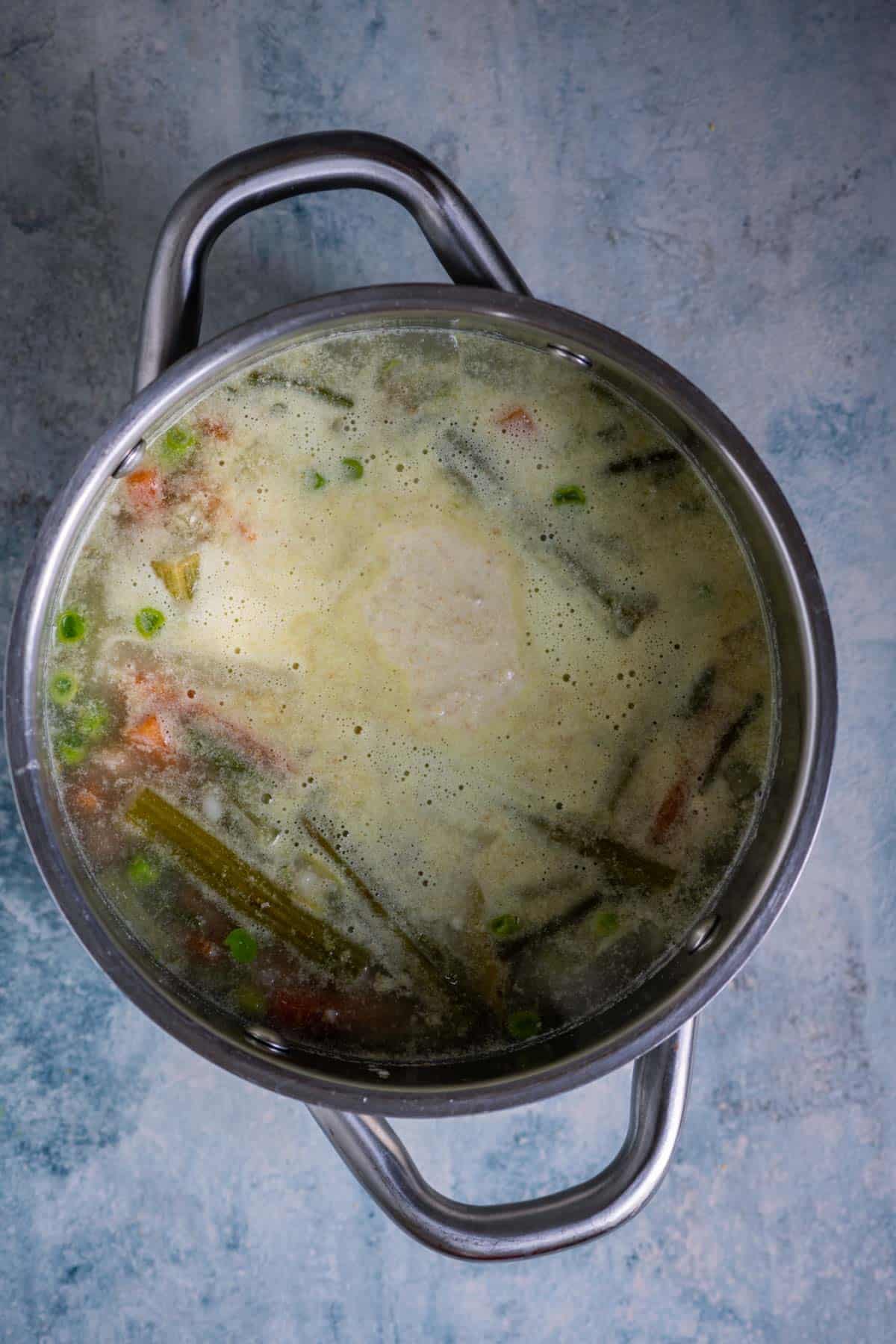
- Step 6: Add the coconut-yogurt paste. Once the vegetables are cooked, add the coconut-yogurt mixture to the pot and mix well. Priya's tip: work quickly once the coconut paste goes in - mix it in right away so it blends in smoothly without any lumps.
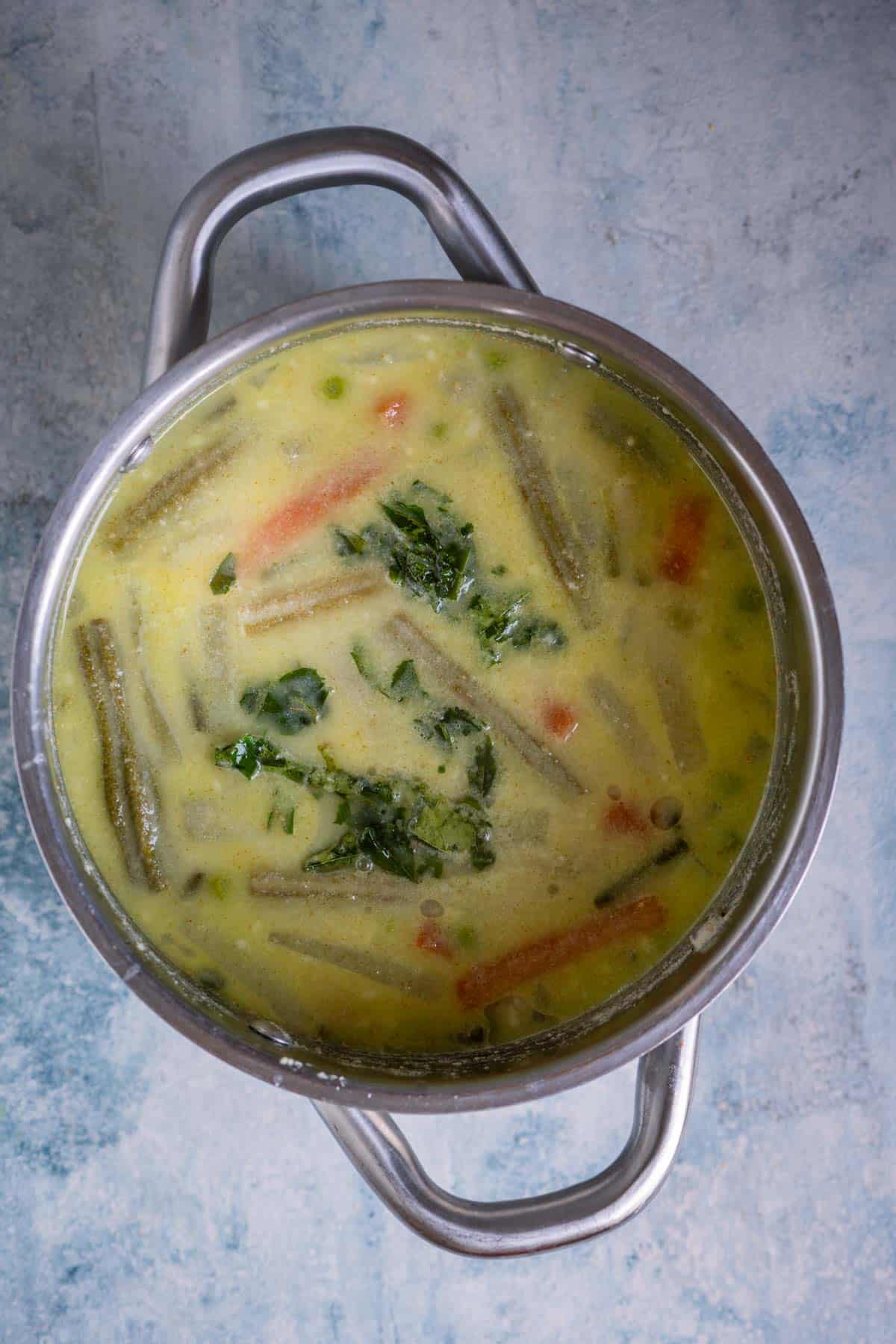
- Step 7: Simmer briefly. Cook for another 5 minutes on low flame, then garnish avial with fresh curry leaves and a drizzle of coconut oil for that final aromatic touch.
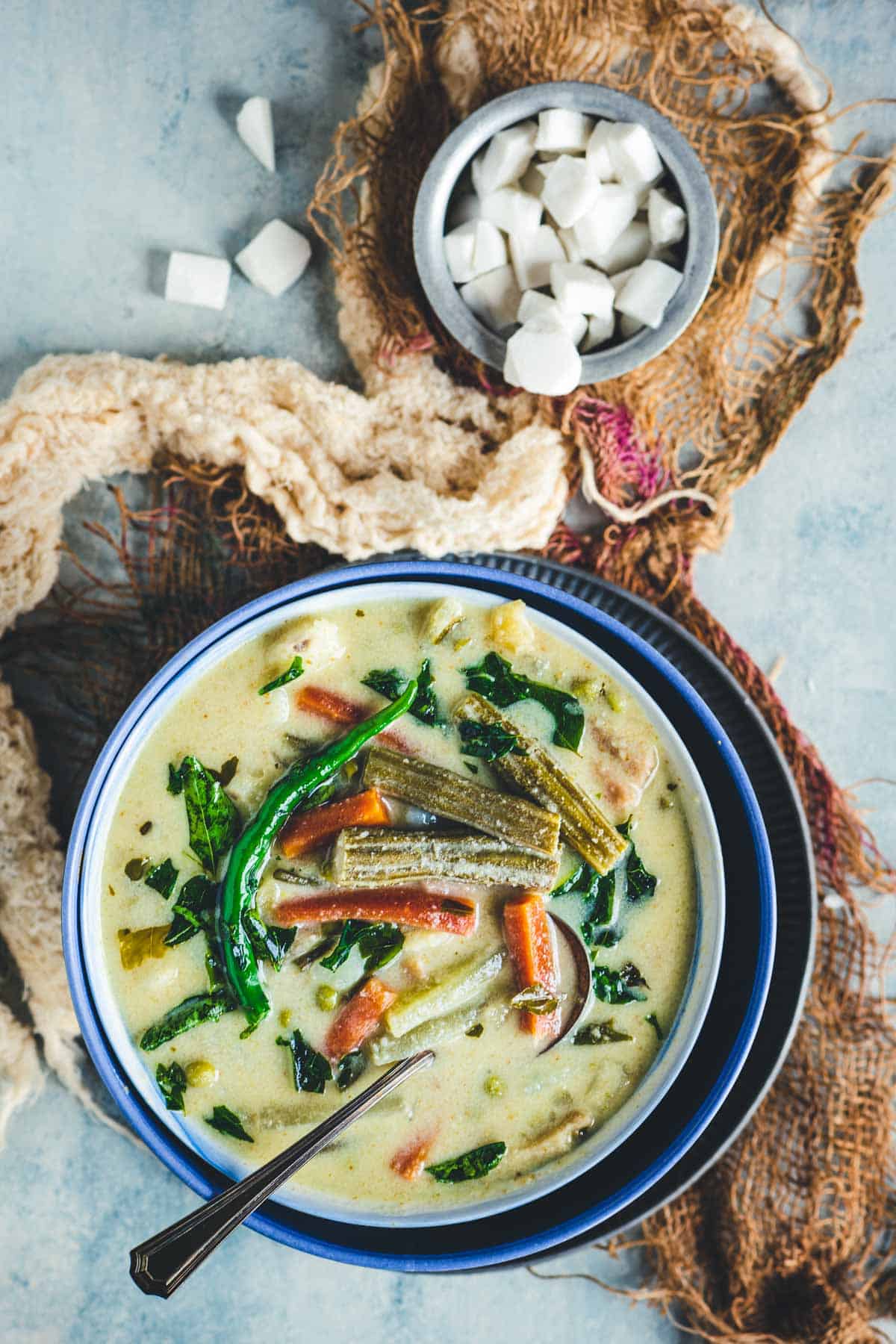
- Step 8: Cook for another minute, then take the pot off the flame. Transfer the avial to a serving bowl.
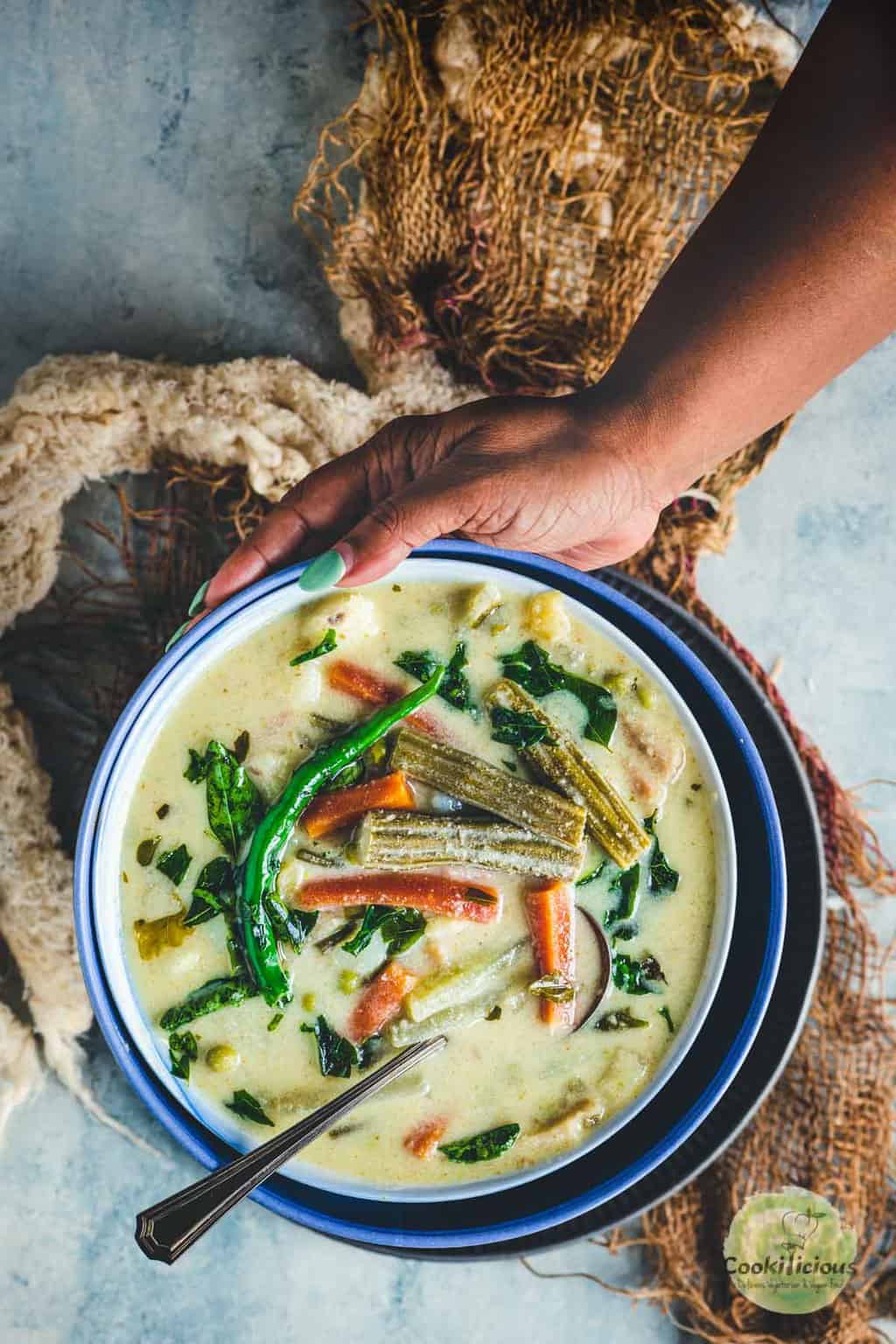
🍽 Serving suggestions
Once ready, keep this avial recipe covered until you're ready to serve - this helps it stay warm and keeps that coconut-yogurt gravy from forming a skin on top. It's traditionally served as a side dish alongside steamed rice and arachuvitta sambar or tomato rasam. Adai Avial is also one of the most popular combos in Tamil cuisine. Some also like to eat it with puliyogare (tamarind rice) or curd rice for a comforting, complete meal.
This Tamil-style aviyal recipe also makes regular appearances at Onam Sadya, weddings, feasts, family get-togethers, and casual weekend meals alike. You can also serve it at parties, potlucks, and festive occasions like Ganesh Chaturthi, Navratri, Raksha Bandhan, Nombu, Pongal, and Janmashtami.
By the way, if you love mixed vegetable curries, you should also check out my Veg Jalfrezi and Veg Kolhapuri recipes.
💭 Priya's Recipe Tips
- Cut vegetables into even, finger-chip-style pieces. This helps them cook uniformly and keeps that classic avial texture - the vegetables should hold their shape, not turn mushy. Do not overcook the veggies.
- Choose your coconut wisely. Freshly grated coconut is traditional and gives the best flavor, but unsweetened desiccated or shredded coconut works well too if fresh isn't available. You can also add a splash of coconut milk along with the water when grinding for extra richness.
- Don't skip the coconut oil drizzle at the end. It might seem optional, but it adds a big boost of aroma and flavor right before serving.
- Try an optional tempering if you like. While traditional avial skips tempering entirely, a light finish of mustard seeds and a pinch of asafoetida (hing) in hot coconut oil is a personal preference some people enjoy - not traditional, but a nice variation if you want to try it.
📖 Aviyal Recipe FAQs
White pumpkin, carrots, green beans, raw plantain (vazhaikkai), potatoes, chow-chow, brinjal, colocasia (arbi/seppan kilangu), drumstick, yam (senai), cluster beans, green peas, ash gourd, and snake gourd are the vegetables that traditionally go into this avial recipe. That said, feel free to use whatever vegetables you have on hand.
Use as many vegetables from the list as you can - aviyal genuinely tastes better with more variety. Add vegetables to the boiling water in order of cook time, with longer-cooking ones (like potatoes, raw banana, and yams) going in first, and quicker-cooking ones added later so nothing turns mushy.
The amount of water depends on how thick or thin you want the curry - add just enough to cover the vegetables, and then add more as needed. You can also steam the vegetables together for with minimal water.
Yes, absolutely - fresh vegetables work just as well in this avial recipe if that's what you have on hand or prefer. Just keep in mind that fresh vegetables may need a few extra minutes of cooking time compared to the frozen mix, since they haven't been pre-blanched.
If you can't easily find fresh yam, drumstick, or raw plantain near you, the frozen avial mix (found in the frozen section of most Indian grocery stores) is a great time-saving alternative.
Avial curdles when the coconut-yogurt mixture is cooked on too high a flame or boiled for too long after being added. If this happens, there isn't much you can do to reverse it, but you can prevent it next time by adding the yogurt mixture at the very end, keeping the flame low, and not letting it simmer for more than a few minutes after that.
Avial keeps well in the refrigerator for 4-5 days in an airtight container, and you can also prepare it a day in advance. It's not ideal for freezing, though, since the yogurt-coconut gravy can separate and change texture once thawed.
To make this avial recipe vegan, use a plant-based yogurt in place of dairy yogurt, or skip yogurt entirely - you can use tamarind water or raw mango for sourness instead. Every other ingredient in this recipe is naturally vegan.

Recipe 📖
Avial (Aviyal) Recipe
Equipment
Ingredients
To make the coconut paste
- 4 oz fresh coconut
- 1 tablespoon cumin seeds
- 4 green chillies
- 1 tablespoon ginger paste
- ½ cup water
- 1 cup thick curd/yogurt
To prepare Avial
- 2 cups water
- 2 potatoes
- 14 oz Avial mix - drumsticks, yam, suran, cucumber, snake gourd, long beans, and carrots
- ⅓ cup green peas
- Salt
- 1 tablespoon edible coconut oil
Instructions
- Add fresh coconut, cumin seeds, ginger, and green chillies to a blender jar.
- Blend into a smooth paste, adding a little water as needed to help it along.
- Transfer the ground coconut paste to a bowl, add the yogurt, and whisk together well. There should be no lumps. Set aside.
- In a pot, add water and salt and bring to a boil. Add the longer-cooking vegetables first - like potatoes and raw plantain, if using. Cover and cook for 7-8 minutes. Priya's tip: the potatoes should be about 80% done at this point - a knife should slide through easily, but don't let them cook all the way through yet.
- Add the rest of the vegetables (or your pre-cut frozen avial mix) and bring back to a boil on medium flame. Cook until just tender, about 7-8 minutes. Priya's tip: take care not to overcook them - the vegetables should hold their shape and texture, not turn mushy. If you're using fresh vegetables instead of the frozen mix, they may need a few extra minutes to cook through.
- Once the vegetables are cooked, add the coconut-yogurt mixture to the pot and mix well. Priya's tip: work quickly once the coconut paste goes in - mix it in right away so it blends in smoothly without any lumps.
- Cook for another 5 minutes on low flame, then garnish avial with fresh curry leaves and a drizzle of coconut oil for that final aromatic touch.
- Cook for another minute, then take the pot off the flame. Transfer the avial to a serving bowl.
Video
Notes
-
- Cut vegetables into even, finger-chip-style pieces. This helps them cook uniformly and keeps that classic avial texture - the vegetables should hold their shape, not turn mushy. Do not overcook the veggies.
- Choose your coconut wisely. Freshly grated coconut is traditional and gives the best flavor, but unsweetened desiccated or shredded coconut works well too if fresh isn't available. You can also add a splash of coconut milk along with the water when grinding for extra richness.
- Don't skip the coconut oil drizzle at the end. It might seem optional, but it adds a big boost of aroma and flavor right before serving.
- Try an optional tempering if you like. While traditional avial skips tempering entirely, a light finish of mustard seeds and a pinch of asafoetida (hing) in hot coconut oil is a personal preference some people enjoy - not traditional, but a nice variation if you want to try it.
Adrianne says
This sounds authentic and delicious at the same time! Veggies and rice, yum and yum, I will try that anytime and the coconut paste sounds like it has a great depth of flavour! Great work!
Priya says
yes, it really is. Thank you
Heather Johnson says
what a unique recipe - i'm going to a southern indian restaurant tomorrow - i'll have to see if they have something similar on the menu!
Priya says
Do try it. Its so yummy!
Beth says
Yummy and so delicious! My hubby and I really enjoyed this recipe! Can't wait to give this a try again soon!
Priya says
Thank you so much.
Jo says
This was so good I made it for lunch 2 days in a row!
Priya says
I am so happy to hear that. Thank you so much.
Srikanth says
I like how detailed the steps are and the best part is that it can be cooked in under 30 minutes which is a definite plus for busy parents like me.
Priya says
Glad. Thank you so much.
Farah Abumaizar says
Beautiful vibrant photos and what an interesting recipe! Thanks for all the modification options you gave and step by step!
Priya says
Thank Farah! Glad you liked it.
Pavani says
I love making avial but didn't really know the regional differences, so thank you for explaining that 🙂 I usually make 2 varieties - one with yogurt (for me) and one without (for the lactose intolerant husband). Lovely clicks.
Priya says
Thank you so much. Glad it was an insightful read for you. We love avial at home.
Kelly Anthony says
I've never heard of avial before so I loved learning about this recipe. I'm always interested in where it originated from and the history of the food.
Priya says
So true..especially this dish has a very fascinating story on how it was invented 🙂
Anita says
Such a fun way to make the kiddies eat their vegetables! I love recipes like this. 🙂
Priya says
I know right! Love how simple yet delicious this recipe is. 🙂
Dannii says
I have never heard of this before, but I love anything with coconut. It sounds delicious.
Priya says
Yes, its a great way to use whatever veggies you have at hand and create a fun dish!
Helen Fern says
this sounds really interesting. I'm going to try this for sure! Thanks for sharing on the "What's for Dinner" linky party!
Chef@Cookilicious says
Thank you so much..yes do give it a try and let me know how it was.. 🙂 Thanks for hosting the link party!