
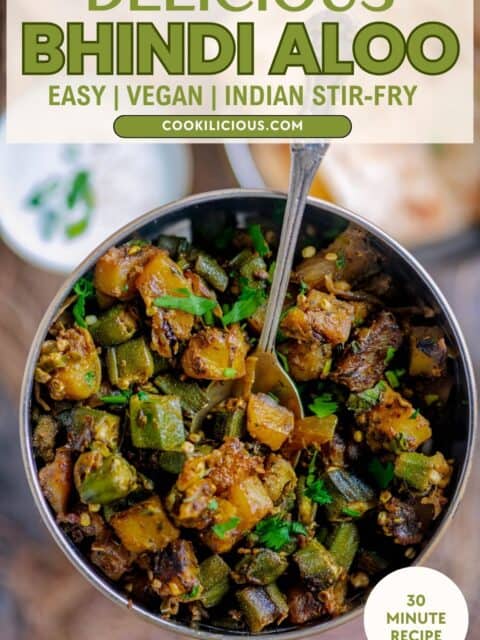
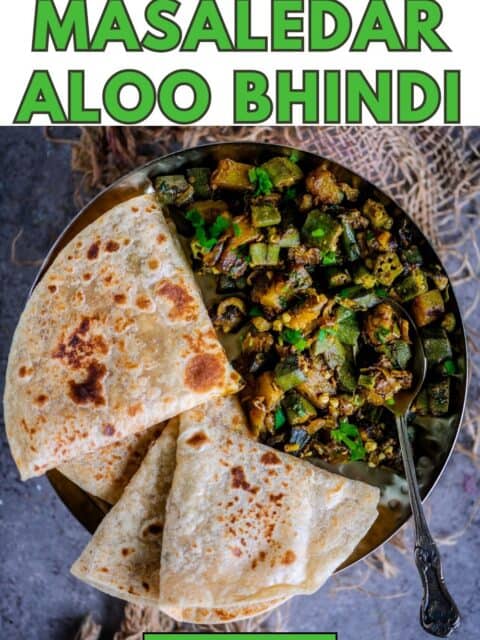
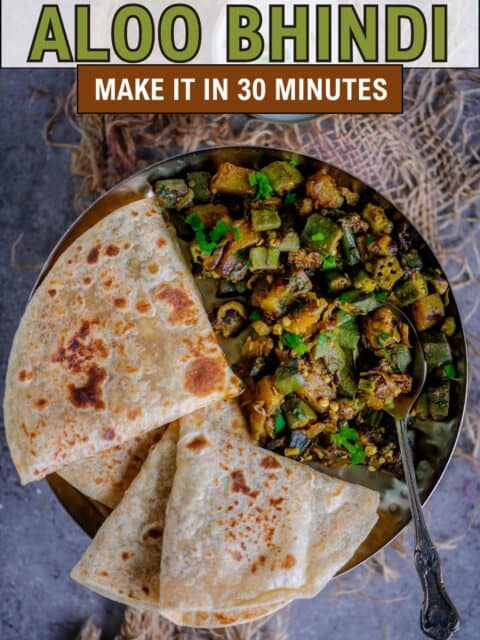
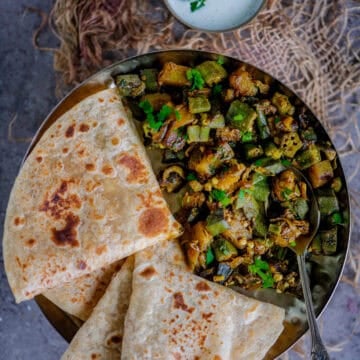
Here's a cozy, restaurant-style Indian stir-fry made with tender potatoes and crisp okra, tossed in warm, aromatic spices until everything is perfectly flavorful. Aloo Bhindi is naturally vegan and gluten-free and comes together in about 45 minutes, making it a go-to weeknight recipe. It's simple, comforting, and incredibly versatile - serve it with roti, dal and rice, or pack it into a lunchbox for an easy, wholesome meal that always hits the spot.
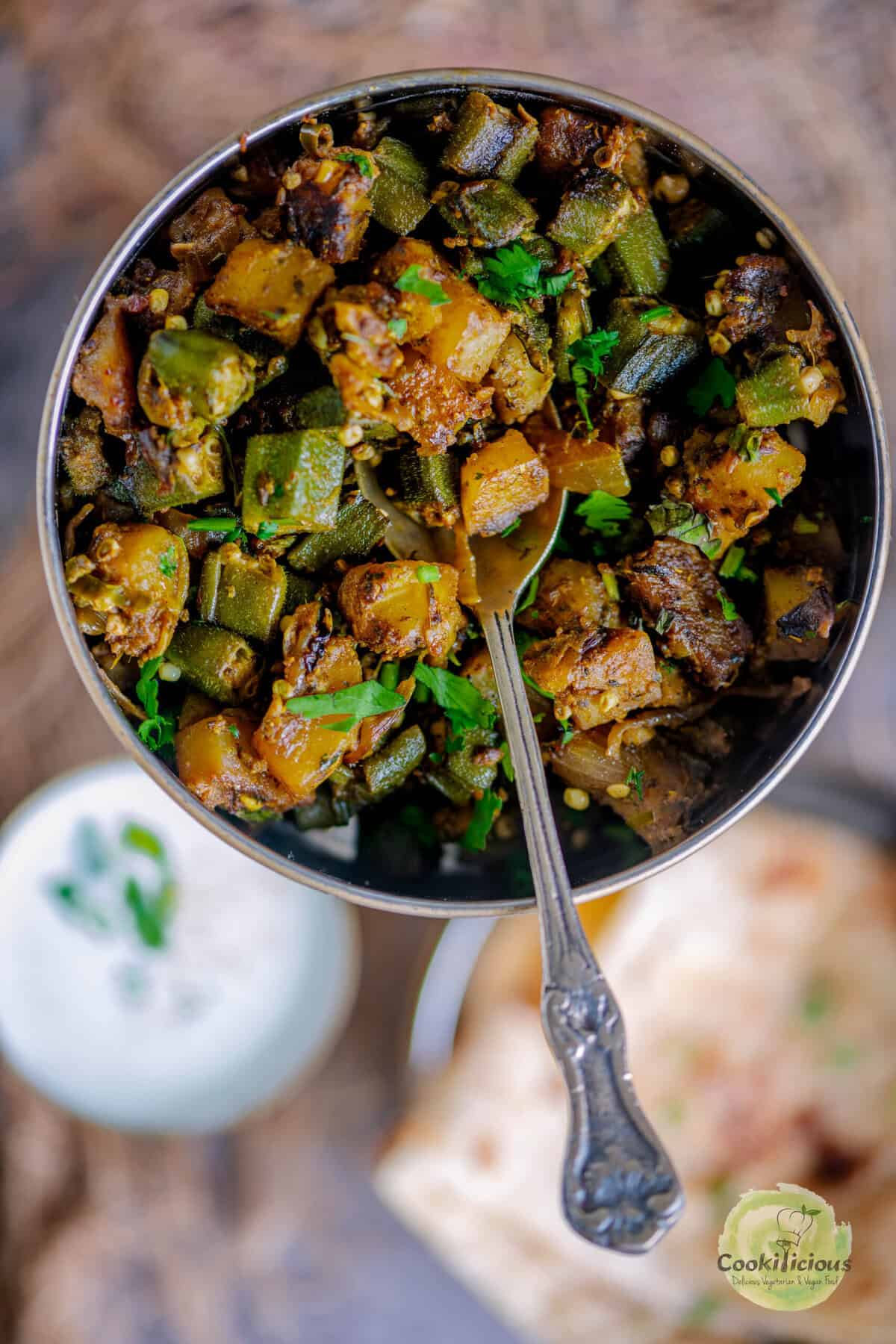
🔍 Quick Look: Indian Classic Aloo Bhindi
- 🌍 Cuisine: North indian
- ⏱️ Prep Time: 15 minutes
- 🍳 Cook Time: 30 minutes
- 🕒 Total Time: 45 minutes
- 👥 Servings: 4 people
- 📊 Calories: ~ 141.19 kcal per serving (based on nutrition panel)
- 🔥 Cook Method: Stovetop
- 👩🍳 Flavor Profile: Mildly spiced, crunchy, and delicious
- ⭐ Difficulty: Quick and easy to make
Need to Substitute An Ingredient Or Didn't Find The Answers You Were Looking For?
Ask AI To Answer Based On This Specific recipe:
* Disclaimer - I am not responsible for the quality of suggestions AI makes.
Jump to:
What Is Aloo Bhindi
Aloo means potatoes or batata, and bhindi means okra (ladies finger) in Hindi. Aloo Bhindi-also known as Bhindi Aloo or Potato Okra Sabzi-is a popular North Indian dry stir-fry made with okra, potatoes, onions, and simple aromatic Indian spices. It's a classic everyday vegan Indian recipe that's cooked in almost every Indian household.
Aloo Bhindi remains one of my all-time favorites. The combination of crispy okra, tender potatoes, and fragrant spices is simply heavenly-comforting, homestyle, and incredibly delicious. No wonder it's also a staple on menus of many Indian restaurants.
Growing up, mom always told us that okra (vendakkai in Tamil) is great for brain health, so dishes like Aloo Bhindi, Restaurant-style Bhindi Masala, Kurkuri Bhindi, Vendakkai Mor Kuzhambu, and Achari Dahi Bhindi appeared often on our table. Each one packed with classic Indian flavors and easy enough for weeknights.
Aloo Bhindi Variations
Every region has its own version of this dish. Some make it in the Gujarati shaak style, some follow the Maharashtrian bhaji method by adding peanuts, and in South India you'll even find a poriyal-style variation (beetroot poriyal, vazhakkai poriyal, or South Indian potato roast) seasoned with homemade sambar powder, or idli milagai podi.
At home, we make the North Indian, Punjabi-style dry Aloo Bhindi-without tomatoes to pair with whole wheat chapati, or gluten-free roti. This bhindi batata version is dry, non-slimy, restaurant-style, and perfect to pair with roti, chapati, paratha, or even as a side with dal-rice. The tang in this recipe comes from amchur powder and a final squeeze of fresh lemon juice, keeping it bright, flavorful, and perfectly balanced. A true weeknight winner!
And if potatoes are a staple in your kitchen like they are in ours, you'll love these comforting Indian potato curries: Aloo Palak, Matar Ka Nimona, Methi Aloo, and Dum Aloo.
Why Make It
- 🌱 Vegan, gluten-free, soy-free and nut-free: A naturally allergy-friendly Indian sabzi that fits perfectly into a plant-based diet.
- ⏱ Ready in about 45 minutes: A simple, fuss-free bhindi recipe ideal for busy weeknights.
- 🍲 One-pot Indian stir-fry: Everything cooks in a single pan for easy prep and quick cleanup.
- 👩🏽🍳 Beginner-friendly and approachable: Made with everyday pantry spices and basic ingredients - perfect even for new cooks.
- 🥙 Pairs perfectly with Indian breads: Serve with roti, chapati, paratha, or alongside dal and rice for a complete meal.
- 💪 Healthy, veg-forward recipe: Uses fresh okra and potatoes for a wholesome, nutrient-rich Indian side dish.
- 🍱 Great for meal prep: Stays fresh for 4-5 days and reheats beautifully, making it lunchbox-friendly.
- 🍽 Family-friendly flavors: Mildly spiced, delicious, and always a weeknight favorite.
🧾 Ingredients Needed
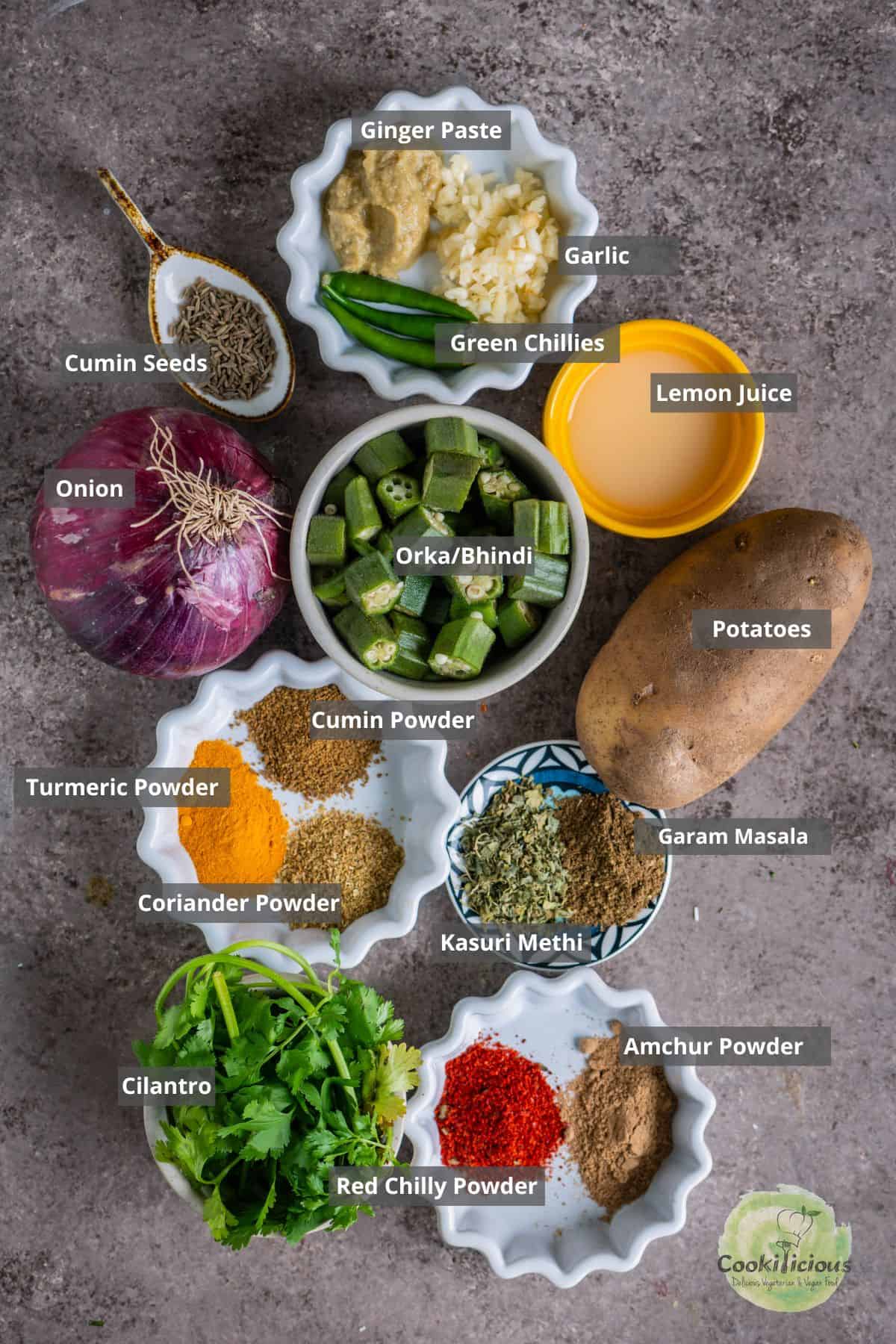
Bhindi (Okra): Always choose fresh, tender okra for the best Aloo Bhindi Masala. Overripe bhindi becomes fibrous, slimy, and won't give you that crisp texture we want. You can easily find fresh okra at Publix or Sprouts, but I personally prefer buying from Indian grocery stores, where the bhindi is usually long, thin, deep green, and contains fewer seeds. Look for pods that are firm, bright, and free from cuts or blemishes. If fresh okra isn't available, frozen pre-cut bhindi works too.
Potatoes: I like using Russet potatoes because they cook quickly, turn soft without falling apart, and absorb spices beautifully. You can also use Yukon Gold or any starchy potato variety for this Punjabi-style Aloo Bhindi recipe.
Spices: This flavorful sabzi uses simple, everyday Indian pantry spices-red chili powder, amchur (dry mango powder), homemade garam masala, crushed kasuri methi, turmeric powder, cumin powder, coriander powder, and whole cumin seeds. These spices give the dish its classic North Indian flavor profile and help create that restaurant-style taste.
Aromatics: Thinly sliced onions, minced garlic, homemade ginger paste, green chilies, fresh cilantro, and a squeeze of lemon juice bring brightness, depth, and aroma to the dish. These aromatics are essential for balancing the earthiness of potatoes and the mild flavor of okra, making the Aloo Bhindi taste warm, hearty, and wholesome.
How To Make Aloo Bhindi 🔪
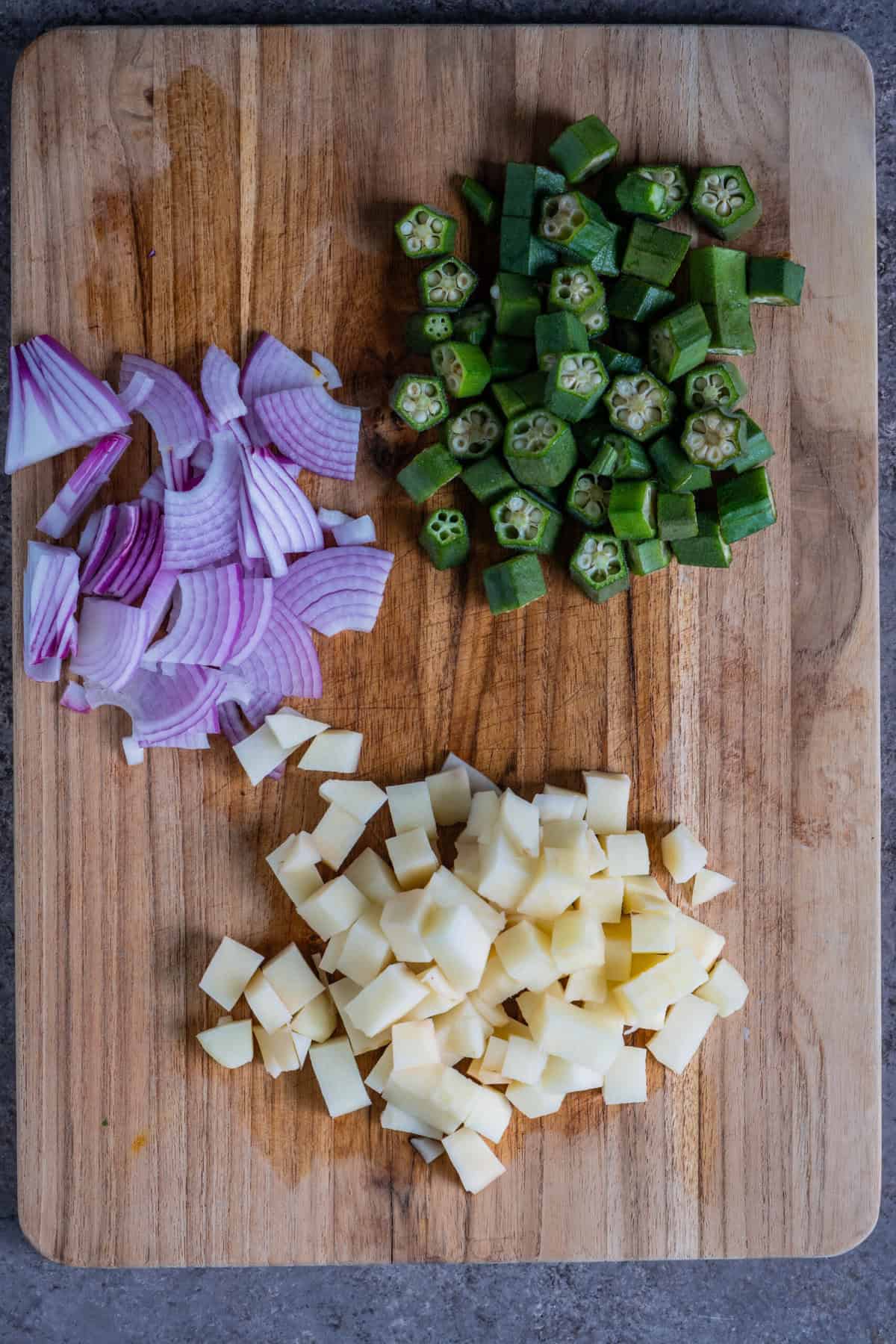
- Step 1: Prep the vegetables: Wash and thoroughly dry the bhindi (okra), then cut and discard the head and tail of it. Slice it into ½-inch pieces. Peel and cube the potatoes into bite-sized pieces, keeping them similar in size to the okra for even cooking. Thinly slice the onions and set everything aside. Priya's tip - Soak the potato cubes in water for a few minutes to prevent discoloration and help them stay fresh.
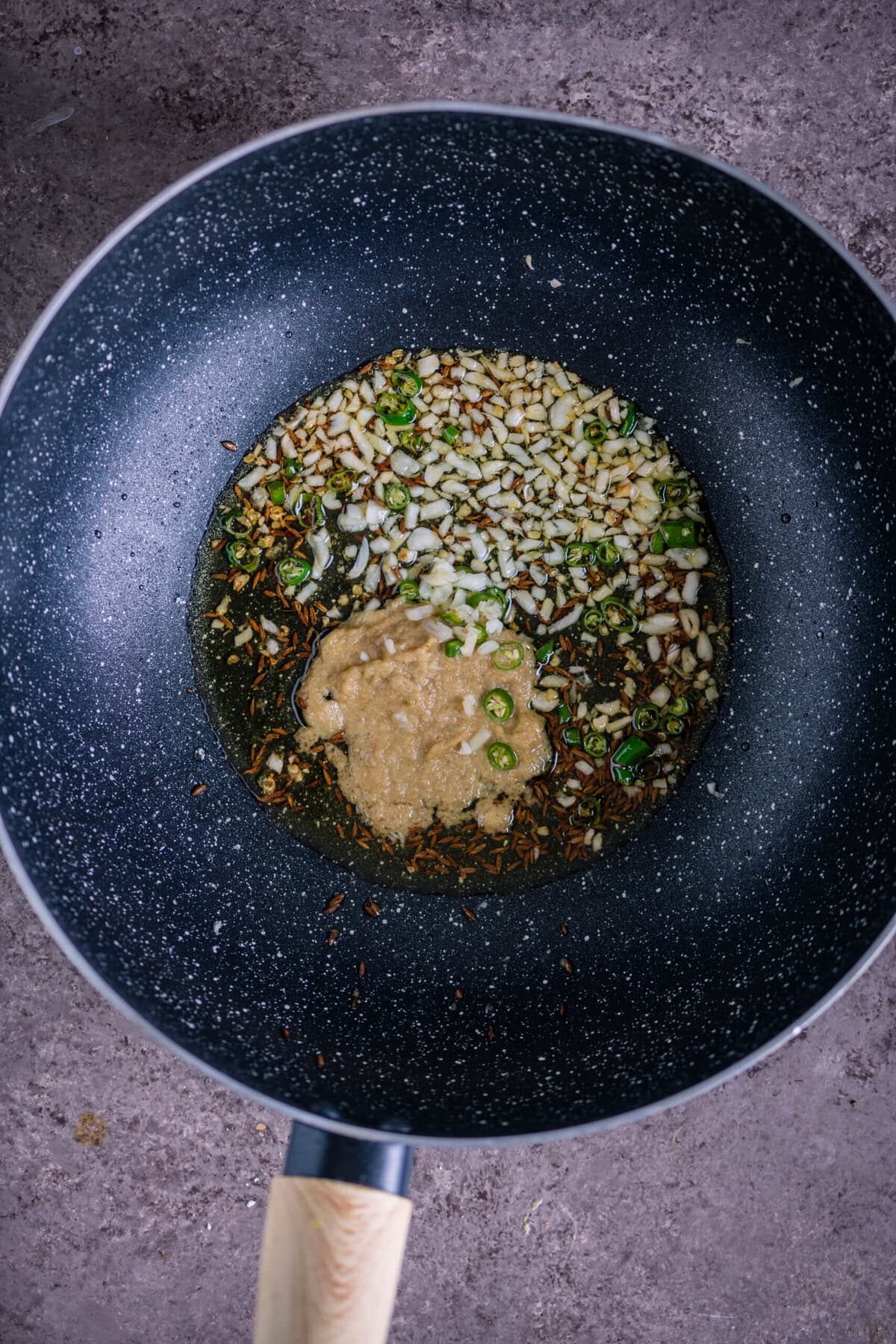
- Step 2: Heat oil and temper spices: In a wide pan, heat 2-3 tablespoons of oil. Add cumin seeds and let them splutter. Toss in minced green chilies, garlic, and ginger paste, and sauté on medium flame until the raw aroma disappears and the garlic turns lightly golden.
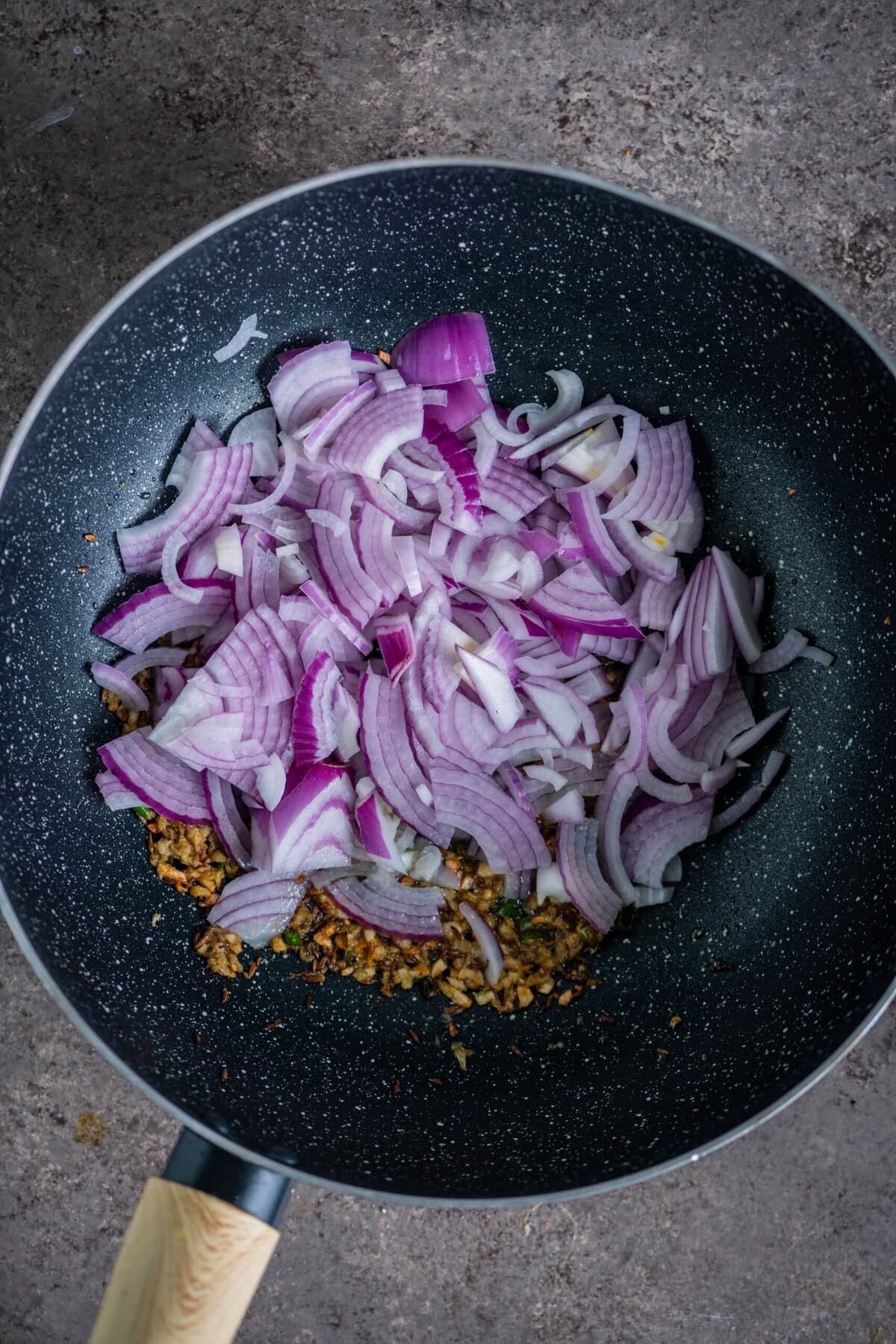
- Step 3: Cook onions: Add thinly sliced onions and sauté for 2-3 minutes until they turn soft and translucent, creating a flavorful base for the sabzi.
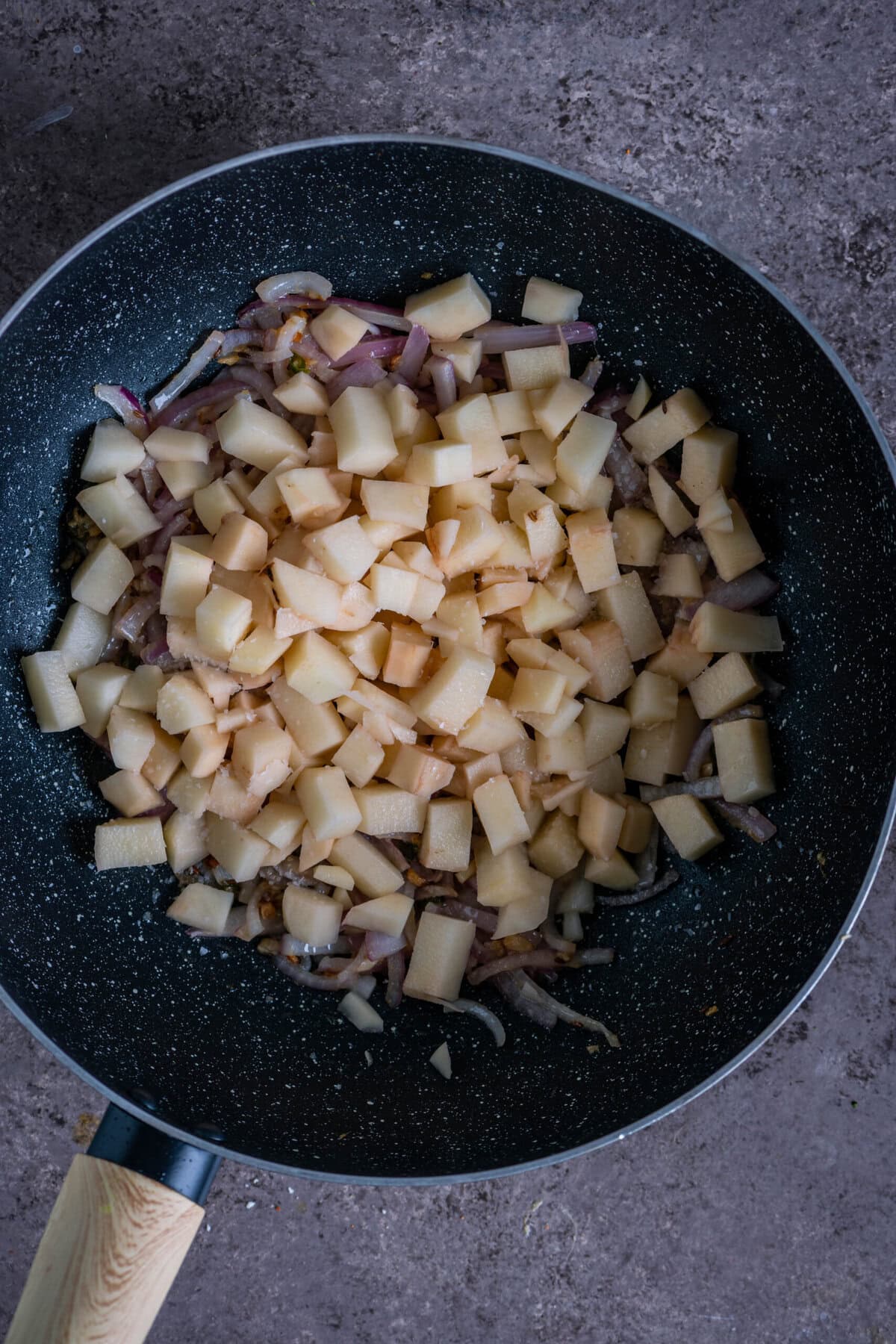
- Step 4: Add potatoes: Mix in the potato cubes along with a pinch of salt. Cover and cook for 6-8 minutes or until the potatoes are almost tender, stirring occasionally to prevent sticking.
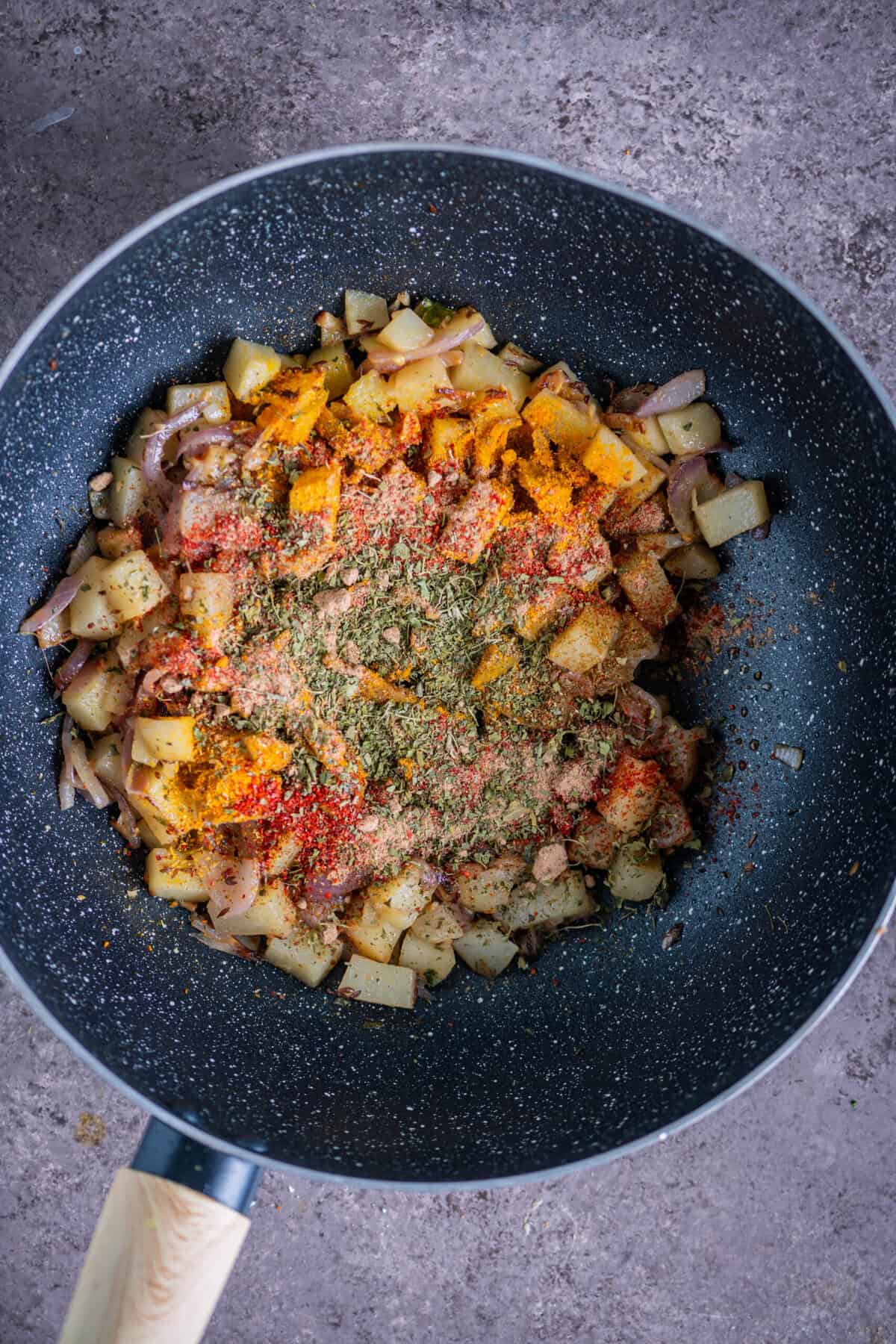
- Step 5: Spice the dish: Sprinkle turmeric, coriander, cumin, red chilly powder, amchur powder, and crushed kasuri methi. Add salt as needed and sauté for another minute to bloom the spices and enhance the aroma.
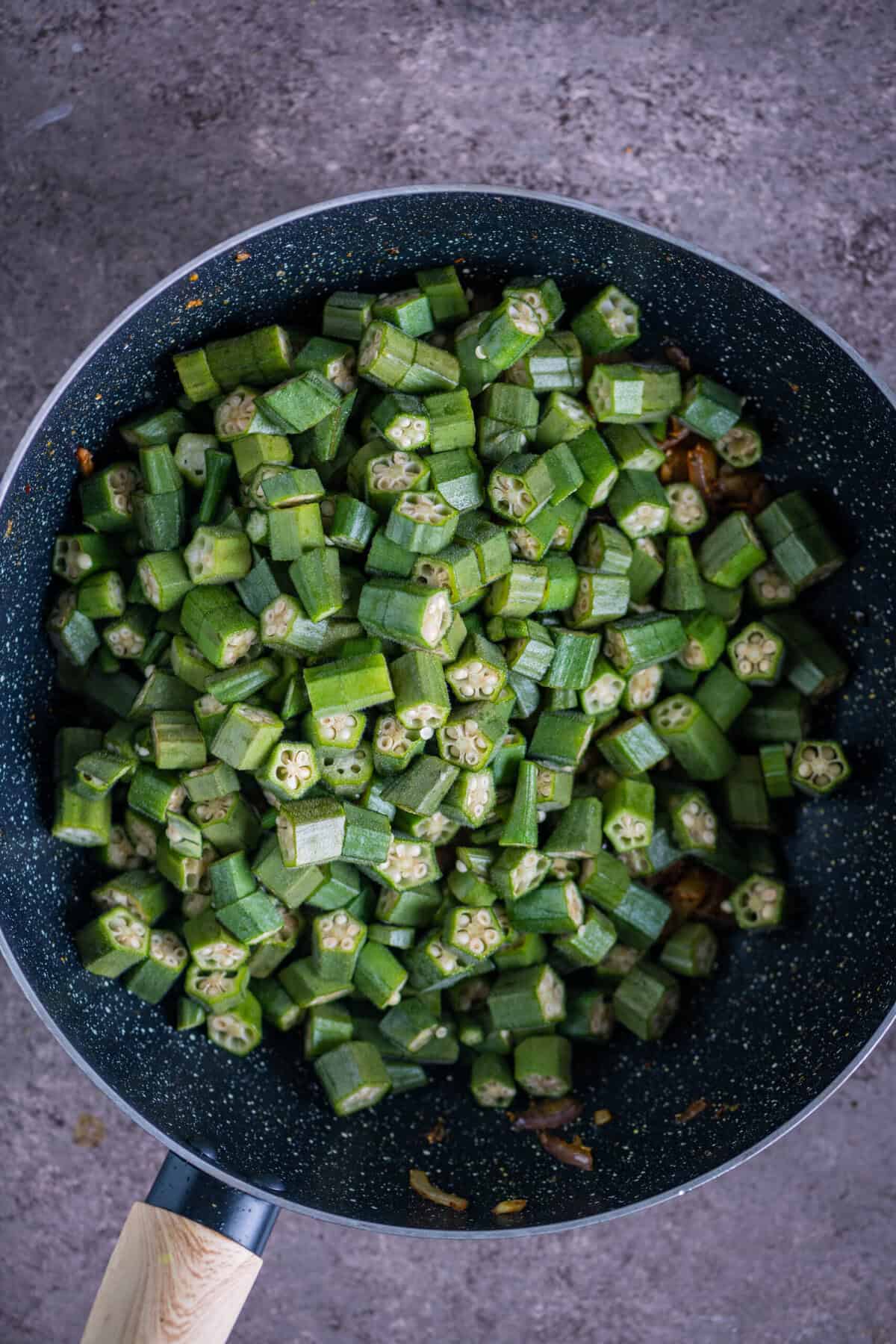
- Step 6: Cook the bhindi: Gently add the sliced bhindi to the pan, stirring lightly to coat it evenly with the spices. Cover and cook for 7-8 minutes, stirring only once or twice midway. Avoid overmixing to prevent slimy okra.
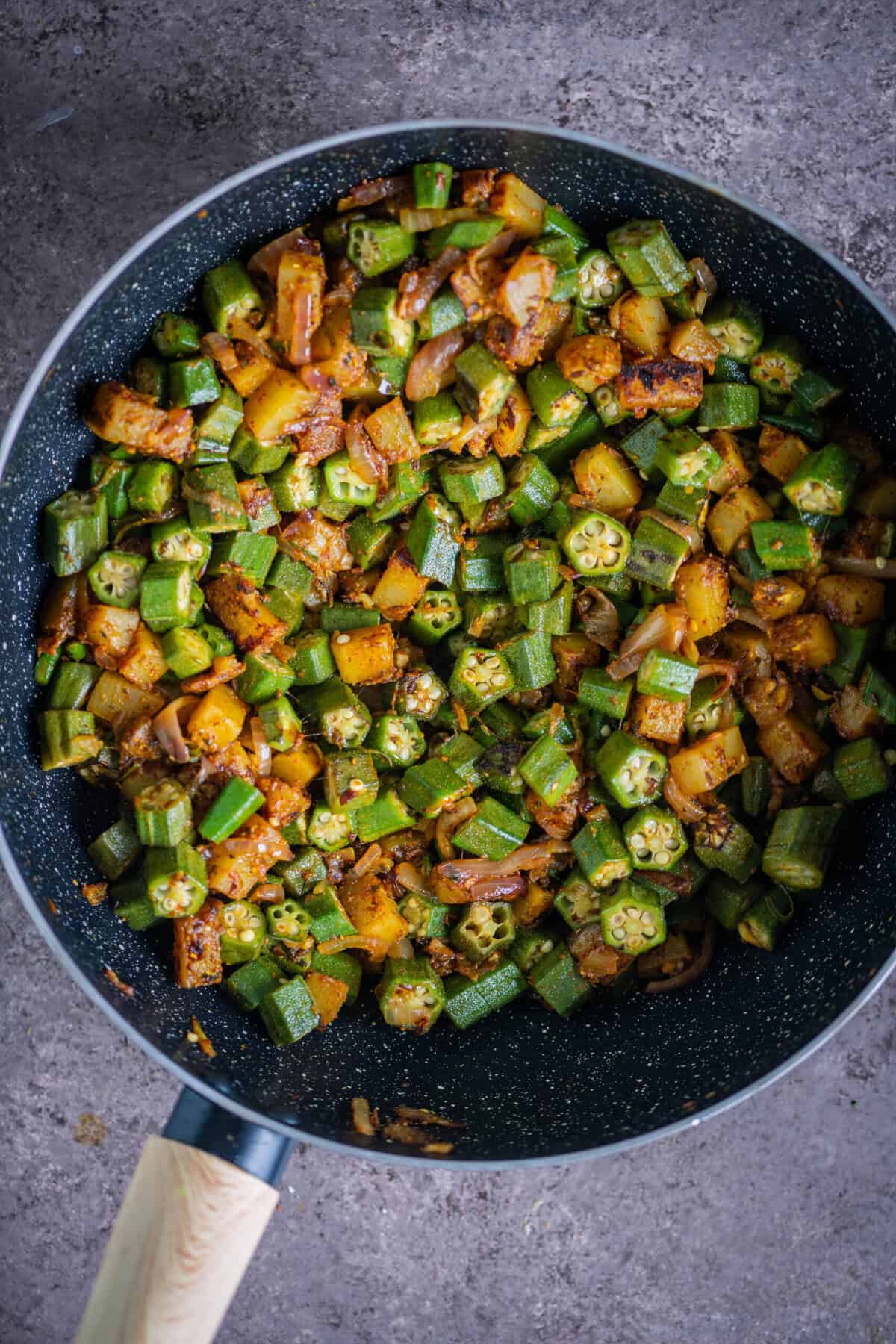
- Step 7: The slow cooking helps remove the slimy texture from the bhindi. If the bhindi releases too much water and is still lacey, cook uncovered for an additional 3-4 minutes on medium flame to evaporate excess moisture and achieve a dry, restaurant-style texture. Taste and adjust salt if needed.
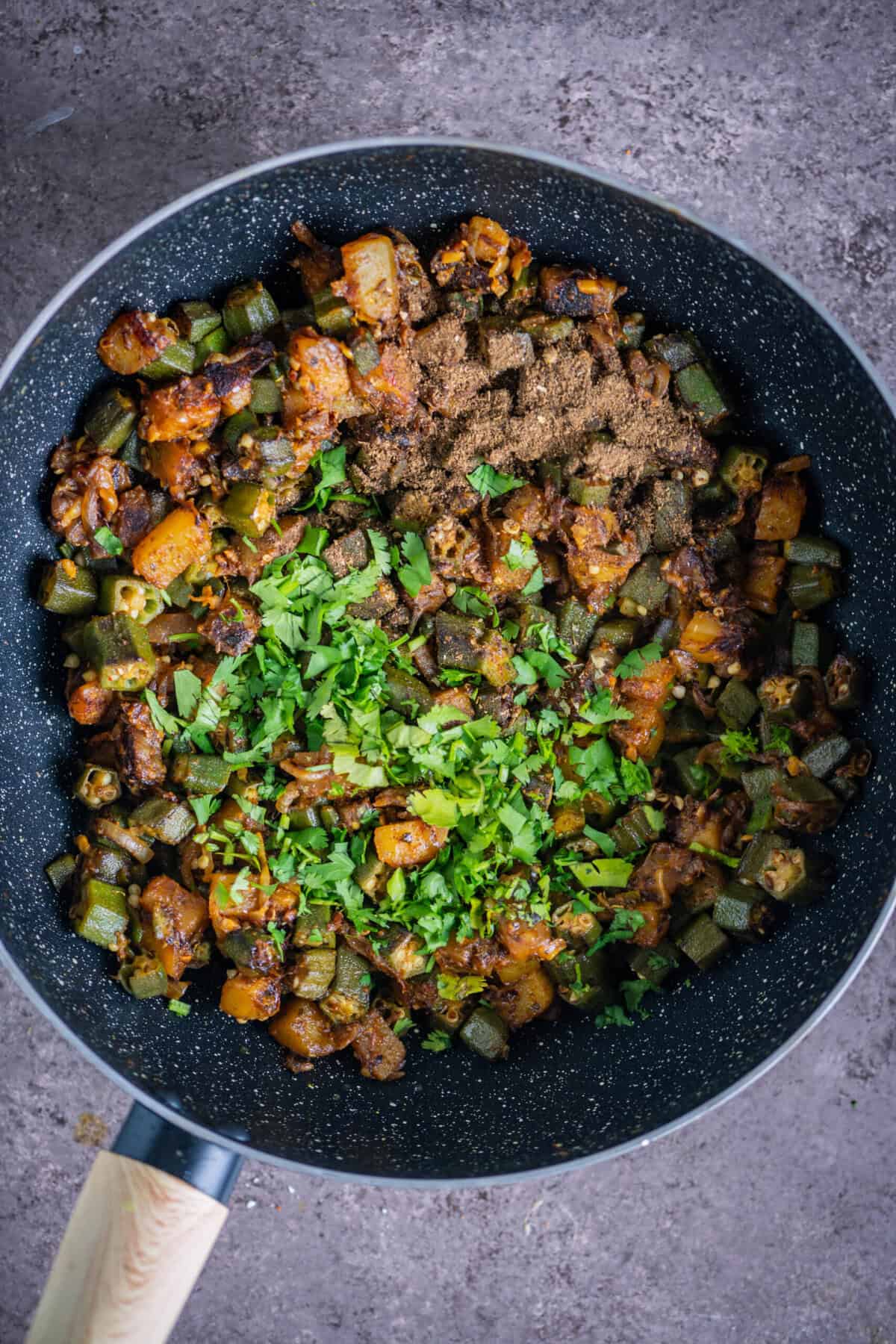
- Step 8: Finish and garnish: Turn off the heat and sprinkle garam masala, freshly chopped cilantro, and a squeeze of lemon juice. Gently mix and take the pan off the flame.
Want to save this recipe?
🍽 Serving Suggestions
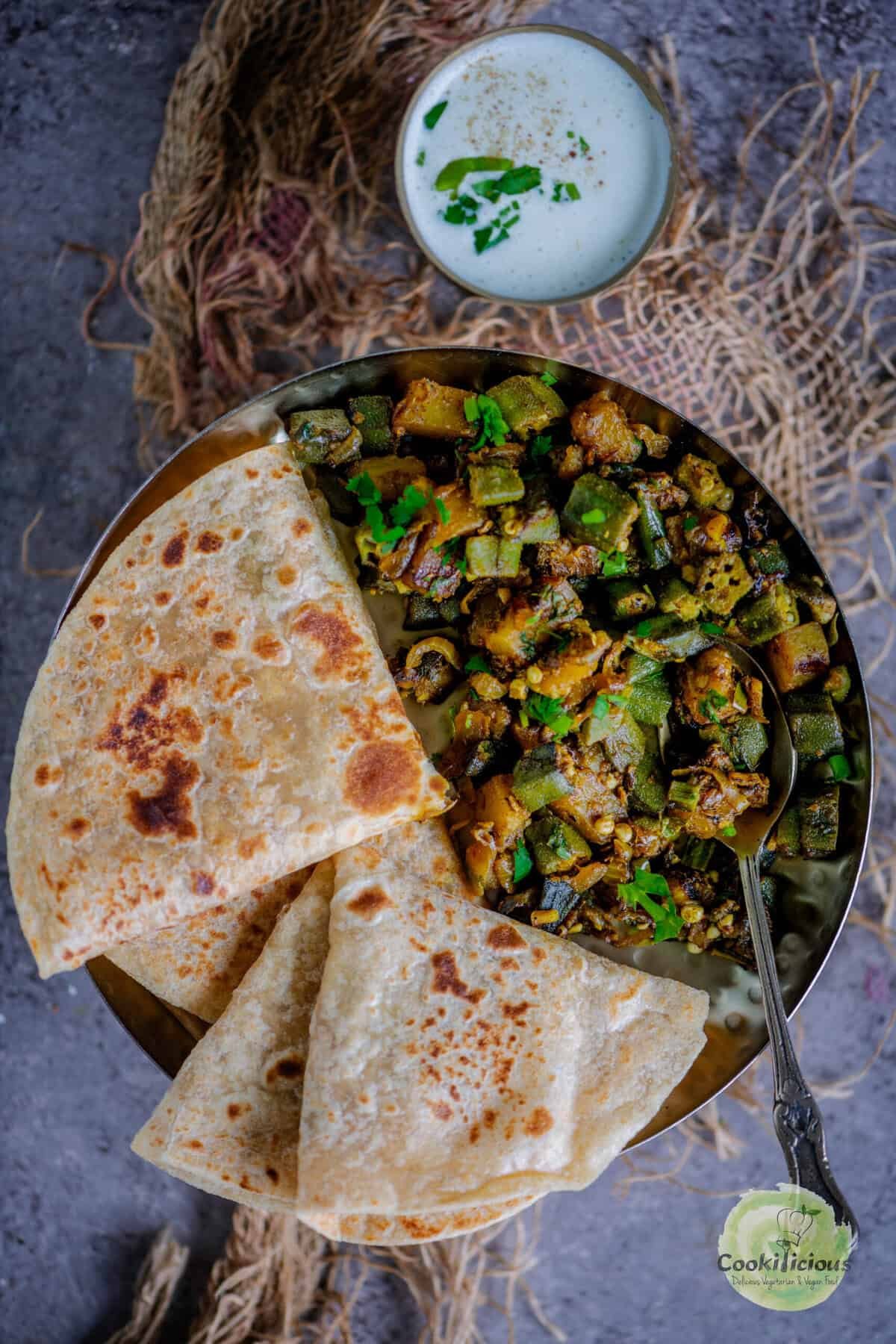
Serve Aloo Bhindi Fry hot and fresh for the best texture and flavor. This vegan, gluten-free Indian sabzi pairs well with any Indian bread-soft gluten-free roti, chapati, phulka, paratha, jowar bhakri, sweet potato poori, kulcha, naan, or even almond flour tortillas. For extra crunch, add a sprinkle of roasted peanut powder. To make it a complete meal or weekend thali, enjoy it with Dal Tadka with jeera rice, Sindhi Kadhi Chawal, Arachuvitta Sambar Rice, Rasam Rice, or Masala khichdi. Round it out with sides like masala chaas, mango lassi, Asian cucumber salad, Maharashtrian koshimbir, papad, or Indian mango pickle for a balanced, satisfying spread.
💭 Priya's Recipe Tips
This Aloo Bhindi is a dry, restaurant-style sabzi, so there's no need to add water. For a semi-gravy version, add chopped tomatoes and a splash of water. Cook the potatoes first until almost done, then add the okra, as their cooking times differ. For extra-crispy potatoes, fry them separately until golden before mixing with the bhindi masala. You can also make this okra stir-fry without potatoes for a lighter, vegan-friendly version.
Aloo Bhindi FAQs 📖
Yes! You can absolutely use frozen, pre-cut bhindi for this Punjabi-style Aloo Bhindi Masala recipe. While frozen okra is widely available at major grocery stores like Publix and Sprouts, I personally prefer picking it up from Indian grocery stores, where the bhindi is usually longer, thinner, and has fewer seeds, giving a better texture in the stir-fry.
If using frozen okra, there's no need to defrost-you can add it directly to the pan. Just be mindful not to overcook, as frozen okra can release extra water and become soft or slightly slimy if cooked too long. Follow the regular cooking steps, and you'll still get a dry, flavorful, restaurant-style Aloo Bhindi Fry with tender potatoes and crisp okra.
Slimy bhindi is a common challenge when making Aloo Bhindi Masala or other okra stir-fries. Here's how to keep your bhindi crispy, tender, and restaurant-style:
Wash and dry thoroughly: Rinse the okra and then pat each piece completely dry before chopping. Excess moisture is the main reason bhindi becomes slimy.
Keep your tools dry: Ensure not just the okra, but also the knife and chopping board are dry. Wiping the knife with a paper towel while chopping helps prevent excess moisture from building up.
Cook in a wide pan: Use a wide skillet or kadhai to give enough space for the okra to cook evenly. Covering the pan helps the spices penetrate, but don't over-stir.
Control the heat: Cook on low to medium flame, letting the bhindi cook slowly. Avoid stirring too frequently to maintain a dry, crisp texture.
Add a touch of sourness: Ingredients like amchur powder (dry mango powder), a splash of lemon juice, or a few drops of vinegar help reduce sliminess while enhancing flavor.
Following these steps will give you non-slimy, flavorful Aloo Bhindi with tender potatoes and perfectly cooked okra every time - just like the North Indian restaurant-style stir-fry.
Making Jain Aloo Bhindi (or Satvik Aloo Bhindi Sabzi) is very easy and perfect for those who follow a no-onion, no-garlic diet. To prepare the Jain version, simply skip the onions, garlic, and ginger. The flavor profile will be slightly different, but still delicious, light, and comforting-exactly how a Jain Sabzi should taste.
Instead of aromatics, rely on the natural earthiness of potatoes and okra, along with everyday Indian spices like turmeric powder, red chili powder, coriander powder, cumin seeds, garam masala, and amchur for tang.
You can also add a pinch of hing (asafoetida) if you follow a style of Jain cooking that allows it-it helps replicate some of the depth usually created by onions and garlic.
Cook the bhindi and potatoes slowly so they stay soft yet hold their shape. A gentle squeeze of lemon juice and a sprinkle of fresh coriander at the end brightens the dish beautifully. This simple, wholesome Jain Bhindi Aloo Sabzi pairs wonderfully with phulka, roti, bhakri, or even jeera rice for a complete satvik meal.
Once your Aloo Bhindi Sabzi has cooled down to room temperature, transfer it to an airtight container and store it in the fridge for up to 4-5 days. This makes it an ideal make-ahead or meal prep recipe for busy weeknights.
Aloo Bhindi also freezes well. To freeze, place the cooled sabzi in a freezer-safe container or zip-lock bag. Thaw it overnight in the fridge before reheating. When reheating, sprinkle a little water and gently warm on the stove or in the microwave to refresh the texture and prevent the okra from drying out. Garnish with fresh cilantro.
Storing it properly ensures your vegan, gluten-free, and flavorful Aloo Bhindi stays delicious, tender, and ready to pair with roti, chapati, rice, or parathas anytime.
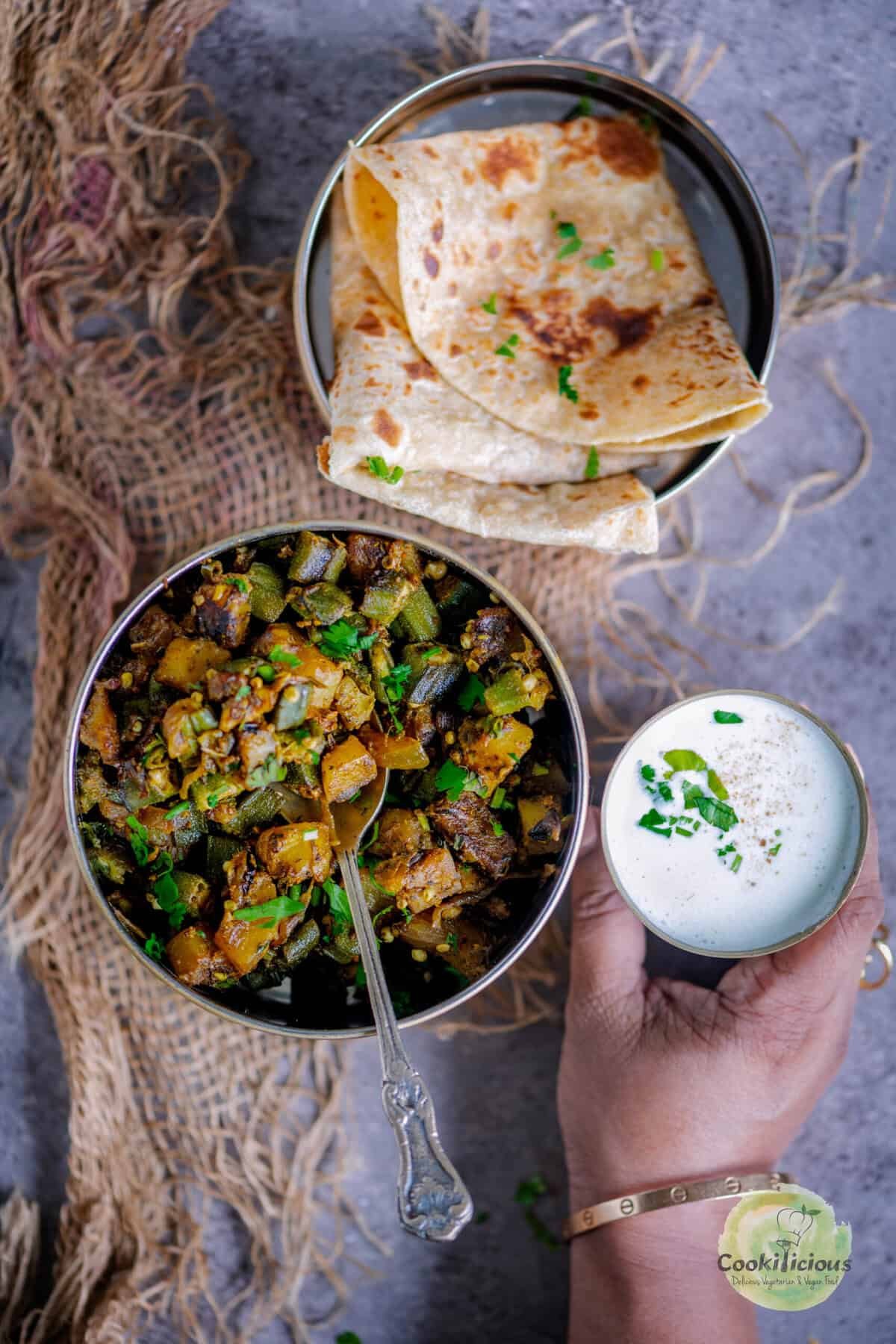
More Recipes With Aloo



Recipe 📖
Indian Classic Aloo Bhindi (Potato + Okra Sabzi)
Equipment
Ingredients
- 1 lb bhindi
- 2 potatoes
- 2 tablespoon vegan ghee
- 1 teaspoon cumin seeds
- 2 green chillies
- 6-7 cloves garlic
- 1 tablespoon ginger paste
- 1 cup sliced onions
- ½ teaspoon turmeric powder
- 1 teaspoon red chilly powder
- 1 teaspoon coriander powder
- 1 teaspoon cumin powder
- 1 teaspoon amchur powder
- 2 teaspoon Kasuri methi
- 1 teaspoon garam masala
- ⅓ cup cilantro, chopped
- 1 tablespoon lemon juice
Instructions
- Wash and thoroughly dry the bhindi (okra), then cut and discard the head and tail of it. Slice it into ½-inch pieces. Peel and cube the potatoes into bite-sized pieces, keeping them similar in size to the okra for even cooking. Thinly slice the onions and set everything aside. Priya's tip - Soak the potato cubes in water for a few minutes to prevent discoloration and help them stay fresh.
- Heat oil and temper spices: In a wide pan, heat 2-3 tablespoons of oil. Add cumin seeds and let them splutter. Toss in minced green chilies, garlic, and ginger paste, and sauté on medium flame until the raw aroma disappears and the garlic turns lightly golden.
- Add thinly sliced onions and sauté for 2-3 minutes until they turn soft and translucent, creating a flavorful base for the sabzi.
- Mix in the potato cubes along with a pinch of salt. Cover and cook for 6-8 minutes or until the potatoes are almost tender, stirring occasionally to prevent sticking.
- Sprinkle turmeric, coriander, cumin, red chilly powder, amchur powder, and crushed kasuri methi. Add salt as needed and sauté for another minute to bloom the spices and enhance the aroma.
- Gently add the sliced bhindi to the pan, stirring lightly to coat it evenly with the spices. Cover and cook for 7-8 minutes, stirring only once or twice midway. Avoid overmixing to prevent slimy okra.
- The slow cooking helps remove the slimy texture from the bhindi. If the bhindi releases too much water and is still lacey, cook uncovered for an additional 3-4 minutes on medium flame to evaporate excess moisture and achieve a dry, restaurant-style texture. Taste and adjust salt if needed.
- Turn off the heat and sprinkle garam masala, freshly chopped cilantro, and a squeeze of lemon juice. Gently mix and take the pan off the flame.
Notes
- This Aloo Bhindi is a dry, restaurant-style sabzi, so there's no need to add water. For a semi-gravy version, add chopped tomatoes and a splash of water.
- Cook the potatoes first until almost done, then add the okra, as their cooking times differ. For extra-crispy potatoes, fry them separately until golden before mixing with the bhindi masala.
- You can also make this okra stir-fry without potatoes for a lighter, vegan-friendly version.


Hasan Jaffer says
This Aloo Bhindi recipe is beautifully explained and makes the dish sound so comforting and flavorful. I really like how you’ve included tips for getting non-slimy okra and restaurant-style texture — that’s always the tricky part, and you’ve made it feel very doable. The step-by-step method is clear, the variations are helpful, and the serving ideas make it even more inviting. This is the kind of everyday sabzi that feels simple, healthy, and truly satisfying.
Priya Lakshminarayan says
Thank you so much.