
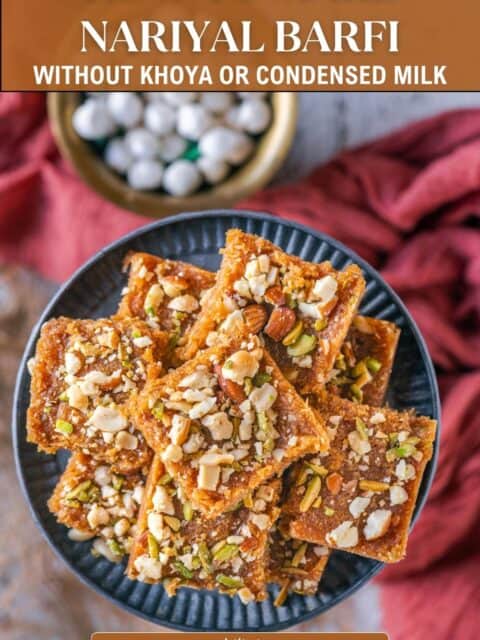
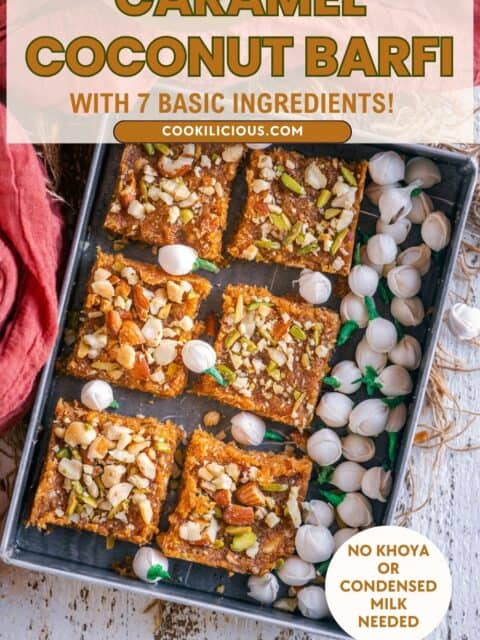
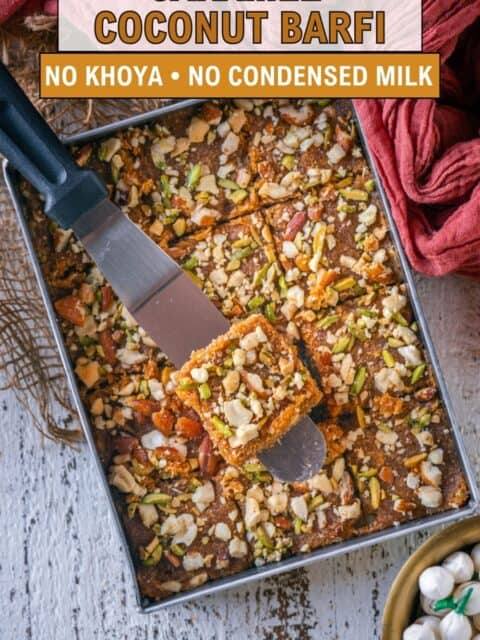
Coconut barfi was my mom's signature dessert - she made it for every happy occasion, a recipe she learned from her own mother. It was one of the first sweets she ever taught me to make. Every year, I still make her signature thenga barfi for my husband's birthday, and he looks forward to it all year.
But over time, I've started putting my own spin on things. I've experimented with more than 6 different coconut barfi varieties, and this caramel coconut barfi has become my favorite by far. If you've only ever tried the classic version - whether you know it as nariyal barfi or thengai barfi, depending on where you grew up - I highly recommend giving this caramelized twist a try.
It comes together in 60 minutes, with no khoya, no condensed milk, and very little ghee, and I promise: you and your guests will fall in love with this new take on this classic coconut fudge.
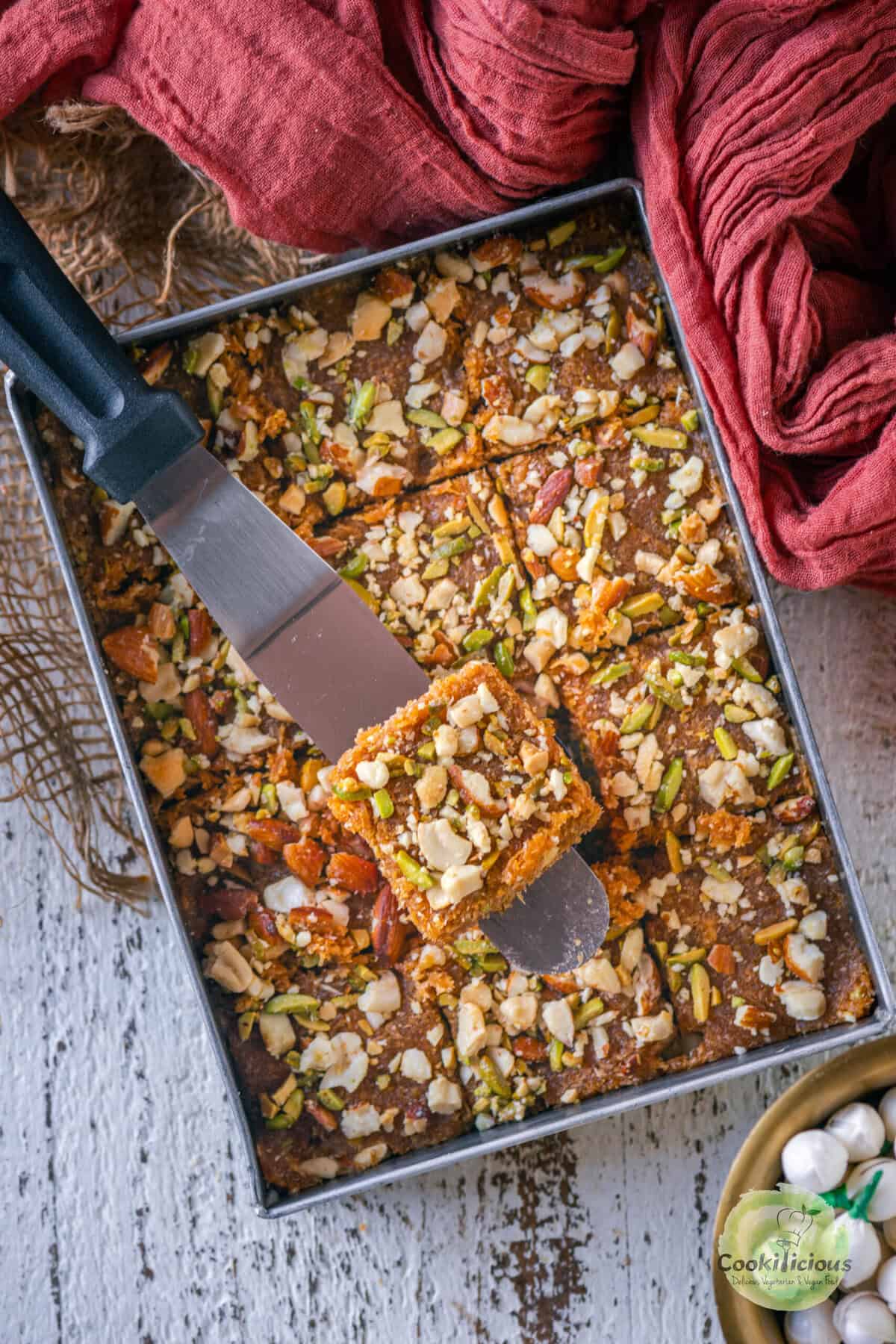
🔍 Quick Look: Easy Coconut Barfi
- 🌍 Cuisine: Indian
- ⏱️ Prep Time: 30 minutes
- 🍳 Cook Time: 30 minutes
- 🕒 Total Time: 60 minutes
- 👥 Servings: 12 Barfis
- 📊 Calories: ~ 152.91 kcal per serving (based on nutrition panel)
- 🔥 Cook Method: Stovetop
- 👩🍳 Flavor Profile: Sweet, soft and slightly grainy in texture.
- ⭐ Difficulty: Simple and easy to make
Jump to:
What Is Barfi
Barfi (also spelled burfi) is a rich, indulgent milk-based Indian sweet that takes center stage on any festive table. The name comes from the Persian word "barf," meaning snow - a nod to its soft, melt-in-your-mouth texture. Barfi is a beloved mithai across India, especially during festivals like Diwali and Holi, as well as weddings and other celebrations. There are countless varieties to choose from, but coconut barfi remains one of the most popular.
Traditionally, barfi is made by simmering milk down until it thickens, then folding in other ingredients before it's set and cut into squares or diamonds. The texture is soft and slightly grainy, almost melting in your mouth - much like a fudge. My coconut burfi version puts a fun spin on the classic, swapping out the usual khoya and condensed milk for a rich homemade caramel base instead.
Why My Coconut Barfi Recipe Is Different
If you've been making the traditional coconut barfi for years, it's time to mix things up a bit. And if you're new to this indulgent dessert, let me fill you in. Coconut barfi is also called Thenga Barfi or Thengai Barfi in Tamil, and Nariyal Barfi in Hindi. It's also known as Kobbari Barfi in Telugu and Kayi Barfi in Kannada - same delicious dessert, different regional names.
As the name suggests, the star ingredient here is coconut. Nariyal barfi is usually white, similar to my coconut ladoos or coconut macaroons. But if you look at the color of my burfi, it's golden brown - and no, I haven't used any jaggery or store-bought caramel syrup like I did in my Caramel Kalakand recipe. That beautiful golden color comes purely from caramelizing the sugar itself, similar to how I make Caramel Sabudana Kheer.
I also haven't used any condensed milk or mawa (khoya) - instead, I've used semolina. My mother-in-law taught me this trick, and while semolina might sound like an unusual swap for a barfi, trust me, it works wonders in replicating the richness you'd normally get from khoya. When amma made her thenga barfi, you could literally see the ghee oozing out of it - and there's nothing wrong with that, sometimes it's okay to indulge! But for this coconut barfi recipe, I've consciously kept the ghee to a minimum.
All of this goes to prove one thing: you can get the same richness and texture in indulgent desserts like coconut barfi by simply making smarter ingredient swaps.
Why Make It
- 🚫 No mawa/khoya, no jaggery, and no condensed milk - just a handful of pantry staples
- 🥣 Needs just 7 basic ingredients you probably already have on hand
- ⏱️ Comes together in under 60 minutes, start to finish
- 🍬 One batch yields 12 generous pieces, so it's perfect for feeding a crowd or gifting during festive season
- 🎉 A fresh, caramelized twist on the classic nariyal barfi/thengai barfi that stands out on any Diwali or Navratri sweets platter
- 🌱 This coconut burfi is naturally eggless and vegetarian, so everyone at the table can enjoy it
- 👩🍳 Simple enough for a beginner, yet impressive enough to serve guests
🧾 Ingredients Needed
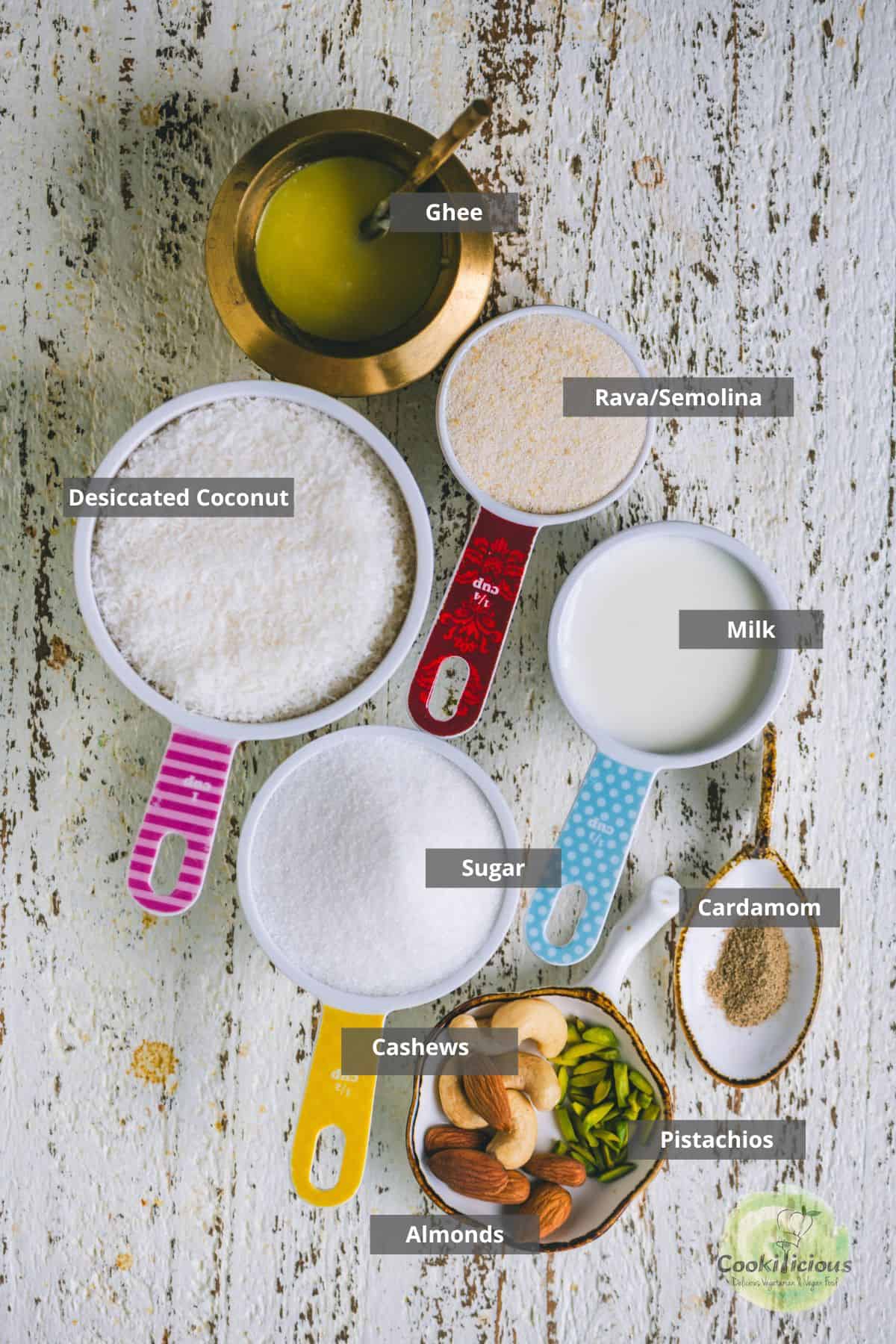
Coconut - Mom would make her thenga barfi with freshly grated coconut, and you can absolutely use that here too. For this recipe, though, I've used unsweetened desiccated coconut, which holds its texture well and is easy to keep on hand. Unsweetened coconut flakes work as a substitute as well - just make sure whatever you use isn't sweetened, or it will throw off the caramel's sweetness balance.
Sugar - Regular granulated sugar is all you need for this coconut barfi recipe; it's what caramelizes into that deep golden color.
Rava (Semolina) - Fine rava/semolina might sound like an unusual addition to a homemade barfi recipe, but trust me, it's the secret to getting that rich, khoya-like texture without using any actual khoya. If your rava is coarse, pulse it in a blender for a few seconds until fine before using.
Milk - I've used full-fat whole milk for this nariyal barfi, which helps the rava cook into a richer, creamier base.
Ghee - Ghee is essential to any authentic Indian mithai, coconut barfi included, since it adds richness and helps everything bind together. If needed, you can substitute melted butter, though the flavor will be slightly different.
Cardamom - A little cardamom powder rounds out the flavor with that warm, aromatic note Indian desserts are known for.
Mixed nuts - I've used almonds, cashews, and pistachios for the topping. Use whatever nuts you have on hand, or skip them entirely if you're cooking for someone with nut allergies - the coconut burfi holds together perfectly fine without them. You can use seeds instead.
🔪 How To Make Caramel Coconut Barfi
To Prepare The Rava Khoya Mixture
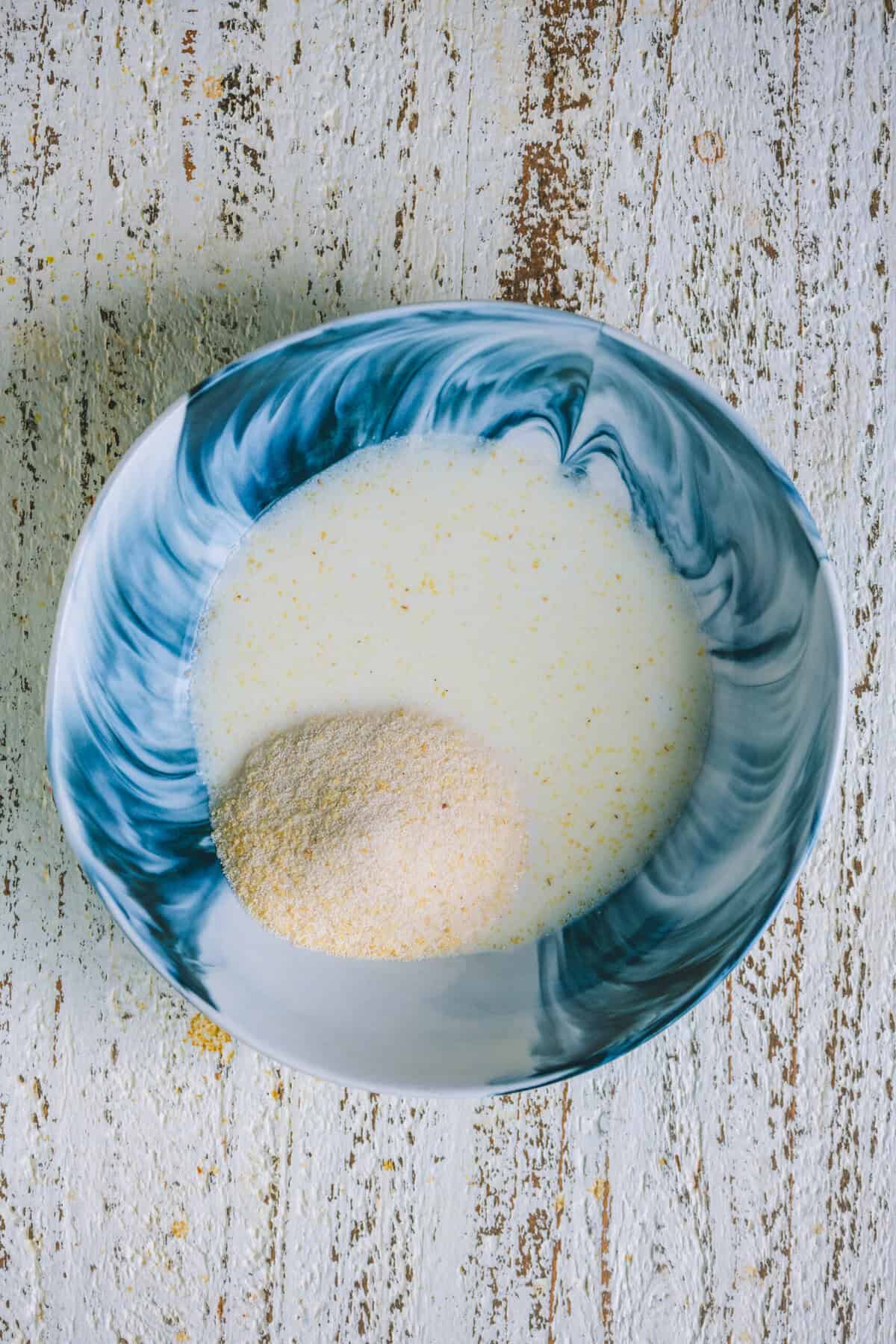
- Step 1: Soak the rava. In a small mixing bowl, add ½ cup milk and the rava. Mix well and set aside for 10 minutes.
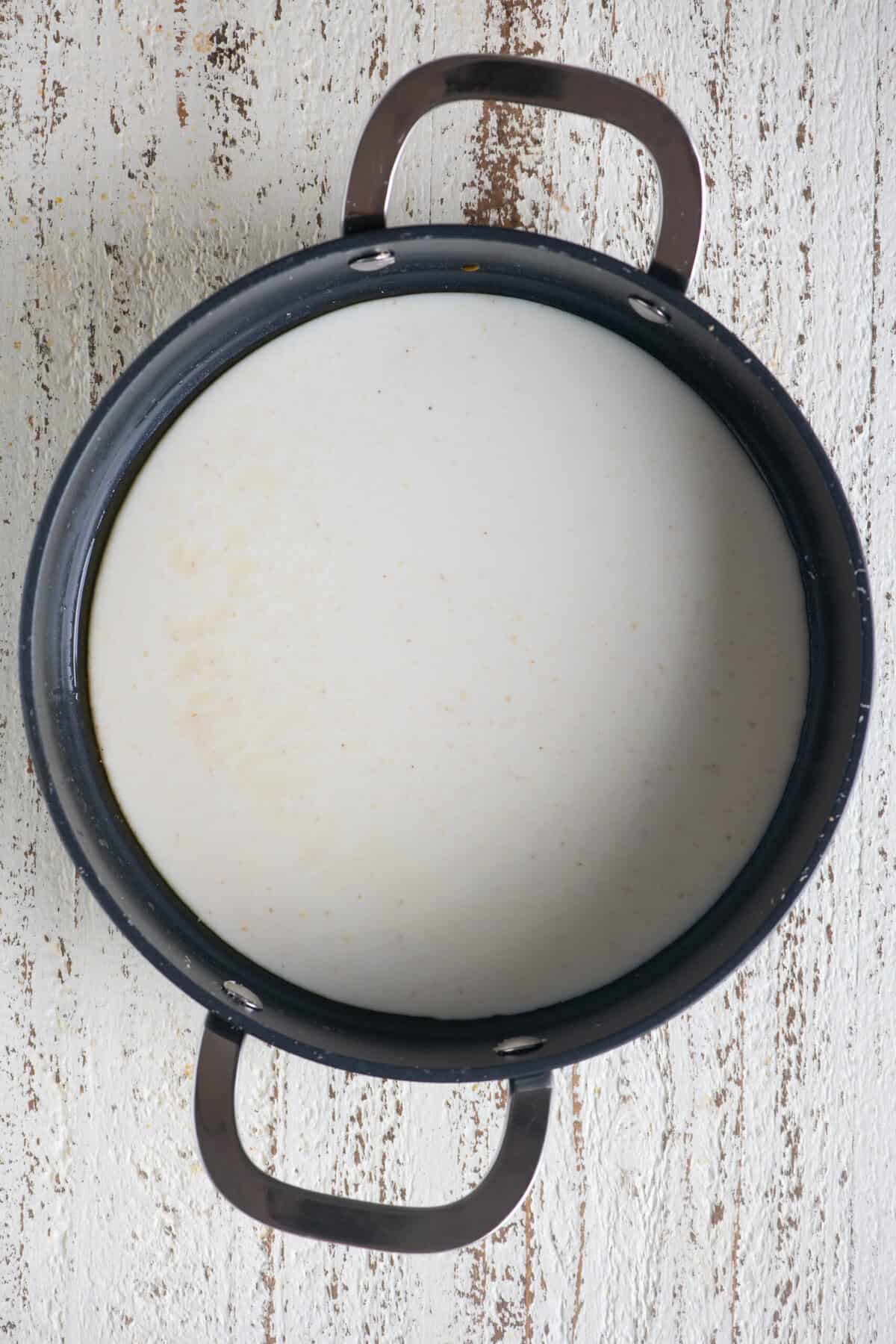
- Step 2: Cook the rava mixture. Heat a teaspoon of ghee in a pan, then add the soaked rava-milk mixture. Sauté on low flame for about 5 minutes, stirring continuously so it cooks evenly and the milk evaporates.
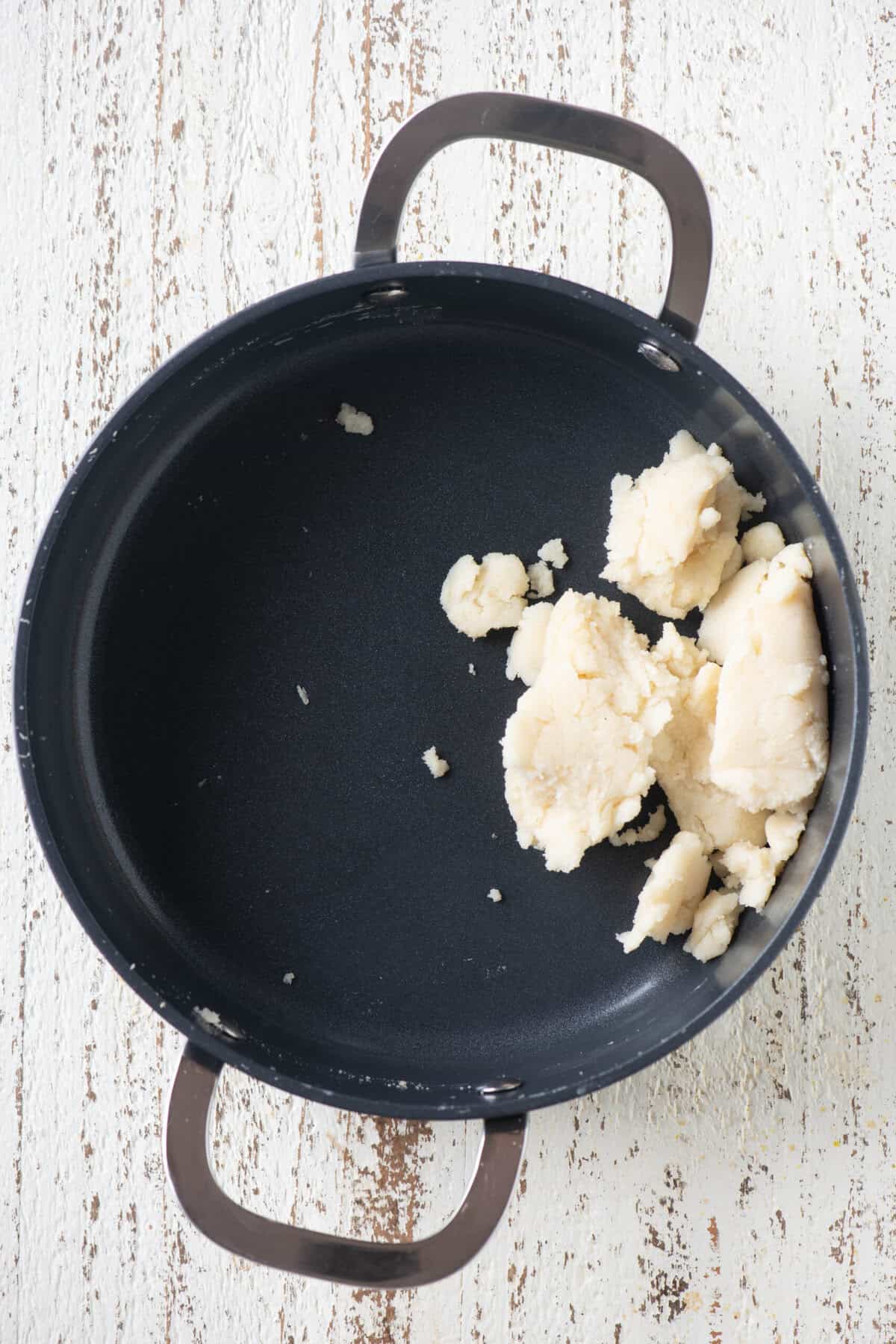
- Step 3: Check the texture. After about 5 minutes, the mixture will come together like khoya and stop sticking to the pan.
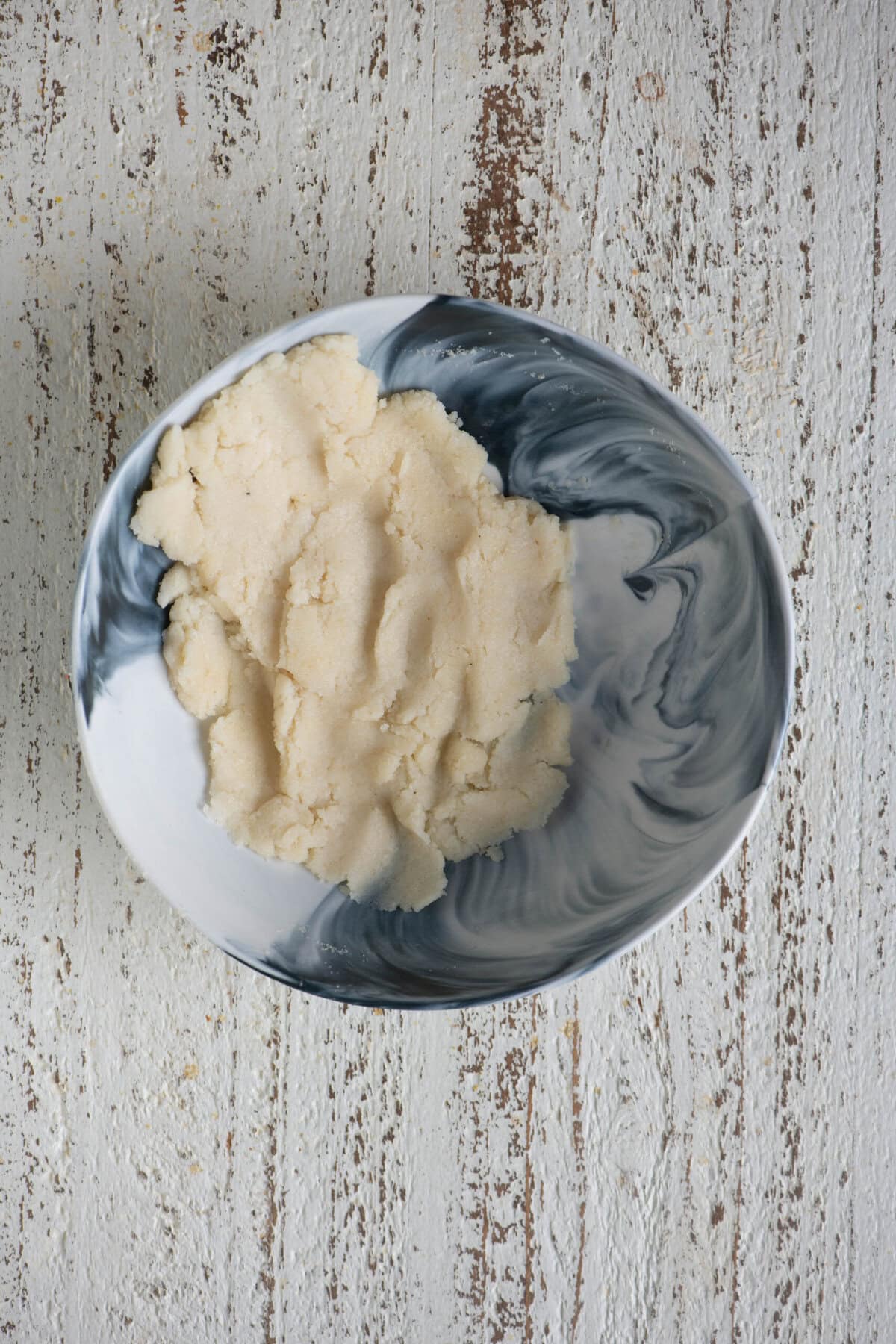
- Step 4: Transfer this rava-khoya mixture to a bowl and set aside until needed.
To Fry The Nuts
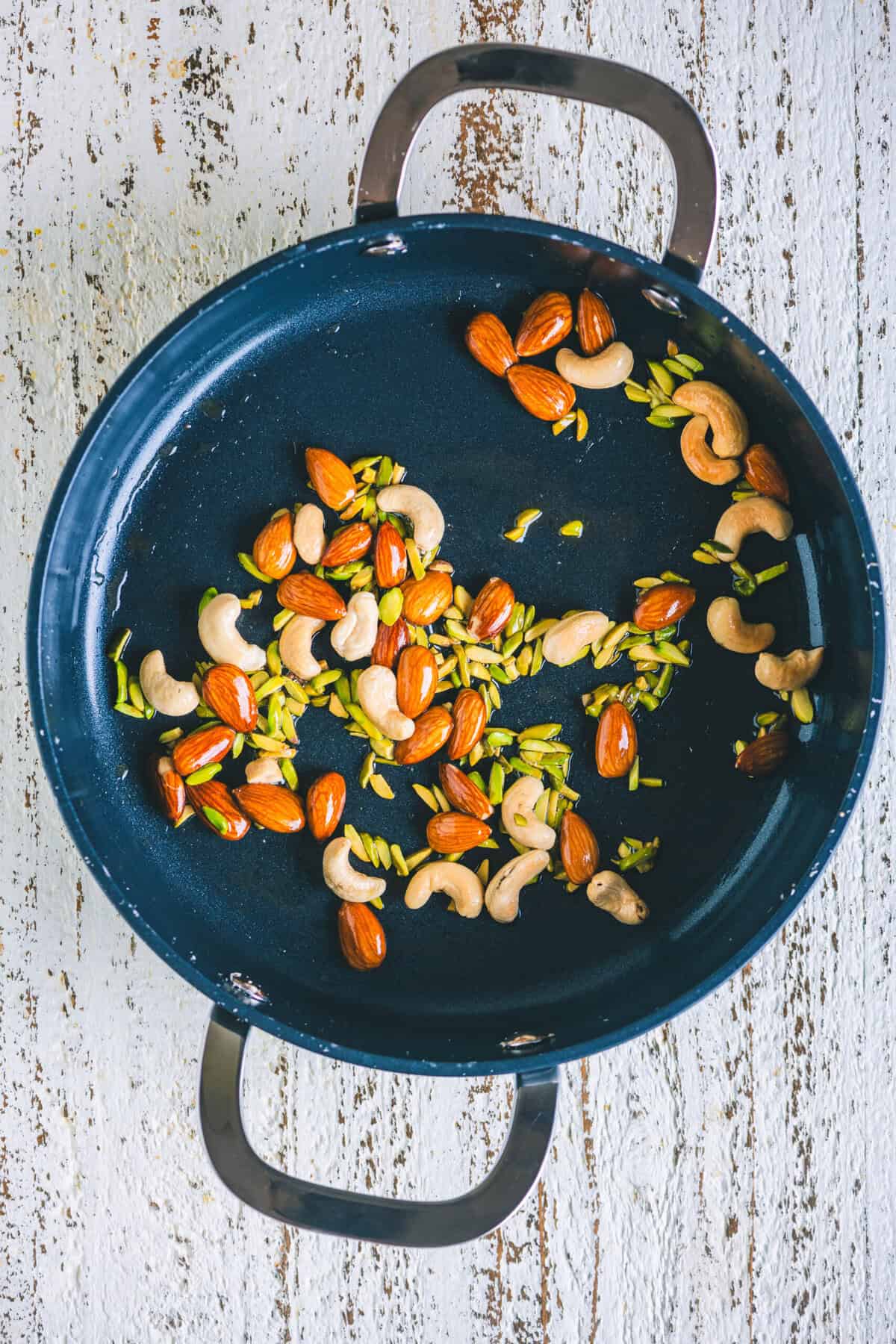
- Step 1: Toast the nuts. Heat ghee in the same pan. Once melted, add the cashews and almonds and fry for 2 minutes. Add the pistachios and fry for another 30 seconds. Transfer the nuts to a plate and let them cool completely.
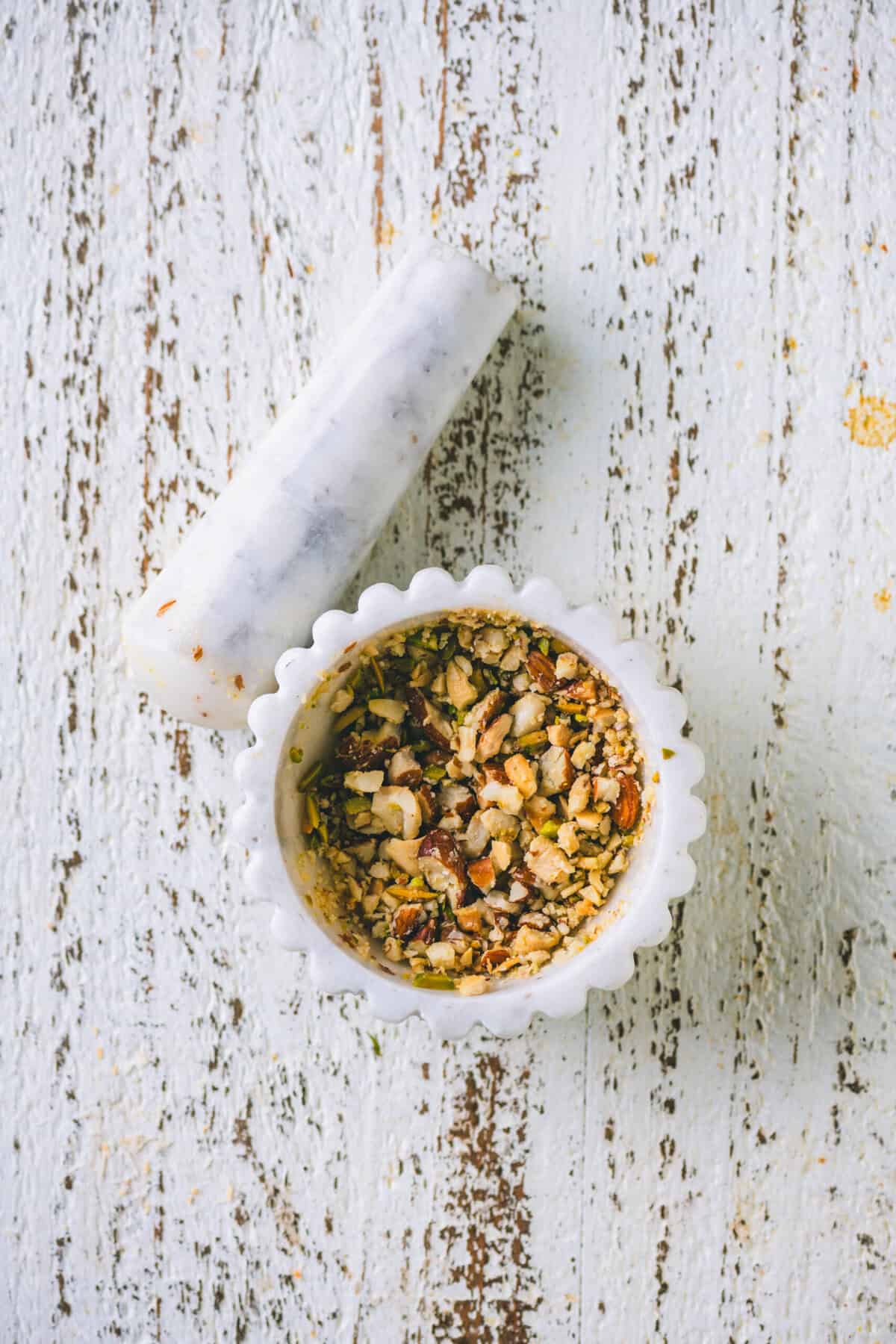
- Step 2: Crush the nuts. Once cooled, coarsely crush the nuts using a mortar and pestle. You can also use a nut chopper instead. Set aside for later.
To Roast The Coconut
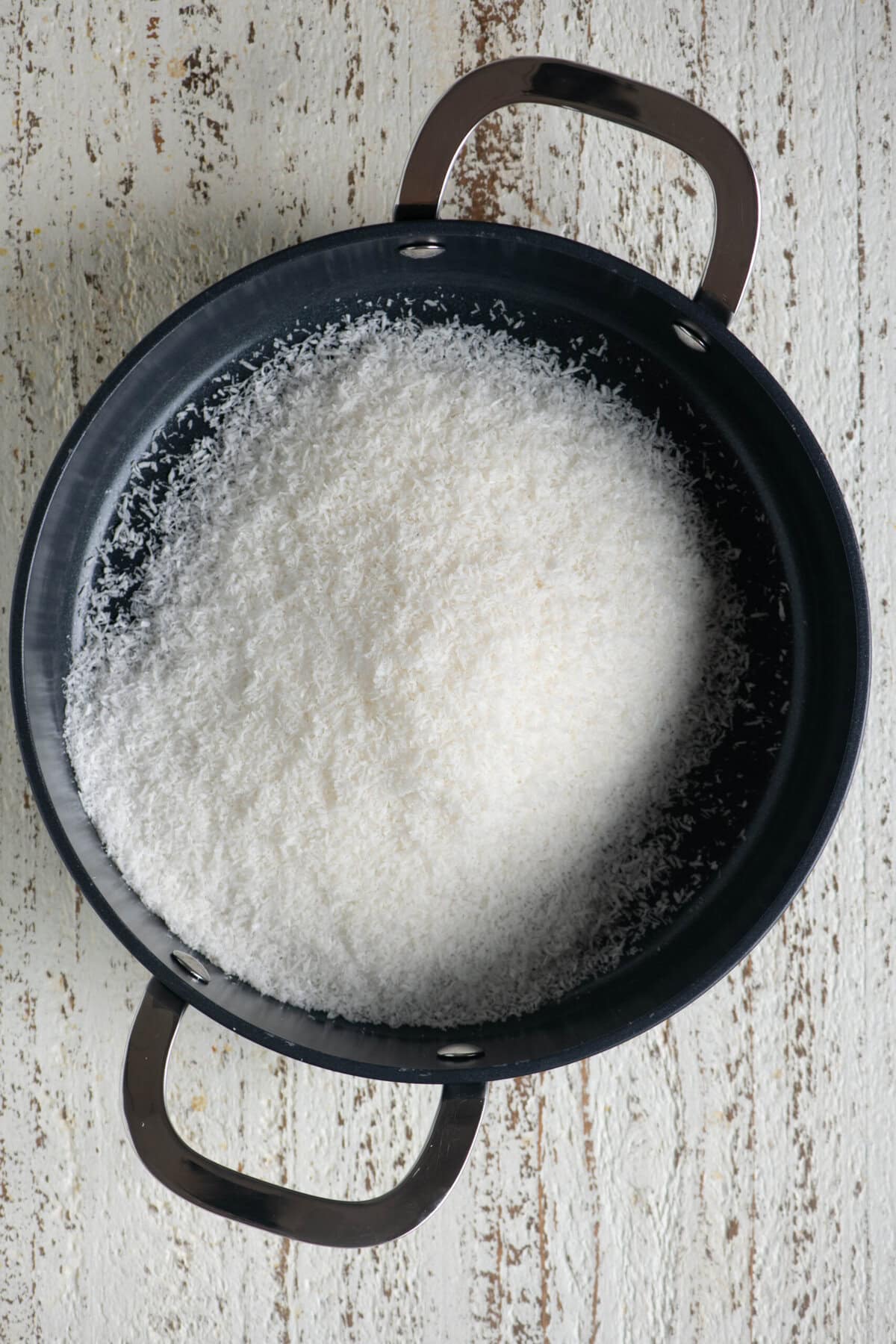
- Step 1: Dry roast the coconut. Add the desiccated coconut to a pan and keep the flame on low-medium. Dry roast, stirring frequently to prevent burning, until it turns light golden and crisp - this should take about 6-8 minutes.
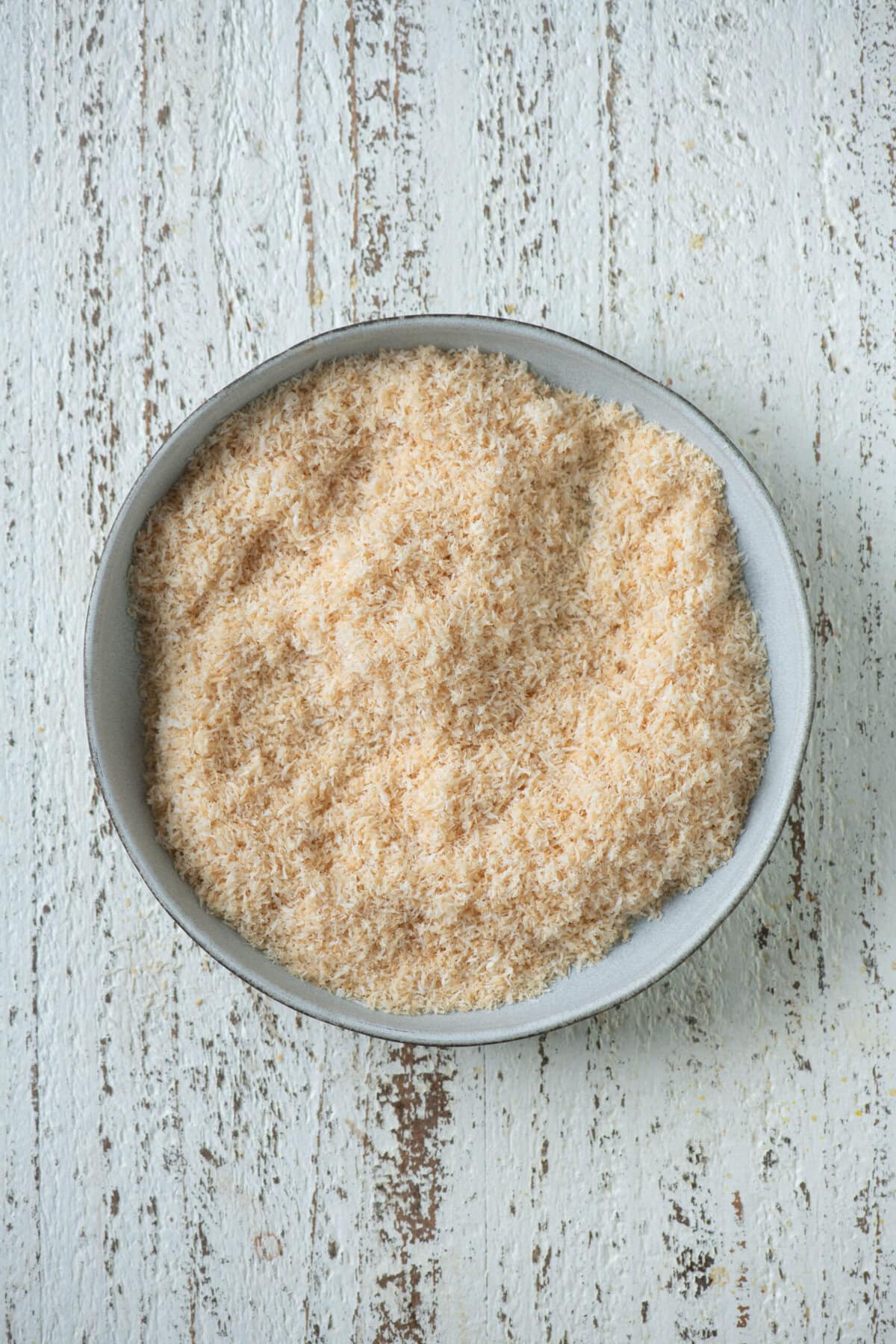
- Step 2: Finish roasting off the heat. Once golden, turn off the flame. Transfer to a plate.
To Prepare The Caramel Coconut Barfi
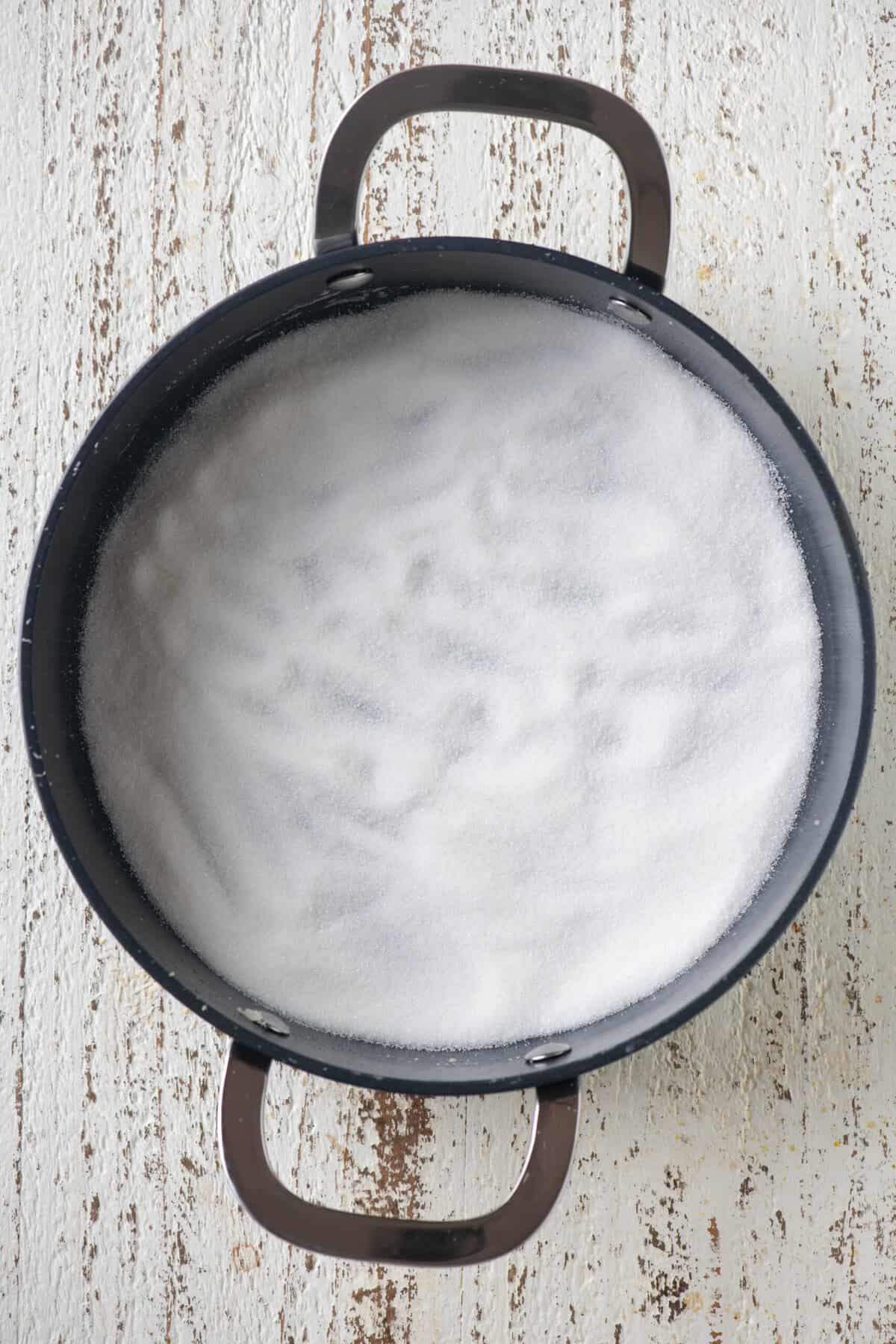
- Step 1: Caramelize the sugar. Spread the sugar in a single layer on the same pan. Keep the flame on low and let it melt slowly - don't mix yet. This can take 12-15 minutes, so be patient.
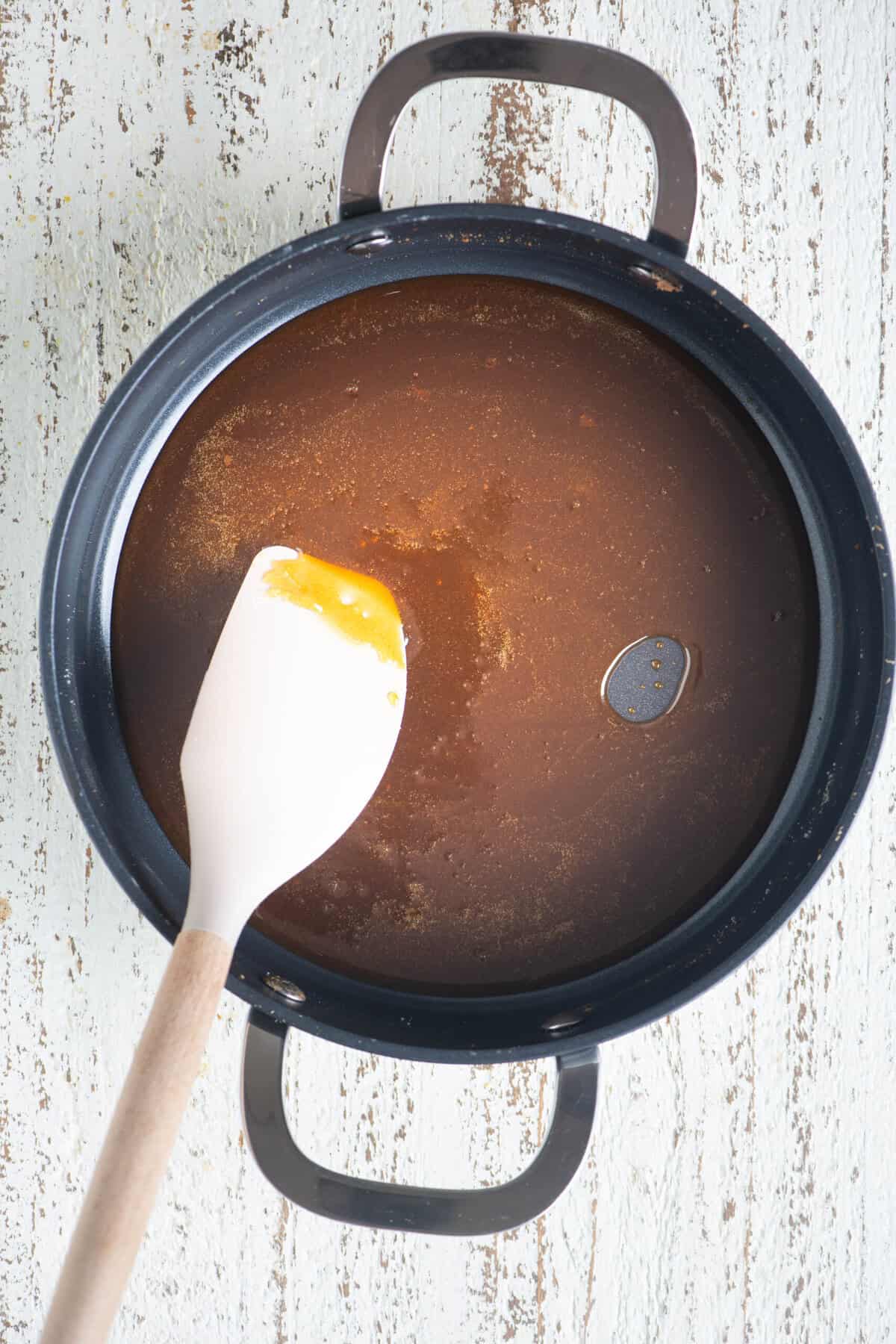
- Step 2: Cook the caramel. Once melted, the sugar will turn dark like caramel. Give it a mix if there are any unmelted pockets of sugar left, then cook for another 2-3 minutes. Priya's tip - Don't let it get too dark or the caramel will turn bitter - you don't need to reach a one-string consistency.
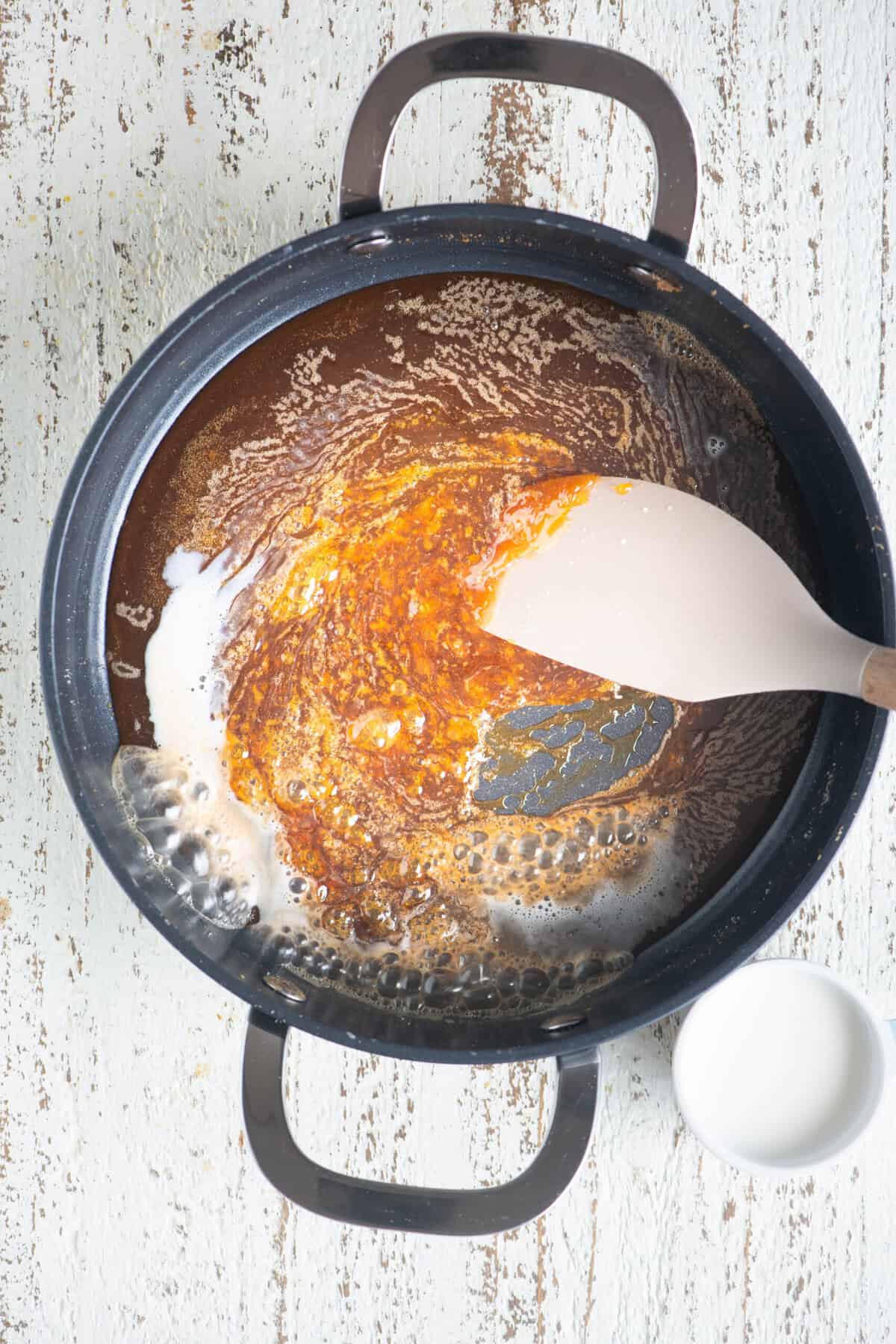
- Step 3: Add the milk. Gradually pour in the remaining milk in batches, mixing the caramel and milk swiftly as you go. Priya's tip - Remember to keep the flame on low-medium.
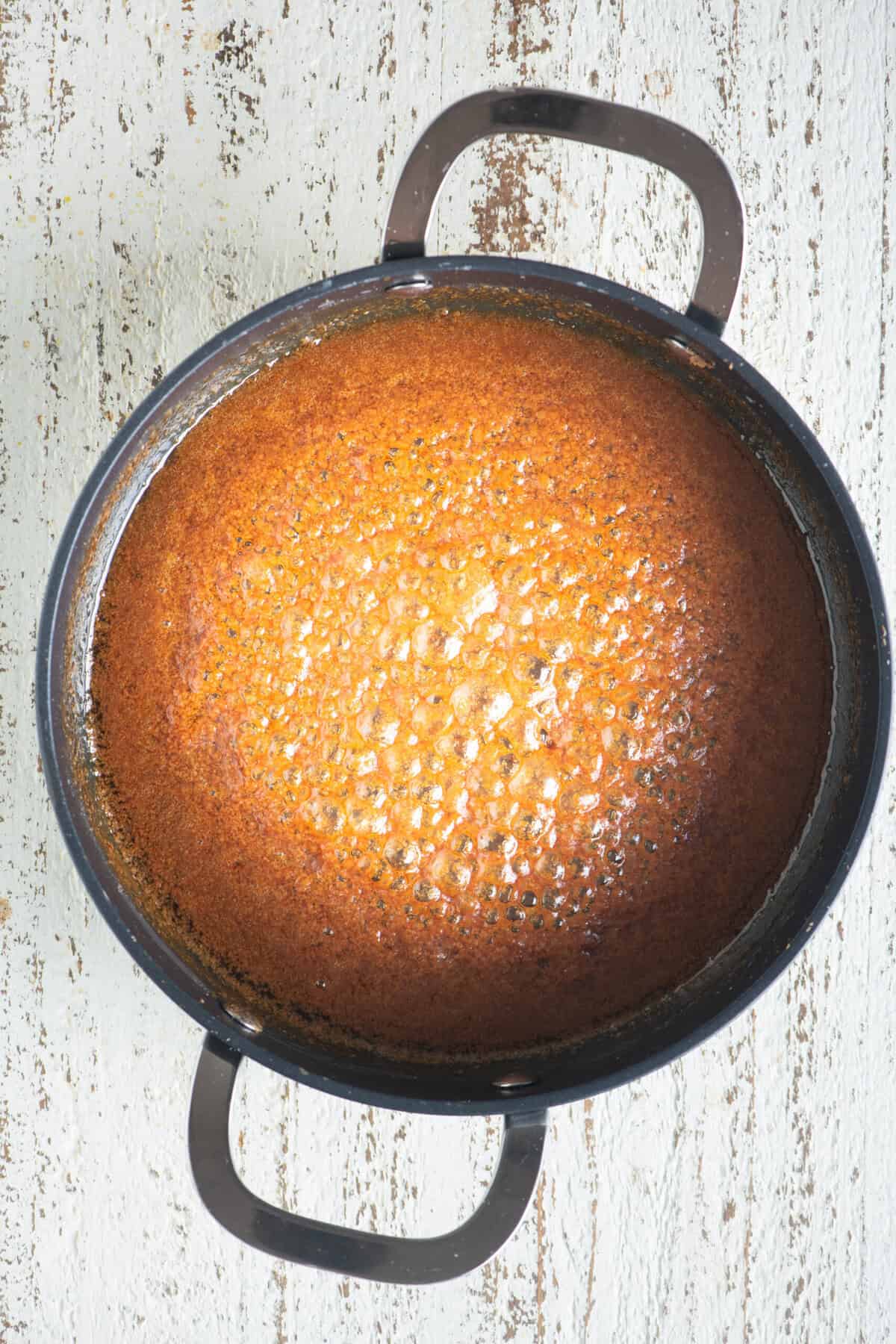
- Step 4: Mix until smooth. Keep stirring until all the milk is incorporated and there are no lumps in the mixture.
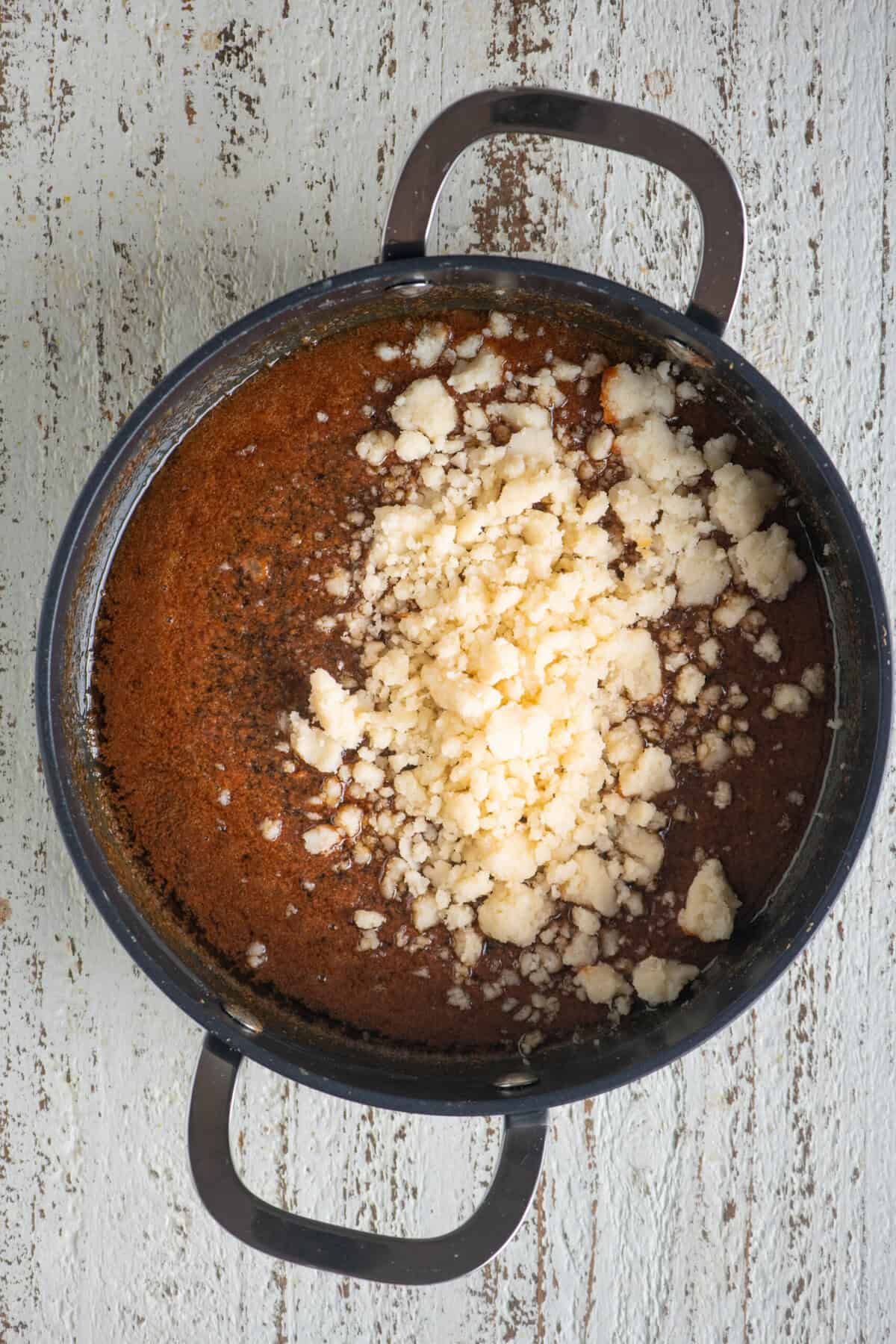
- Step 5: Add the rava mixture. Add the cooked rava mixture, pressing it into the caramel-milk base. Cook for 2-3 minutes.
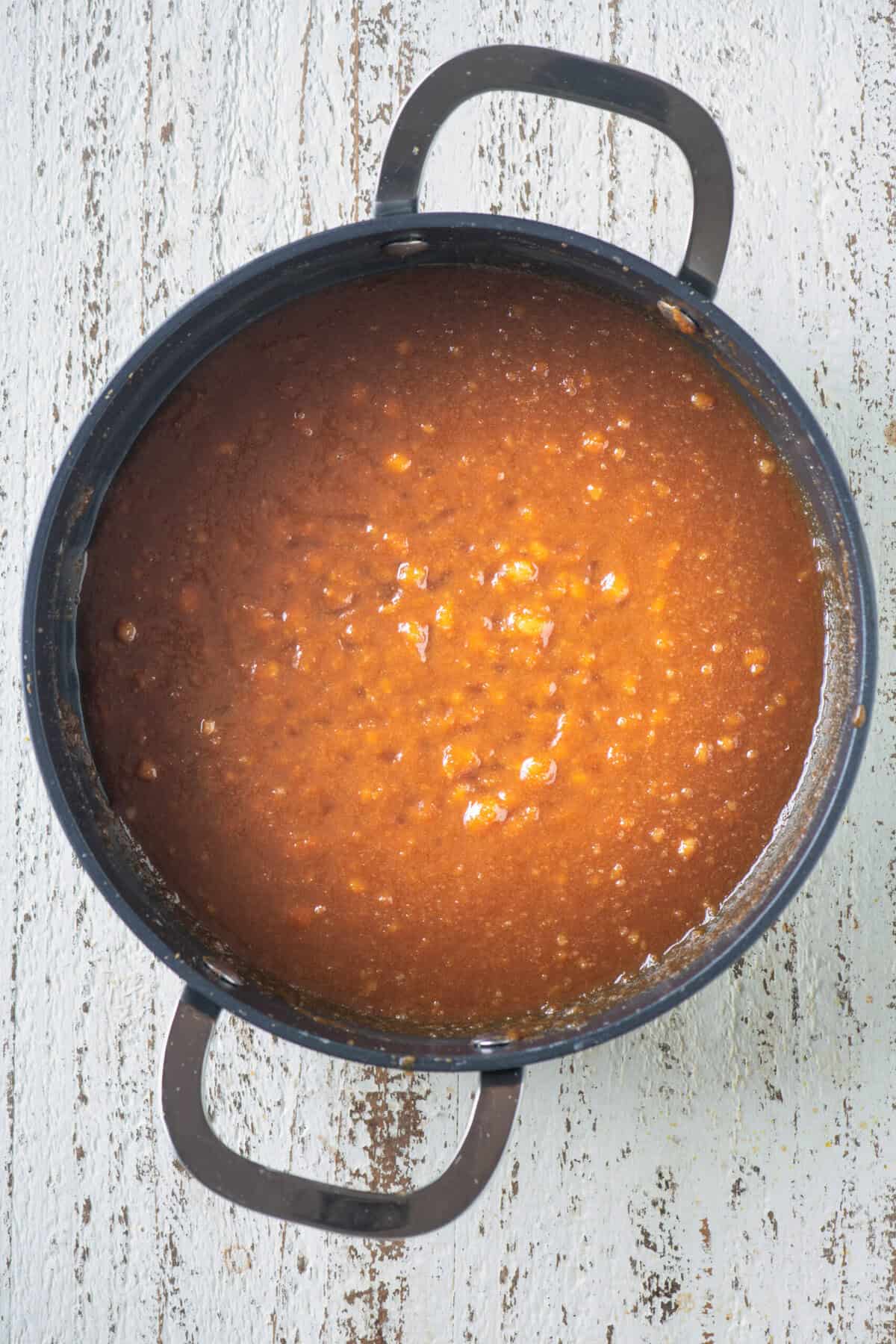
- Step 6: Blend it in. The rava mixture should break down completely and blend smoothly with the caramel. Priya's tip - Use the back of your spoon to mash the rava mixture if needed.
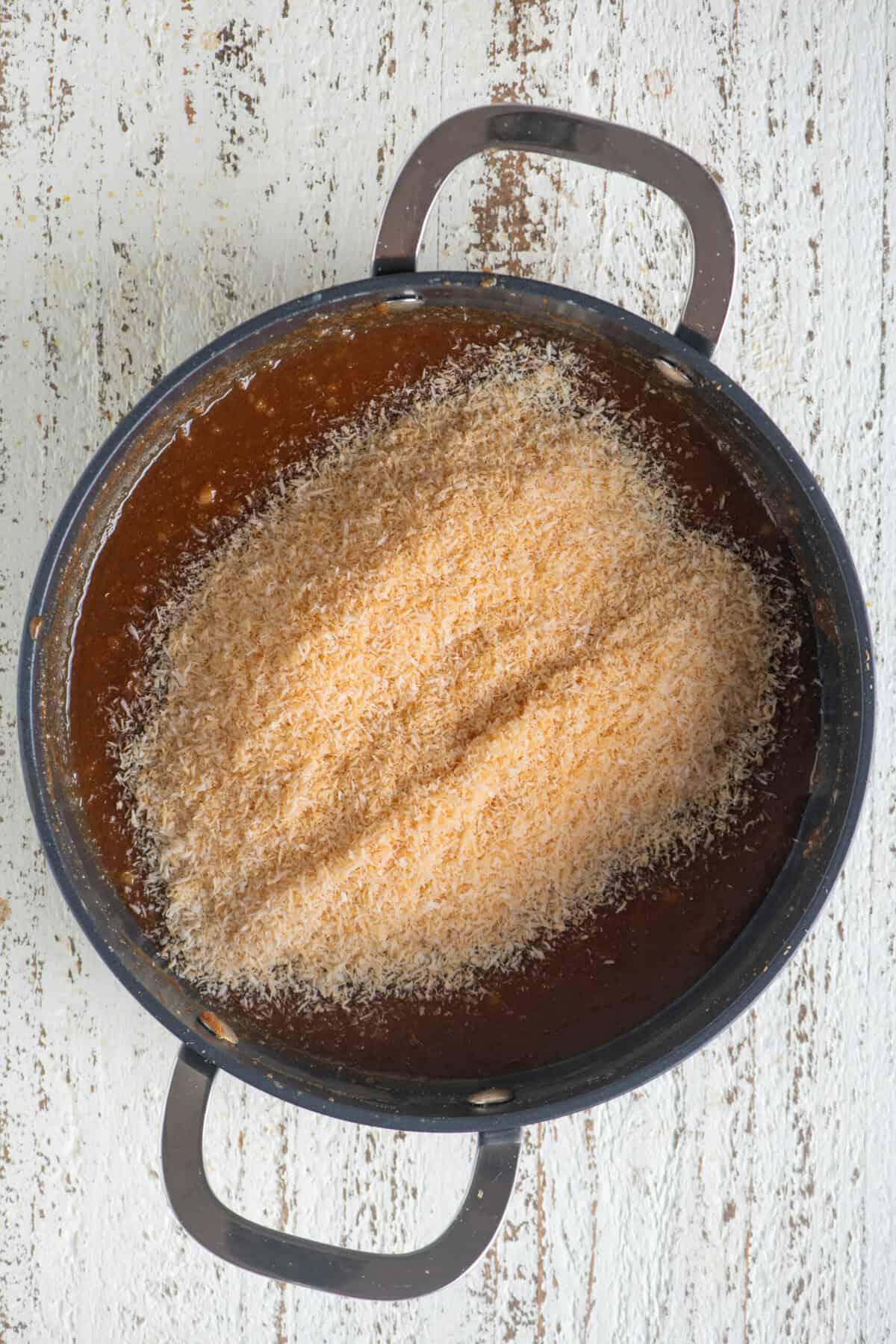
- Step 7: Add the coconut. Add the roasted desiccated coconut to the pan. Mix and continue cooking until the mixture comes together like a soft dough. Priya's tip - The barfi mixture should not stick to the bottom of the pan and should resemble a soft dough.
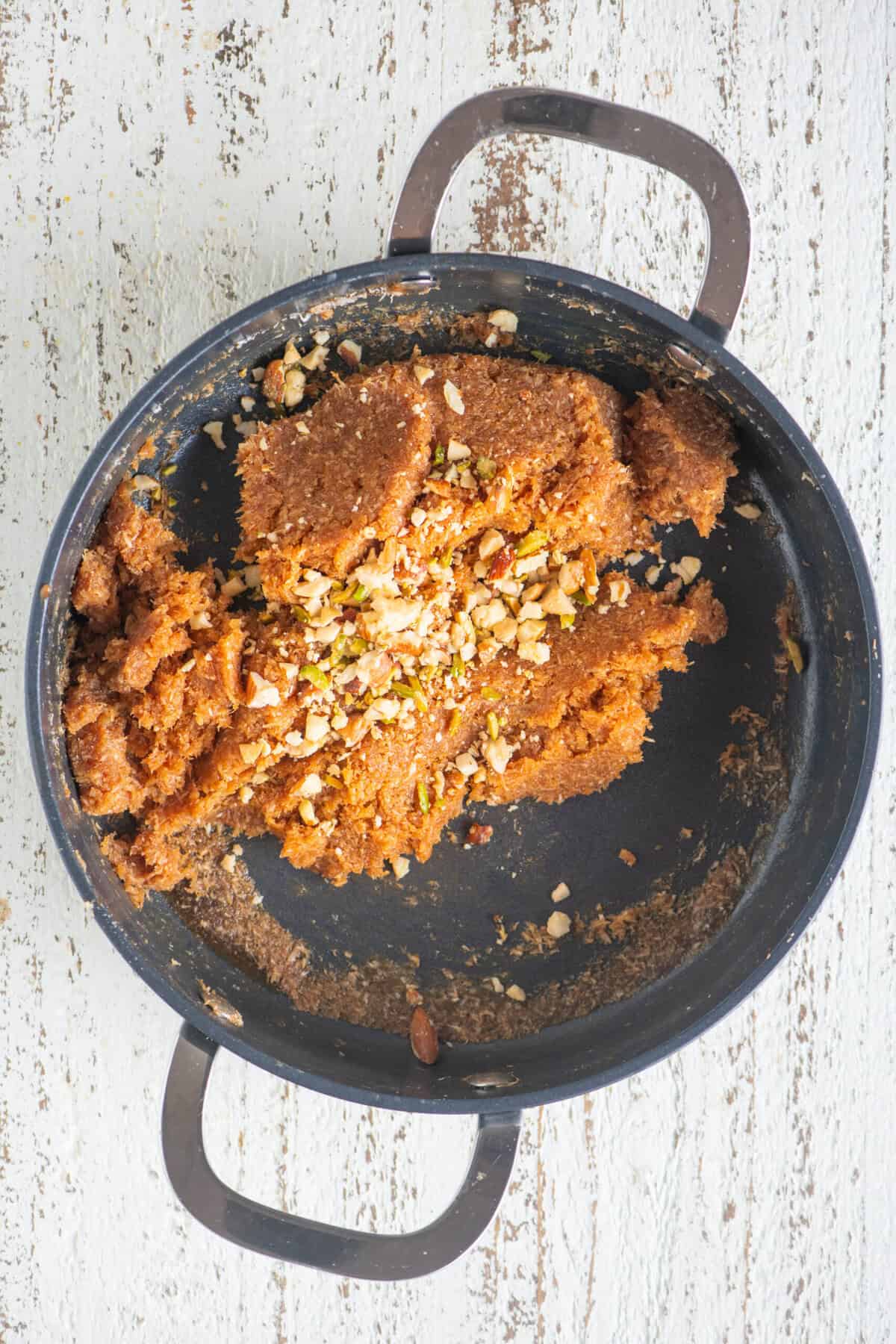
- Step 8: Season and add nuts. Add the cardamom powder and half of the crushed nuts, reserving the rest for garnish. Priya's tip - Add an extra teaspoon of ghee here if needed.
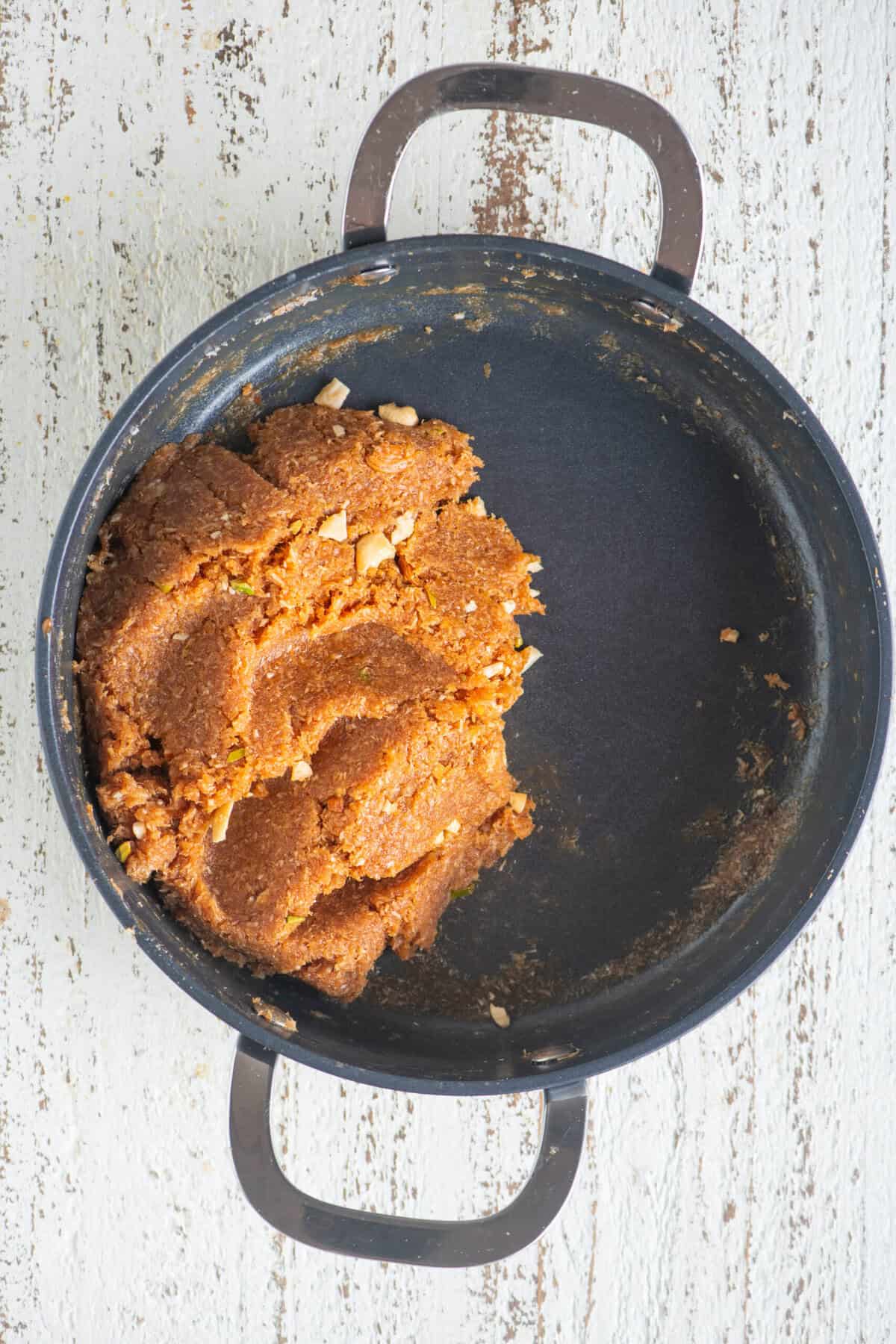
- Step 9: Swiftly mix everything together.
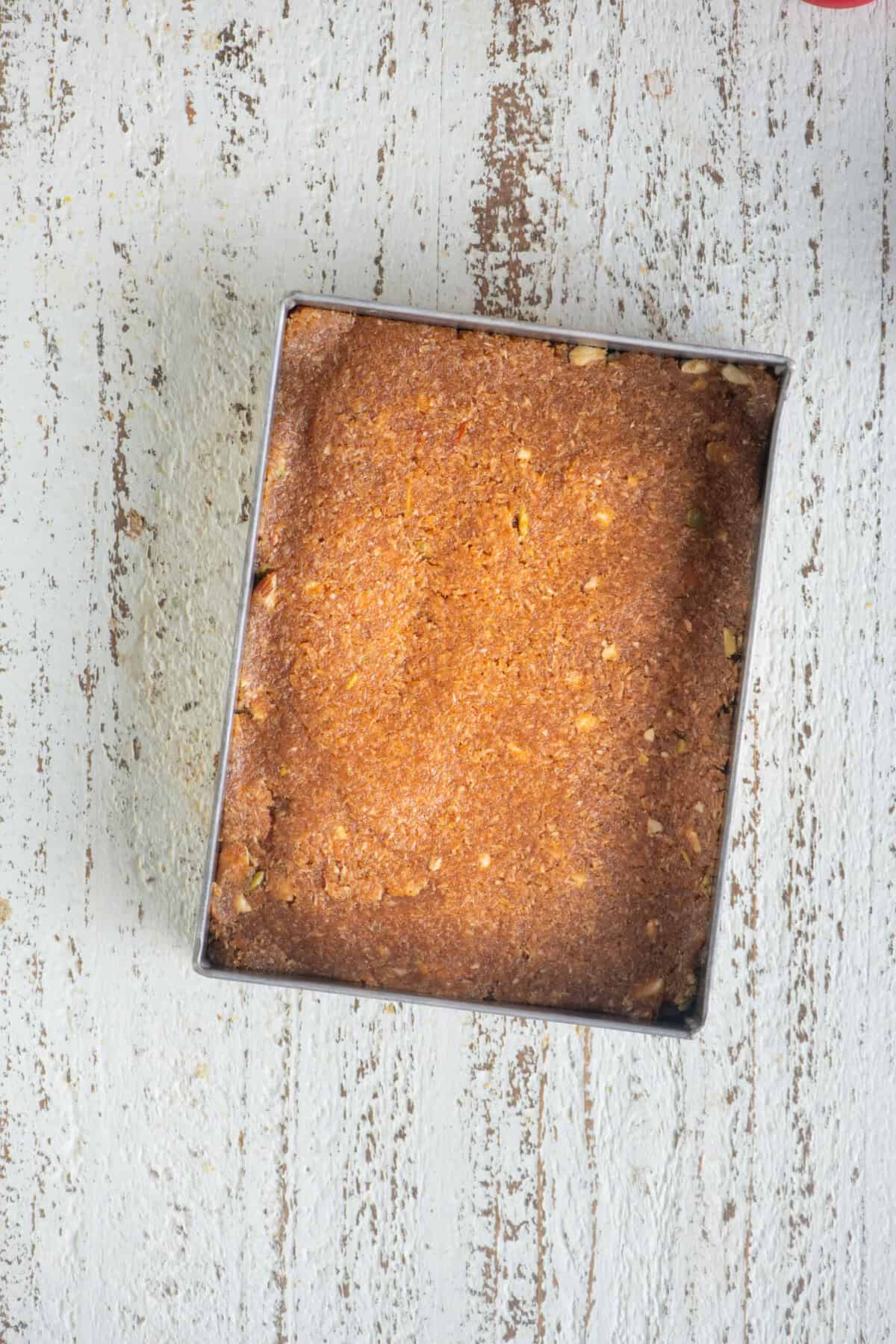
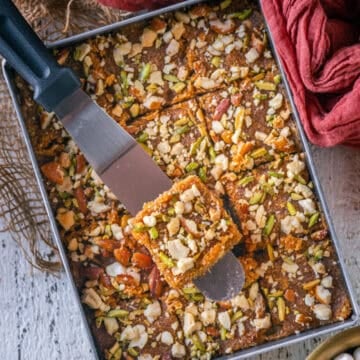
- Step 10: Set the barfi. Transfer the mixture to a greased tray and flatten it out evenly.
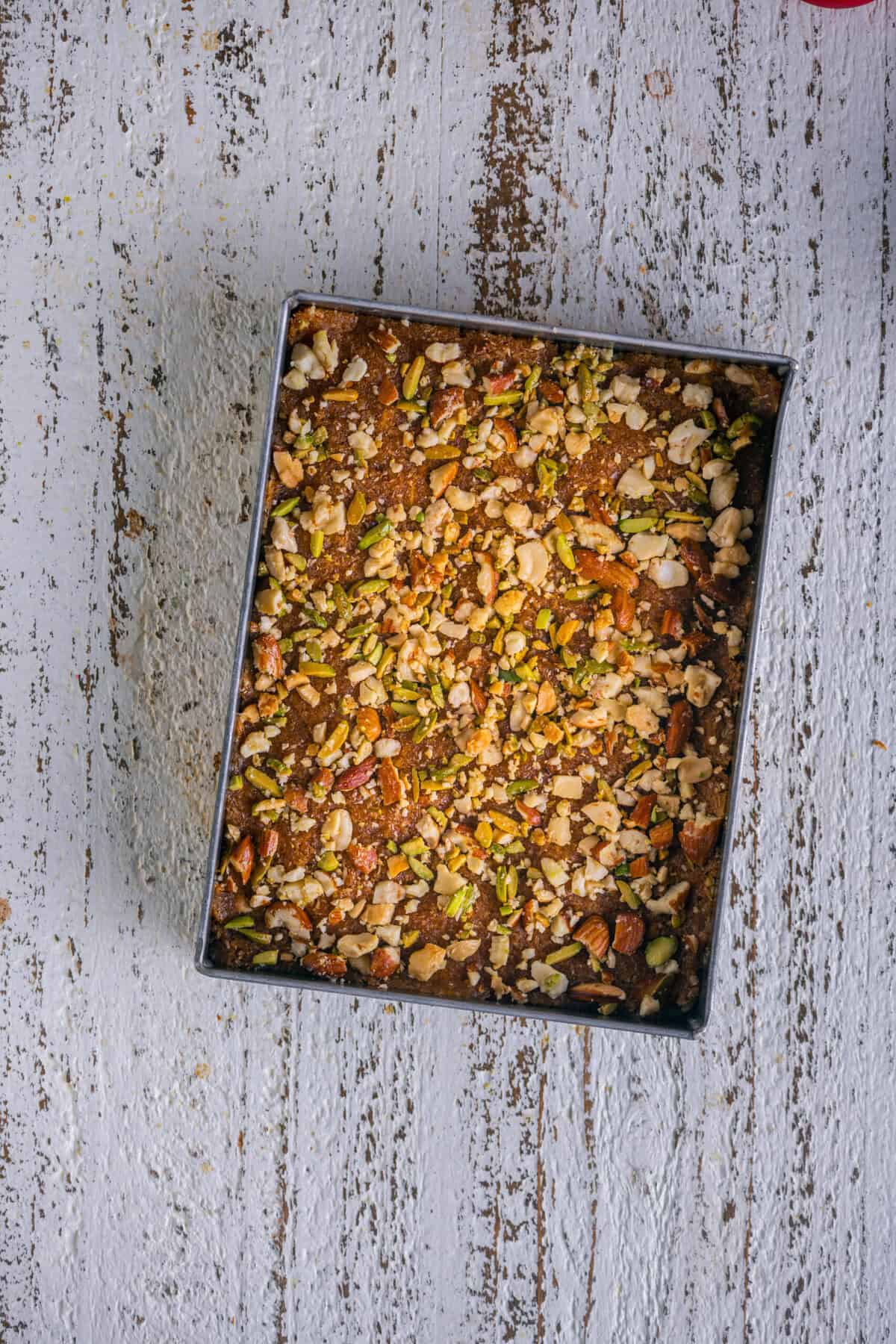
- Step 11: Garnish and press. Sprinkle the remaining fried, chopped nuts over the top and press them gently into the barfi.
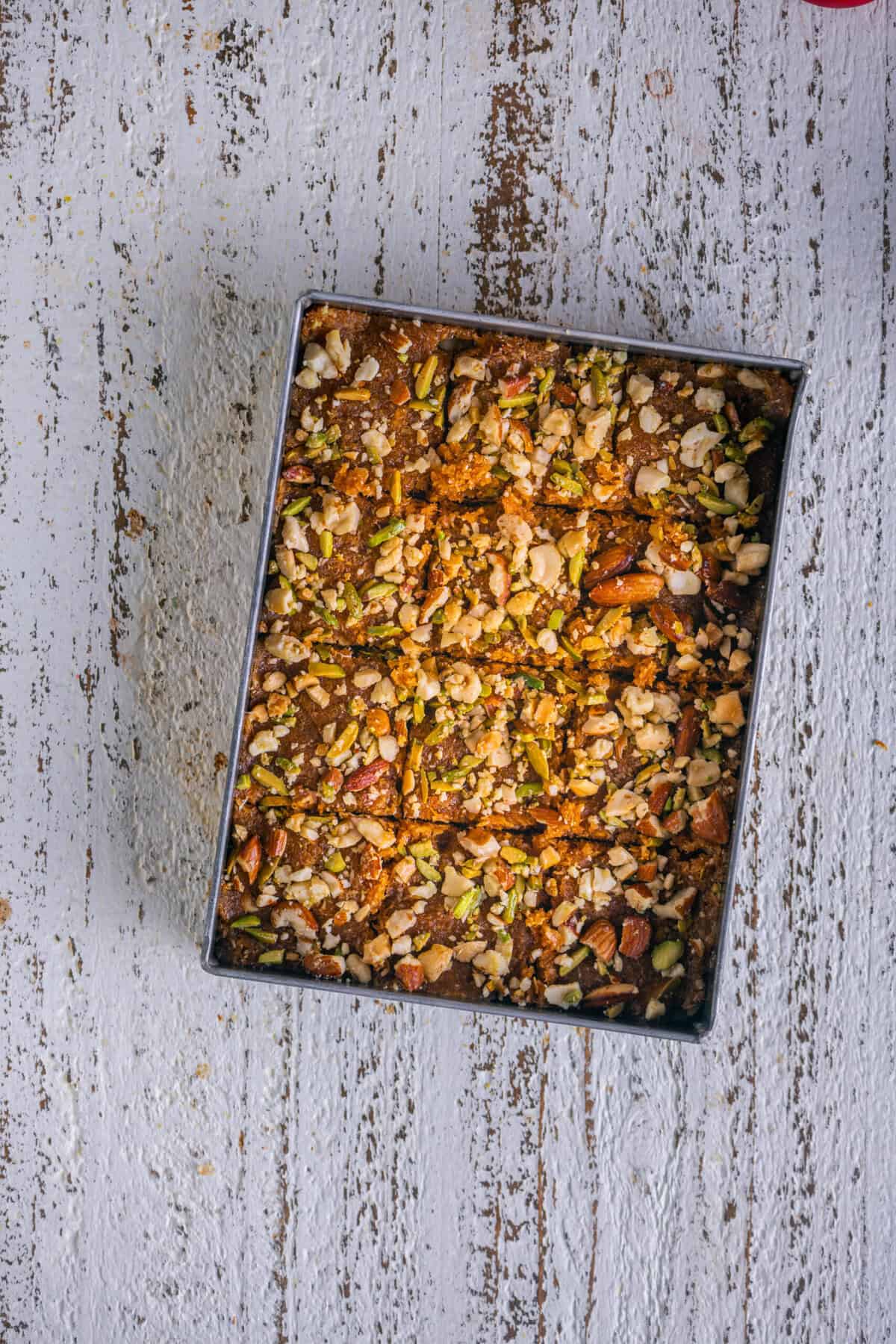
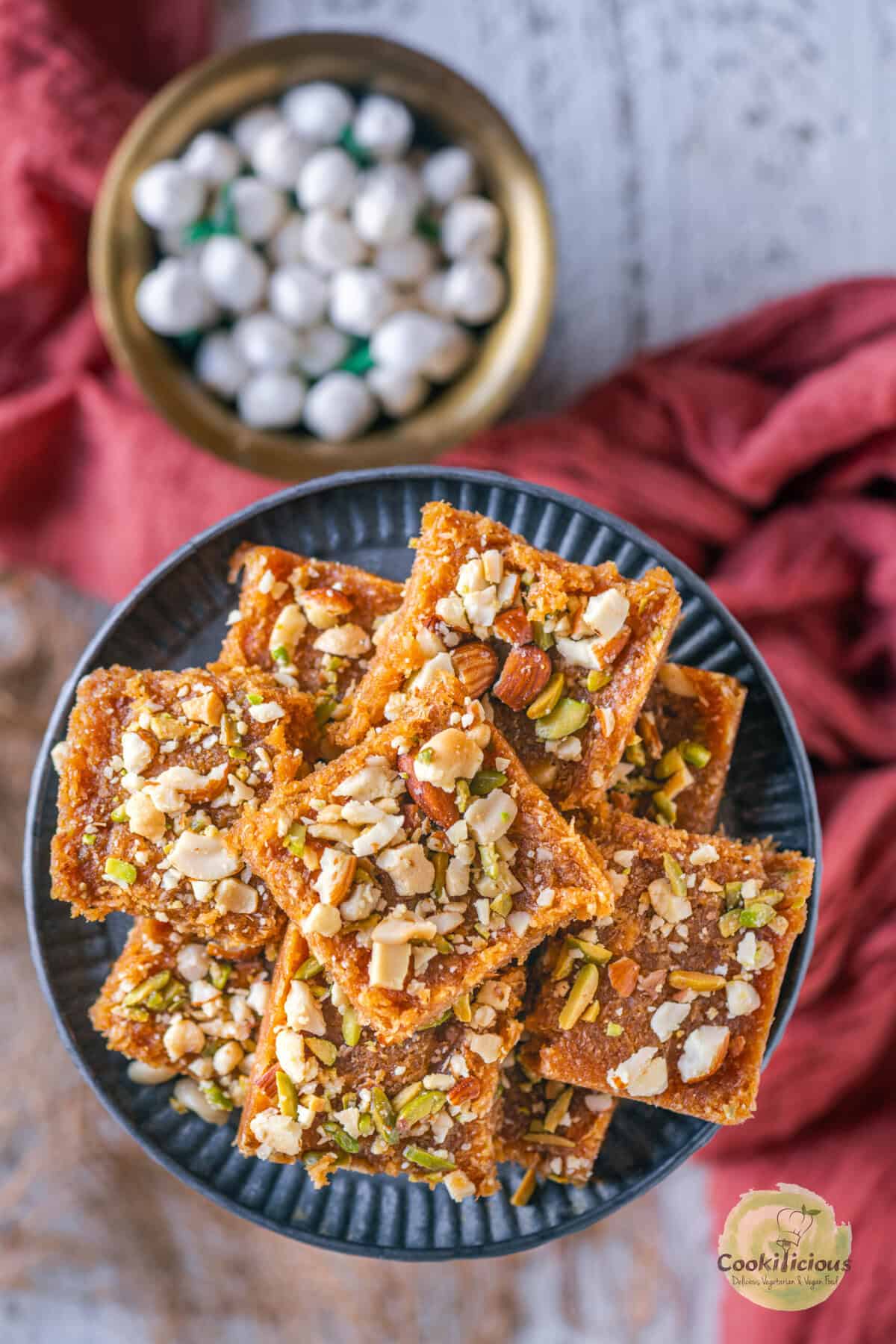
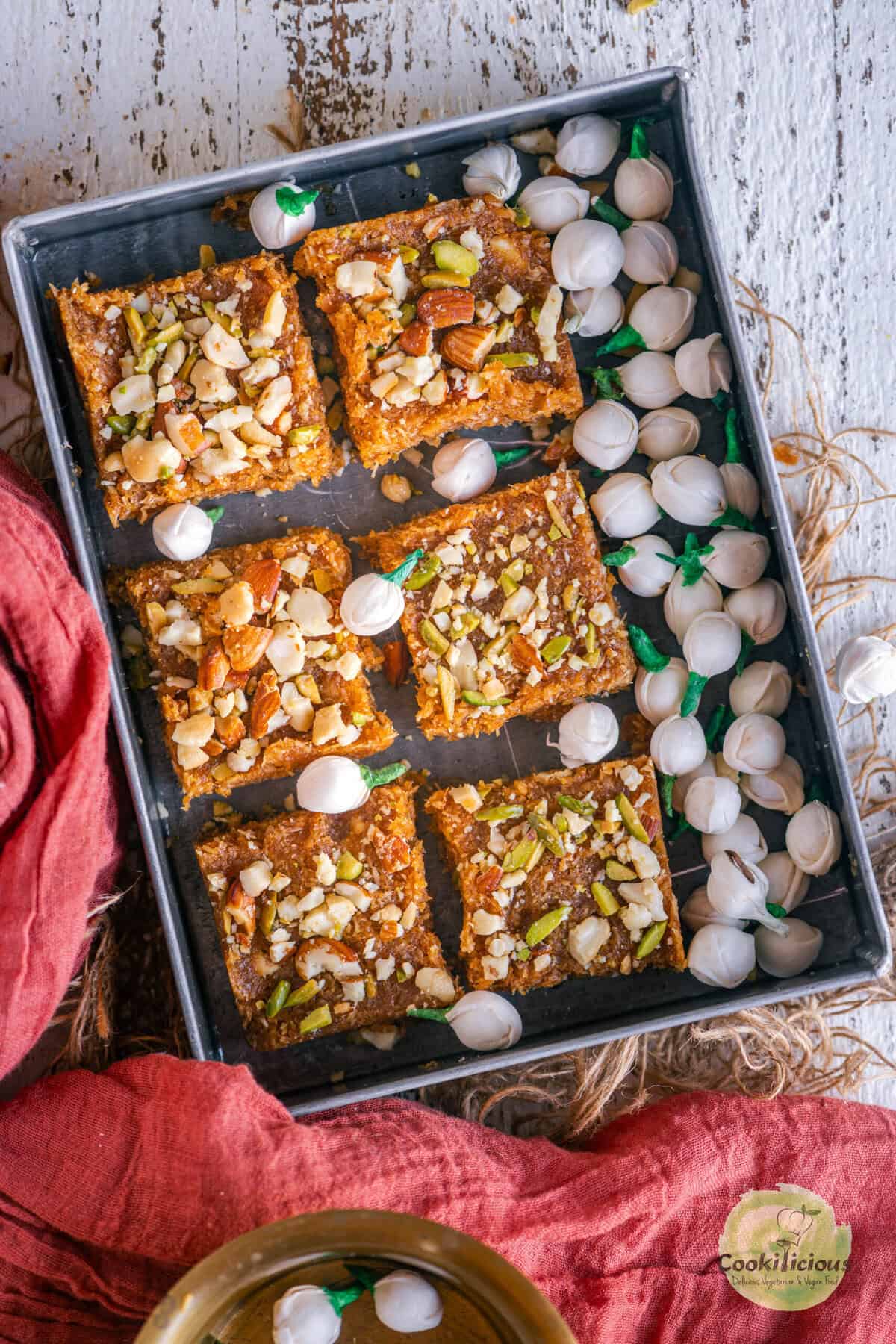
- Step 12: Cool and cut. Cut into squares and let it cool completely. Priya's tip: if you're in a rush, pop the tray in the fridge for 10 minutes to speed up the cooling.
Want to save this recipe?
🍽 Serving Suggestions
For an extra festive touch, top the coconut barfi with edible silver vark, just like a classic kaju katli. It instantly makes this dessert feel special enough for any mithai box. Transfer the coconut barfi pieces to a platter and serve.
These thenga barfis hold up well and can easily be packed and gifted during the holidays - a homemade coconut barfi always makes for a thoughtful, personal gift. Serve them for festive occasions like Diwali, Navratri, Ganesh Chaturthi, Janmashtami, or Holi, or bring them along to Thanksgiving potlucks, parties, or Christmas gatherings - everyone loves a good coconut-flavored dessert, no matter the occasion!
This caramel coconut burfi also pairs beautifully with a warm cup of masala chai or filter coffee, and would be right at home on your Indian Dessert Charcuterie Board.
💭 Priya's Recipe Tips
- Use fine rava. If you only have coarse rava on hand, blitz it in a blender for a few seconds until fine before using - this ensures it blends smoothly into the caramel-milk base instead of leaving a gritty texture.
- Go easy on the ghee. This coconut fudge recipe needs very little ghee to come together, but feel free to add a touch more if you like a richer, more indulgent barfi.
- Don't rush the caramel. Let the sugar melt slowly on low flame without stirring too early - rushing this step is the most common reason caramel turns bitter or grainy. Watch the caramel color closely. Aim for a deep amber, not a dark brown - once it crosses into dark territory, the bitterness is hard to fix.
- Keep stirring once the milk goes in. Add the milk gradually and mix swiftly to avoid lumps forming in the caramel base.
- Cook until it pulls away from the pan. The barfi mixture is ready to set only once it comes together like a soft dough and stops sticking to the sides - under-cooking here is what usually causes barfi to not set properly.
- Press the nut garnish in firmly. Garnish with the nuts and press them in immediately while the barfi is still hot - this helps them stick properly once it's cut, instead of falling off when serving.
📖 Coconut Barfi FAQs
Yes, freshly grated coconut works beautifully too - it's actually what my mom always used for her thenga barfi. Just be sure to lightly roast it first to remove excess moisture before adding it to the caramel mixture, or your barfi may turn out softer and won't hold its shape as well.
Skip the caramel process entirely - even roasting the coconut beforehand becomes optional at that point. Fry the nuts and set them aside. Then prepare the rava-khoya mixture as usual, and add the coconut and sugar directly to it. Mix and cook until everything comes together like a soft dough. Fold in the fried nuts, then transfer the mixture to a tray to set. You can also use freshly grated coconut for this version instead of desiccated.
If your coconut barfi turns out too soft or won't hold its shape, it likely needs a little more cooking time - the mixture should come together like a soft dough and pull cleanly away from the sides of the pan before you transfer it to the tray. If it's already set and cooling, popping it in the fridge for 10-15 minutes (like the tip mentioned earlier) can also help firm it up.
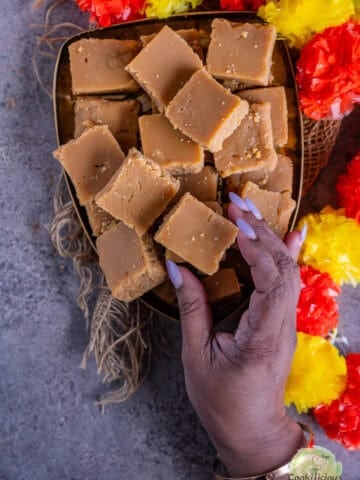
Yes, absolutely - feel free to shape it however you like. I've cut mine into squares, similar to Mysore Pak or Caramel Kalakand. But you could just as easily roll the mixture into lemon-sized balls like Coconut Rose Ladoos, flatten and shape them into pedas, or press them into modak molds to make caramel coconut modaks, similar to my Chocolate Mawa Modaks. You can also use any decorative mold you have on hand - get creative with it!
Swap the regular milk for coconut milk, almond milk or cashew milk, and use a homemade dairy-free ghee in place of regular ghee. Every other ingredient in this recipe is naturally vegan. Do note: semolina (rava) is not gluten-free, so this recipe is not suitable for a gluten-free diet even in its vegan form.
Store your coconut barfi in an airtight container at room temperature for up to 2-3 days, or refrigerate it for up to a week for maximum freshness. Since this version uses rava and milk instead of khoya or condensed milk, keeping it refrigerated is the safer option in warm or humid weather.
You can also freeze it - place the cooled, cut pieces in an airtight, freezer-safe container (with parchment between layers) and freeze for up to 2-3 months. Thaw in the refrigerator overnight before serving.
More Delicious Recipes With Coconuts
Recipe 📖
Caramel Coconut Barfi (Nariyal Barfi)
Equipment
Ingredients
- ¾ cup Milk
- ¼ cup Fine rava
- 1.5 cups Desiccated coconut
- 3 teaspoon Ghee add more if required
- ¼ cup Mixed nuts
- ½ cup Sugar
- ½ teaspoon Cardamon powder
Instructions
To Prepare The Rava Khoya Mixture
- In a small mixing bowl, add ½ cup milk and the rava. Mix well and set aside for 10 minutes.
- Heat a teaspoon of ghee in a pan, then add the soaked rava-milk mixture. Sauté on low flame for about 5 minutes, stirring continuously so it cooks evenly and the milk evaporates.
- After about 5 minutes, the mixture will come together like khoya and stop sticking to the pan.
- Transfer this rava-khoya mixture to a bowl and set aside until needed.
To Fry The Nuts
- Heat a teaspoon of ghee in the same pan. Once melted, add the cashews and almonds and fry for 2 minutes. Add the pistachios and fry for another 30 seconds. Transfer the nuts to a plate and let them cool completely.
- Once cooled, coarsely crush the nuts using a mortar and pestle. You can also use a nut chopper instead. Set aside for later.
To Roast The Coconut
- Add the desiccated coconut to a pan and keep the flame on low-medium. Dry roast, stirring frequently to prevent burning, until it turns light golden and crisp - this should take about 6-8 minutes.
- Once golden, turn off the flame. Transfer to a plate.
To Make The Caramel Coconut Barfi
- Spread the sugar in a single layer on the same pan. Keep the flame on low and let it melt slowly - don't mix yet. This can take 12-15 minutes, so be patient.
- Once melted, the sugar will turn dark like caramel. Give it a mix if there are any unmelted pockets of sugar left, then cook for another 2-3 minutes. Priya's tip - Don't let it get too dark or the caramel will turn bitter - you don't need to reach a one-string consistency.
- Gradually pour in the remaining milk in batches, mixing the caramel and milk swiftly as you go. Priya's tip - Remember to keep the flame on low-medium.
- Keep stirring until all the milk is incorporated and there are no lumps in the mixture.
- Add the cooked rava mixture, pressing it into the caramel-milk base. Cook for 2-3 minutes.
- The rava mixture should break down completely and blend smoothly with the caramel. Priya's tip - Use the back of your spoon to mash the rava mixture if needed.
- Add the roasted desiccated coconut to the pan. Mix and continue cooking until the mixture comes together like a soft dough. Priya's tip - The barfi mixture should not stick to the bottom of the pan and should resemble a soft dough.
- Add the cardamom powder and half of the crushed nuts, reserving the rest for garnish. Priya's tip - Add an extra teaspoon of ghee here if needed.
- Swiftly mix everything together.
- Transfer the mixture to a greased tray and flatten it out evenly.
- Sprinkle the remaining fried, chopped nuts over the top and press them gently into the barfi.
- Cut into squares and let it cool completely. Priya's tip: if you're in a rush, pop the tray in the fridge for 10 minutes to speed up the cooling. Transfer the coconut barfi pieces to a platter and serve.
Notes
- Use fine rava. If you only have coarse rava on hand, blitz it in a blender for a few seconds until fine before using - this ensures it blends smoothly into the caramel-milk base instead of leaving a gritty texture.
- Go easy on the ghee. This recipe needs very little ghee to come together, but feel free to add a touch more if you like a richer, more indulgent barfi.
- Don't rush the caramel. Let the sugar melt slowly on low flame without stirring too early - rushing this step is the most common reason caramel turns bitter or grainy. Watch the caramel color closely. Aim for a deep amber, not a dark brown - once it crosses into dark territory, the bitterness is hard to fix.
- Keep stirring once the milk goes in. Add the milk gradually and mix swiftly to avoid lumps forming in the caramel base.
- Cook until it pulls away from the pan. The barfi mixture is ready to set only once it comes together like a soft dough and stops sticking to the sides - under-cooking here is what usually causes barfi to not set properly.
- Press the nut garnish in firmly. Garnish with the nuts and press them in immediately while the barfi is still hot - this helps them stick properly once it's cut, instead of falling off when serving.
Leave a Reply