



Every South Indian home has its own way of making idli and dosa batter. I've already shared my mother-in-law's dosa batter and idli batter, but this uttapam recipe uses my mother's version. Amma always added a handful of aval (poha) to her batter. She said it made the dosas soft, and that's exactly how I want my uttapams to be.
Having grown up on idlis, dosas and uttapams, I know these recipes by heart, and the ratios are all in my head. For this homemade uttapam batter, I grind rice, urad dal, thin poha and a pinch of methi seeds. The result is a thick, soft, spongy South Indian uttapam with a lightly crisp base.
I love loading mine with colorful vegetables and a sprinkle of curry leaves, green chillies and idli podi. It makes this vegetable masala uttapam hearty and flavorful enough for breakfast, lunch or dinner.
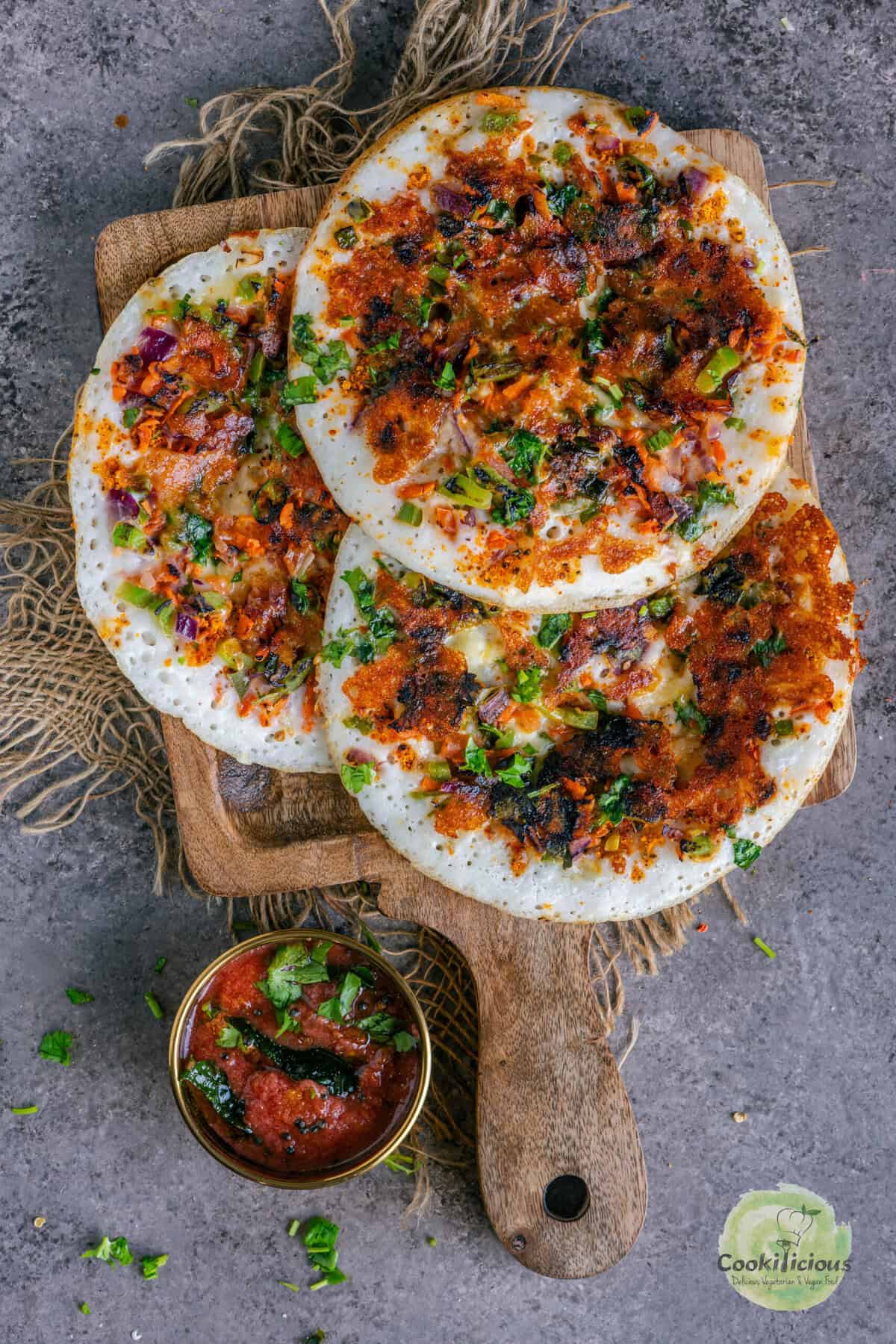
🔍 Quick Look: Uttapam Recipe
- 🌍 Cuisine: South Indian
- ⏱️ Prep Time: 8 hours for soaking + 8 hours for fermentation
- 🍳 Cook Time: 20 minutes
- 🕒 Total Time: 16 hours 20 minutes
- 👥 Servings: 12 uttapams
- 📊 Calories: ~ 137.58 kcal per serving (based on nutrition panel)
- 🔥 Cook Method: Stovetop
- 👩🍳 Flavor Profile: Soft, mildly tangy and savory, with spicy, crunchy vegetable toppings
- ⭐ Difficulty: Easy, mostly hands-off waiting time
Jump to:
What Is Uttapam
Uttapam, also called uthappam, uttappa or oothappam, is a thick, soft yet slightly crisp South Indian pancake made from a fermented rice and lentil batter. Think of it as a dosa's fluffier cousin: soft and spongy inside, with a lightly crisp, golden base.
In most South Indian homes, uttapam is made with leftover dosa batter that's a day or two old and slightly sour, which gives it a lovely tang. There are many ways to make that batter, and here I'm sharing my mother's version with poha, which keeps the uttapam extra soft.
What makes a South Indian uttapam unique is its toppings. Colorful vegetables like onions, tomatoes, carrots, bell peppers, curry leaves and green chillies are pressed into the batter while it cooks, so every bite is full of vegetables. A simple onion uttapam, tomato uttapam or onion tomato uttapam is the classic, but adding more veggies on top turns this vegetable masala uttapam into a hearty, colorful meal.
Uttapam is a favorite at breakfast and dinner in South Indian homes, and a menu staple in tiffin centers, Udupi restaurants and roadside eateries across India.
⚖️ Uttapam vs Dosa
Uttapam and dosa are made from the same kind of fermented rice and lentil batter, but they're quite different on the plate. Dosa batter is thinner and spread out into a large, thin, crisp crepe. It's usually cooked on one side only, and for masala dosa it's folded around a spiced potato filling.
Uttapam batter is slightly thicker, often a day older and tangier, and poured into a small, thick pancake. Instead of a filling, the vegetables are pressed into the top while it cooks. It's cooked covered on medium-low heat and flipped, so it turns soft and spongy inside with a lightly crisp base.
Uttapam vs set dosa: Set dosa, a Karnataka favorite, is the closest cousin. Both are thick, soft and spongy, and many set dosa batters use poha, just like my mother's. The difference is in the toppings and size.
Set dosa is plain, smaller, cooked on one side only and served in a stack of two or three (like American pancakes) with saagu or chutney. Uttapam is a little bigger, loaded with vegetables and flipped so the toppings get golden and crisp.
Why Make It
- 🌱 Naturally vegan, gluten-free and nut-free uttapam batter recipe. Skip the cheese, or use a vegan one, to keep it fully plant-based.
- 👩🍳 Easy to make: There's no special skill like spreading a thin dosa and no special equipment like an idli steamer needed. Just pour the batter, add the toppings and flip.
- ⏳ Mostly hands-off: The fermentation takes time, but it's all waiting. Grind the batter at night and wake up to soft, bubbly batter.
- 🦠 Naturally fermented: Like idli and dosa, the batter is fermented, a traditional way of cooking that's often considered gentle on the gut.
- 🎨 Customizable toppings: Keep it simple with onion uttapam, or load up a vegetable masala uttapam with carrots, bell peppers, cheese or podi. The uttapam toppings are up to you.
- 🗓️ One batch, all week: A single batch of uttapam batter keeps in the fridge for up to a week, ready for quick breakfasts, dinners or lunchboxes.
- 👨👩👧 Family-friendly: Kids love the colorful, pizza-like toppings, and it's filling enough for a full meal.
🧾 Ingredients Needed
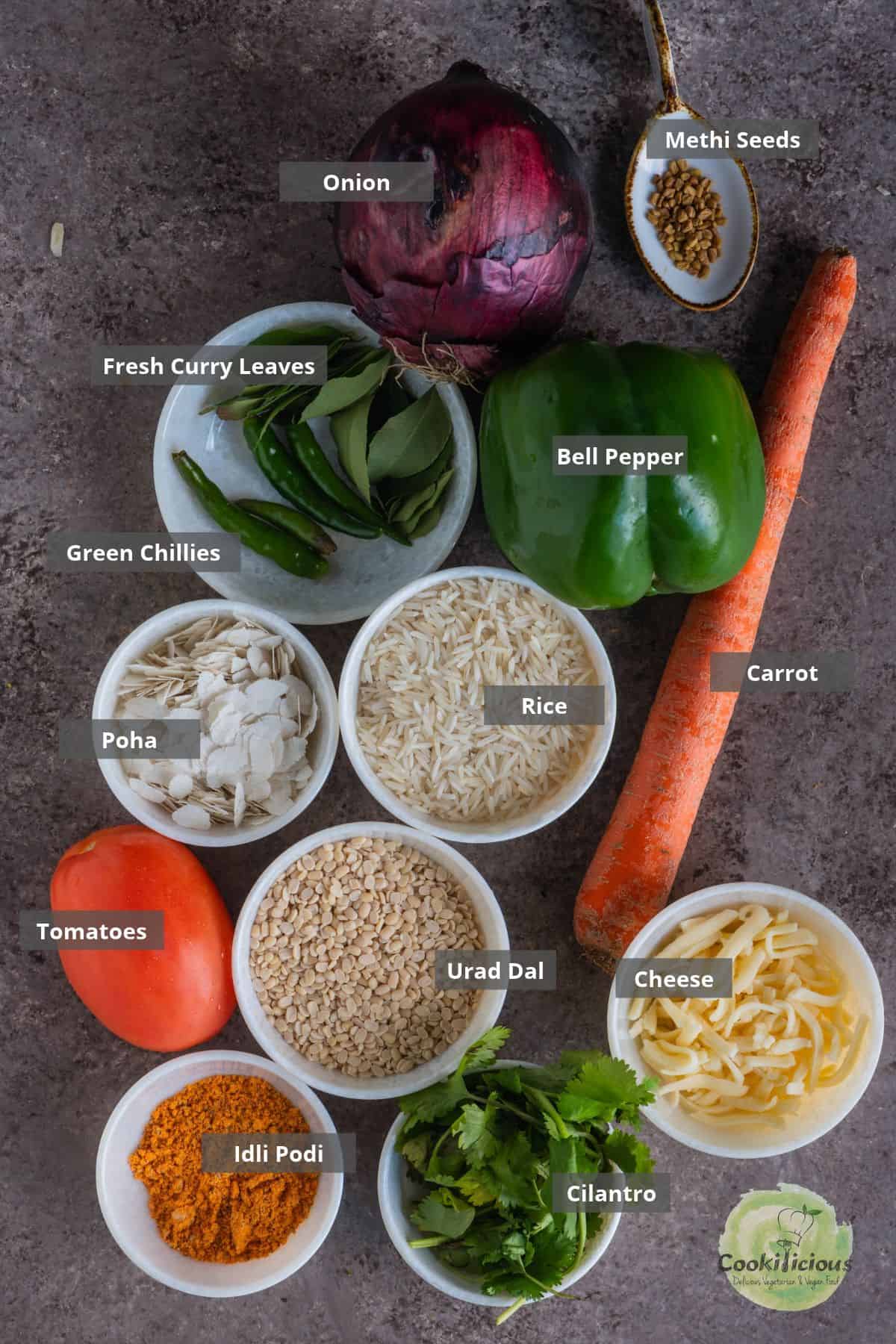
For the uttapam batter
- Rice: I have used sona masoori and regular long-grain basmati to make uttapam batter. Short or medium-grain rice, like idli rice or sona masoori, gives the softest uttapam.
- Urad dal: Whole or split, skinless urad dal makes the batter light and fluffy.
- Methi seeds: Just a pinch helps the batter ferment well and makes the uttapam soft.
- Poha: Thick or thin poha both work. This is Amma's trick for soft, spongy uttapams.
- Salt: Add it after fermentation.
For the uttapam toppings
- Vegetables: A colorful mix of onion, tomato, bell peppers and carrot makes this a true mixed vegetable uttapam. Chop or grate them finely so they cook through quickly.
- Aromatics: Fresh curry leaves, green chillies and cilantro.
- Idli podi (optional): Adds a lovely spicy kick to this vegetable uttapam recipe. I use my homemade idli podi (milagai podi), but store-bought from an Indian grocery store works too.
- Cheese (optional): Mozzarella or processed cheese melts beautifully, or use dairy-free cheese to keep it vegan. Kids especially love cheese uttapam!
For cooking
- Ghee or oil: Amma always made her uttapams and dosas in ghee, and I still do. For a vegan version, use my homemade dairy-free ghee or any cooking oil.
- Pan: A cast-iron or nonstick frying pan or dosa tawa works best for masala uttapams.
See the recipe card below for exact quantities.
🔪 How to Make Uttapam Batter At Home
To Make The Uttapam Batter
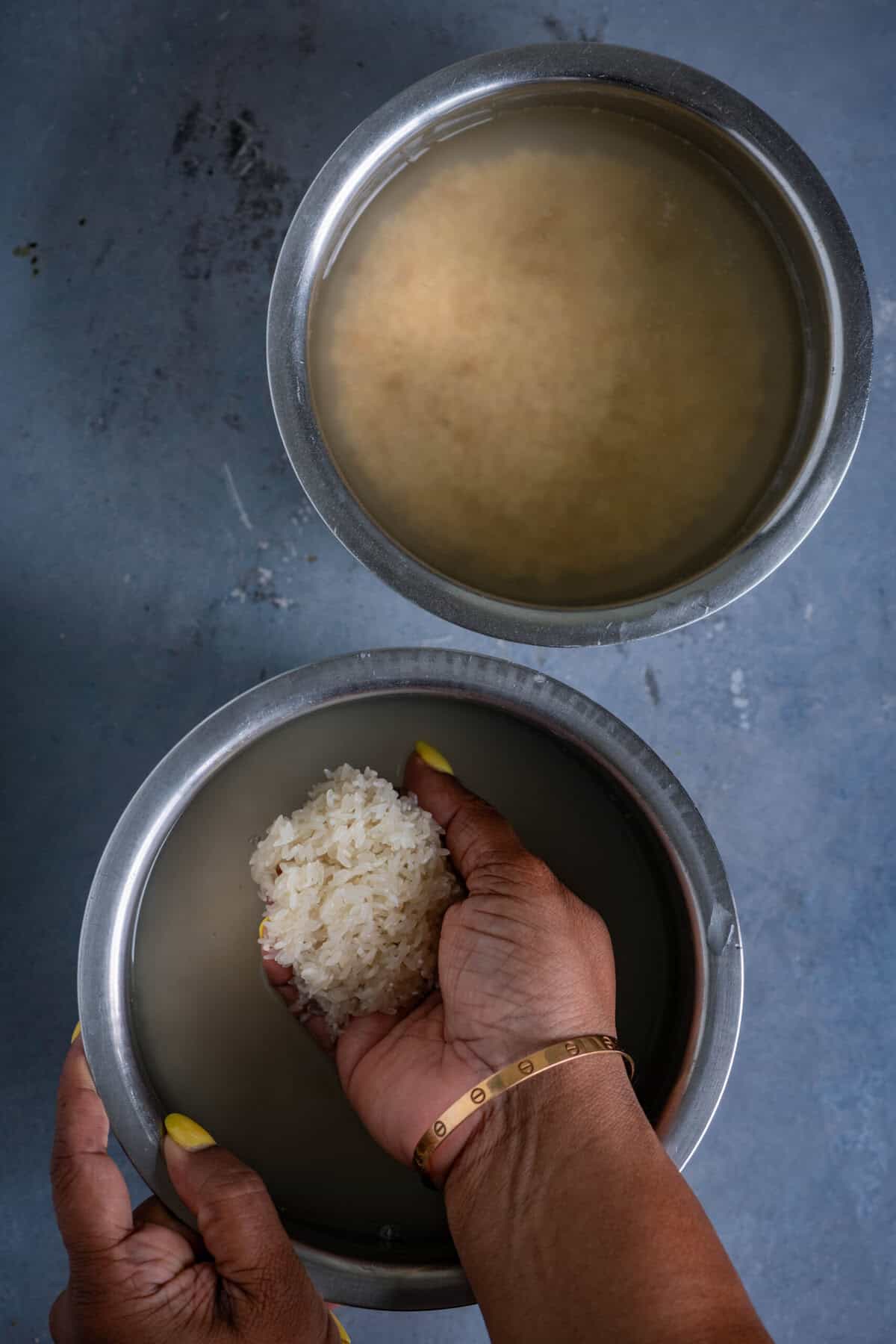
- Step 1: Soak the rice: Rinse the rice and soak it in water. Soak overnight for best results. In a separate bowl, rinse and soak the urad dal with the methi seeds overnight as well.
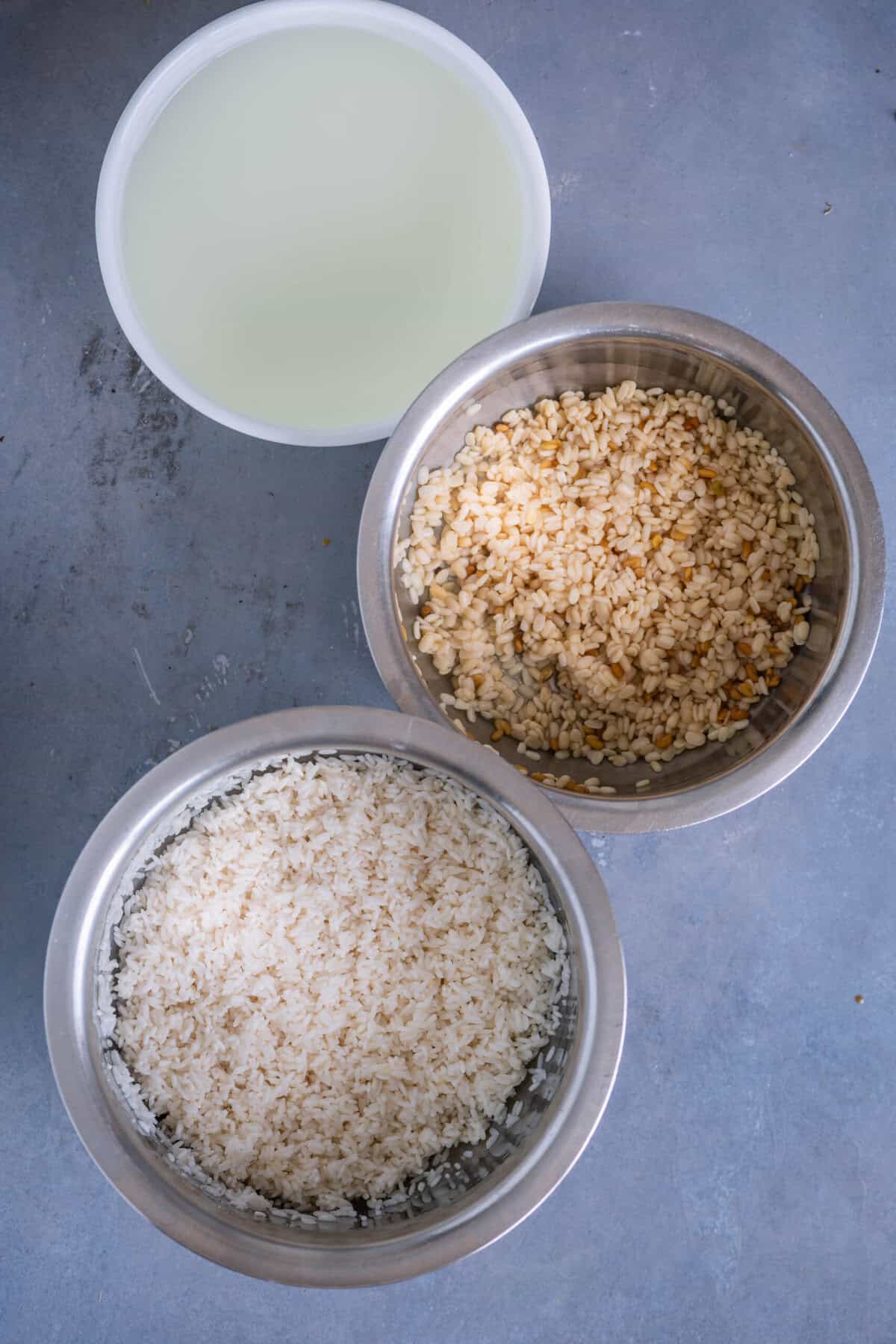
- Step 2: Drain: Drain the water from both the rice and the urad dal.
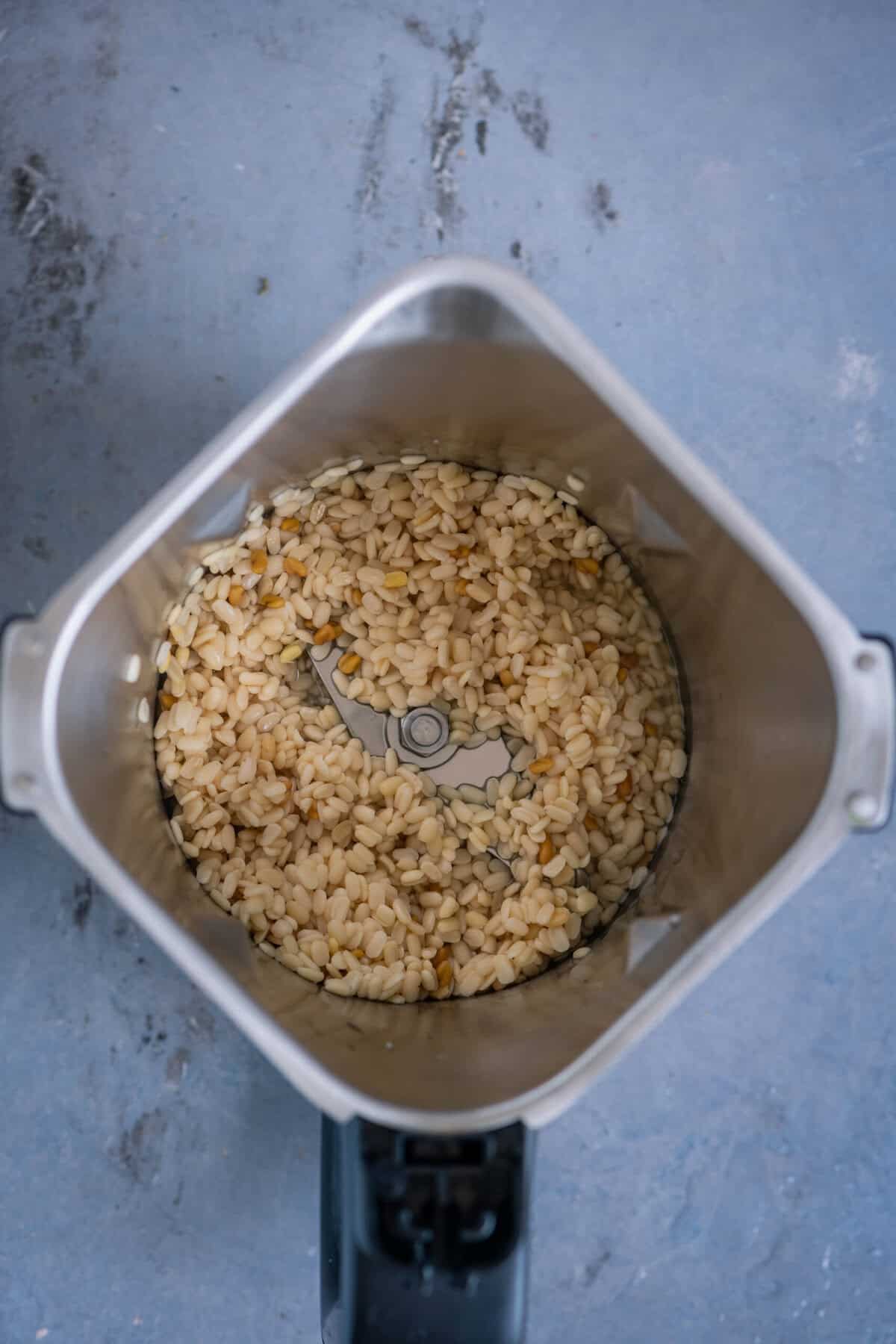
- Step 3: Grind the urad dal: Add the soaked urad dal and methi seeds to the blender jar with 2-3 tablespoons of water, and grind until smooth and fluffy. Priya's tip: Do not add more water. Just the amount specified. The batter needs to be thick.
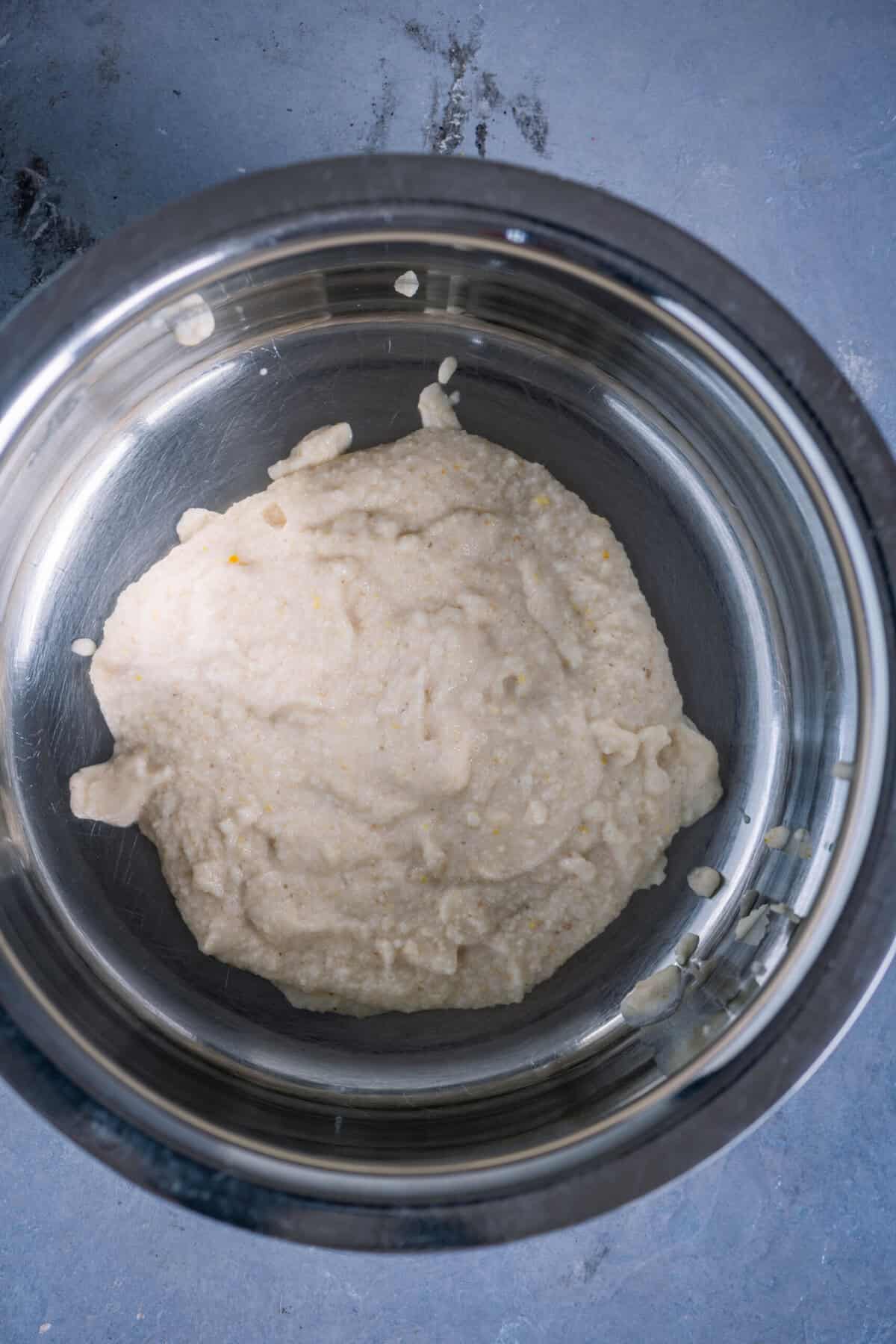
- Step 4: Combine: Add the ground urad dal to a mixing bowl.
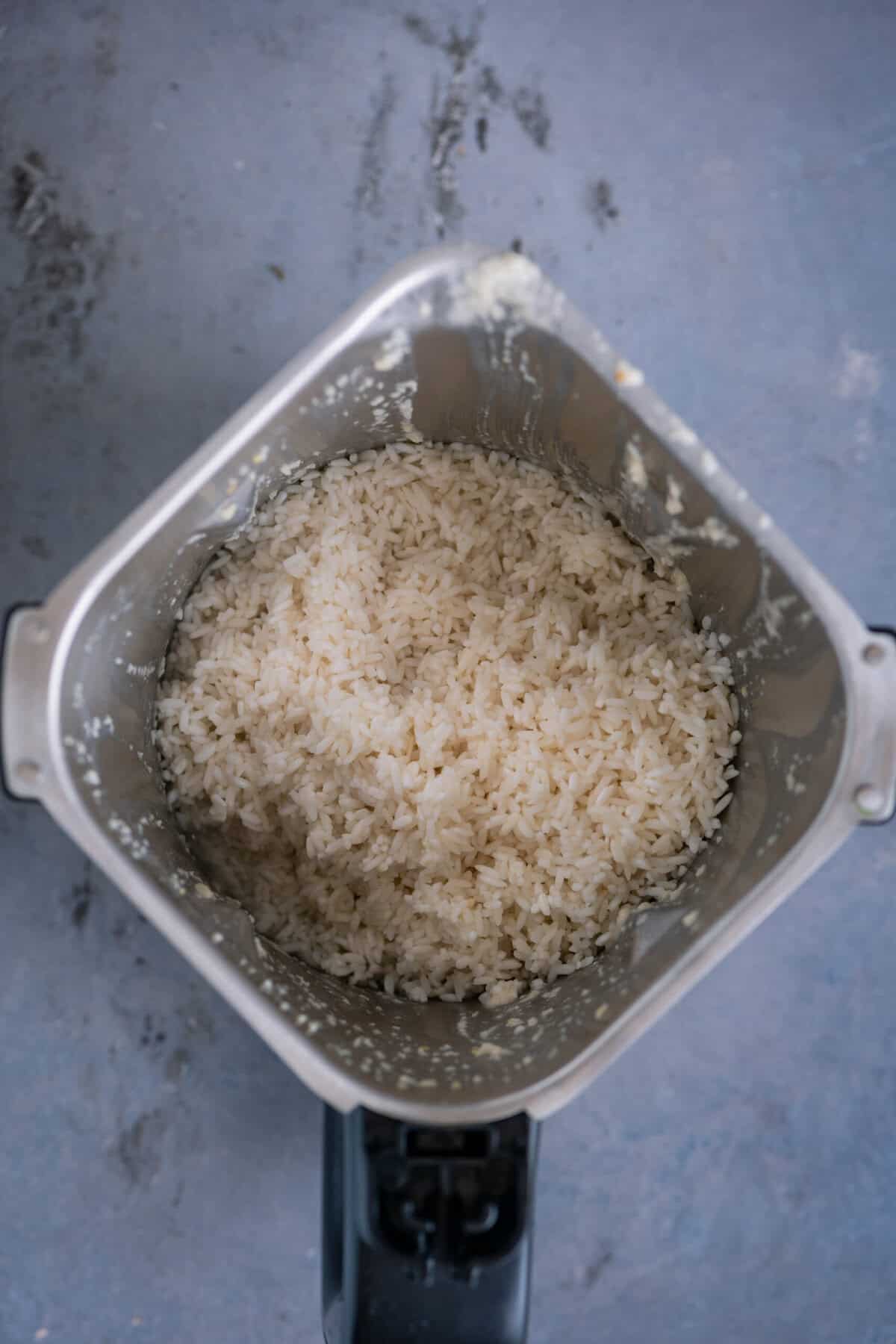
- Step 5: Add the poha: Transfer the rice to the same blender jar and add the dry thin poha. Priya's tip: You can also soak the poha in water for 10 minutes before adding it.
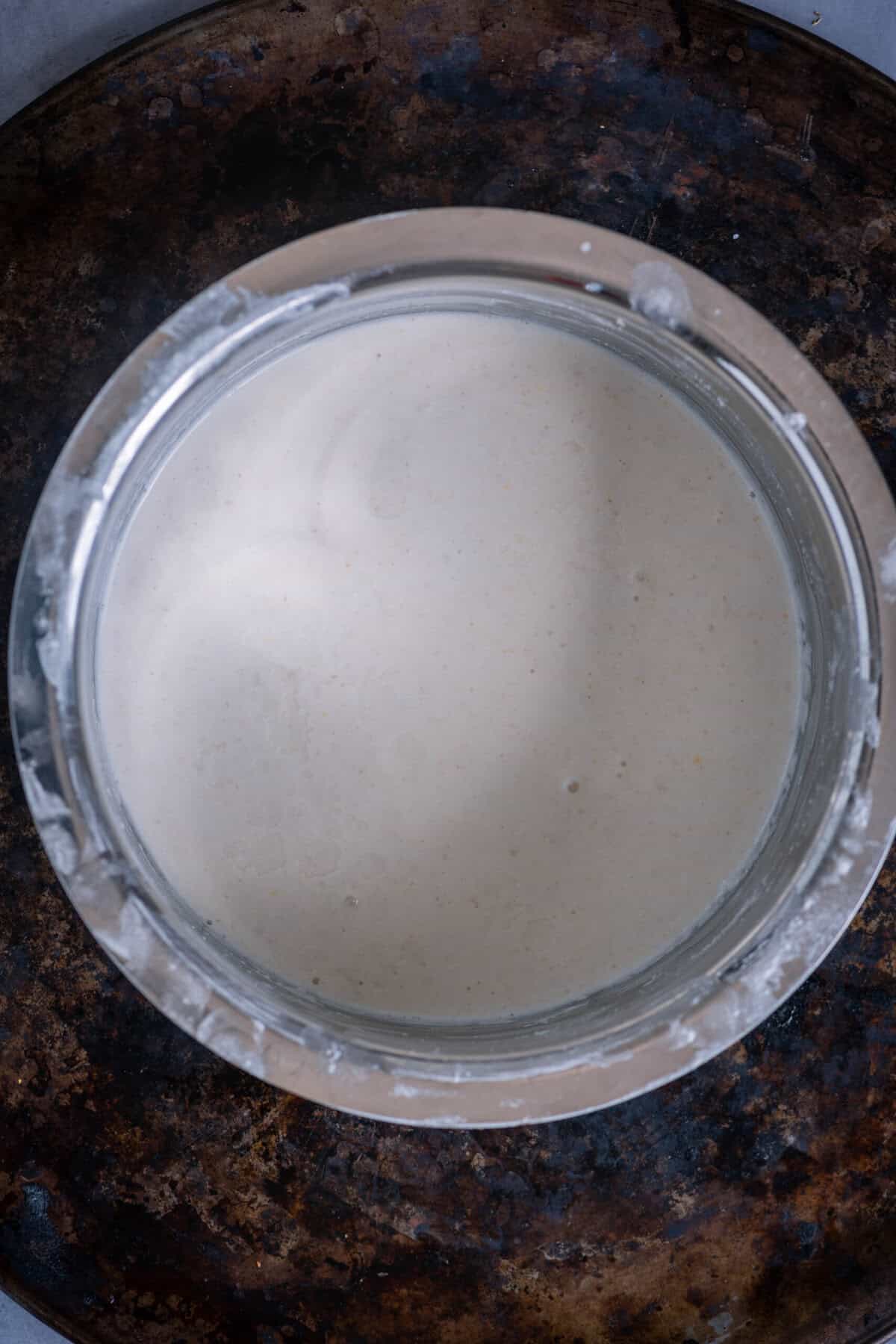
- Step 6: Grind the rice: Add about ¼ cup of water and blend until smooth. Then pour the ground rice and poha mixture into the same mixing bowl. Priya's tip: Use only as much water as you need to help it grind, because too much makes the batter runny.
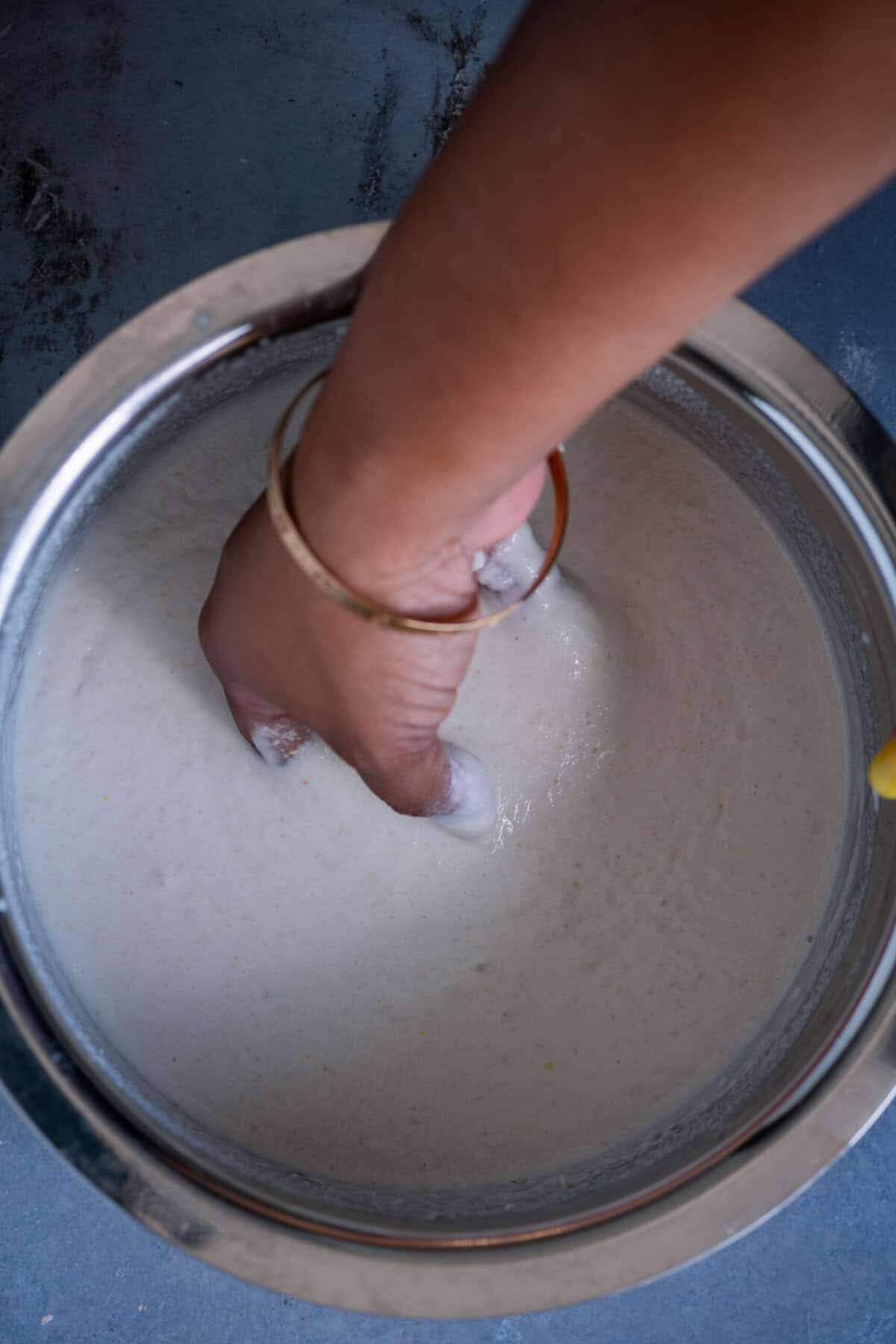
- Step 7: Mix by hand: With clean hands, mix the two batters well. Priya's tip: The natural warmth of your hands helps kickstart fermentation. This is crucial.
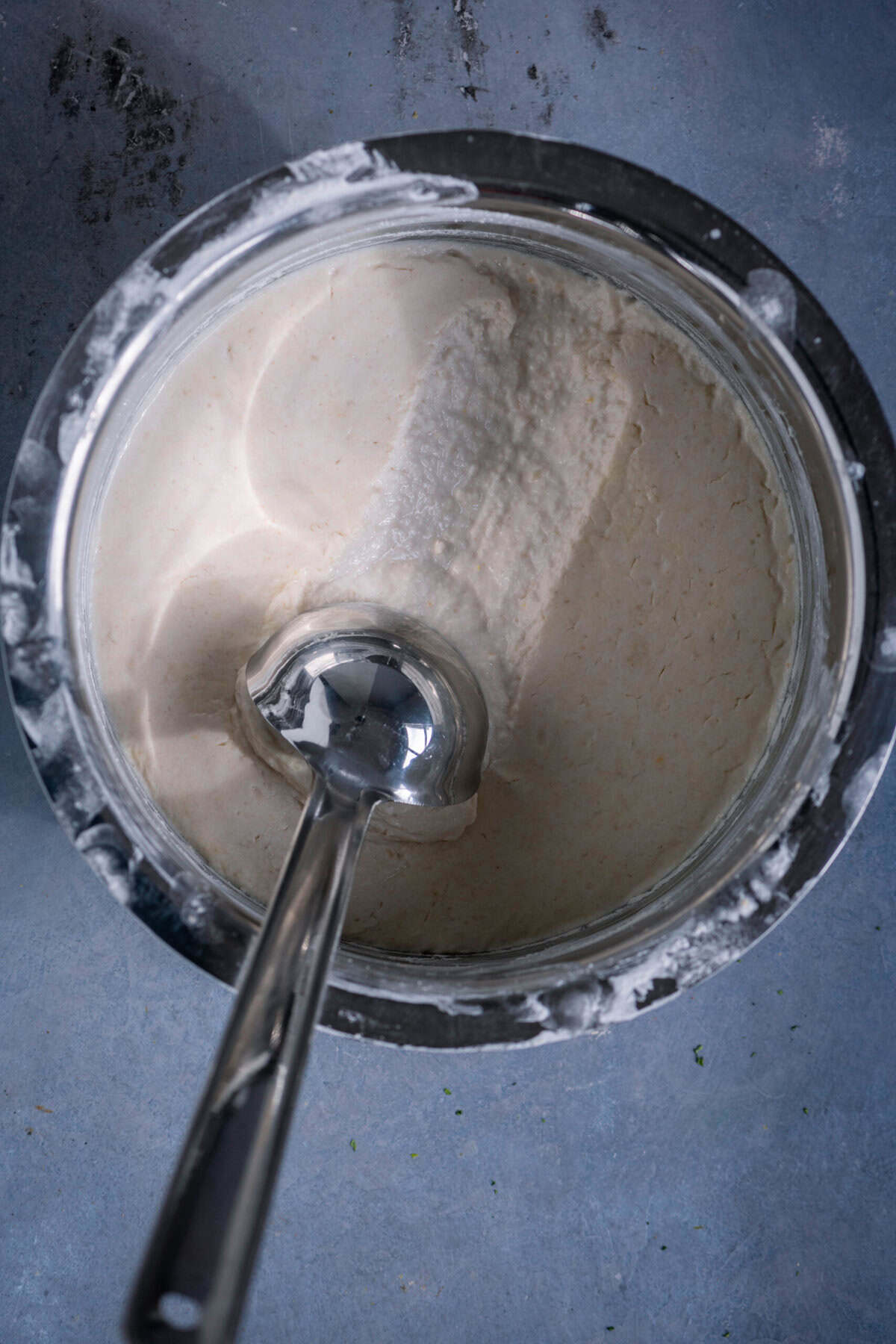
- Step 8: Ferment: Cover the bowl and let the batter ferment overnight in a turned-off oven with just the light on. By morning, the batter will have risen and look bubbly. Add salt and mix gently. Add up to ¼ cup of water, a little at a time, until the batter is thick but pourable. Your homemade uttapam batter is ready!
For The Uttapam Toppings
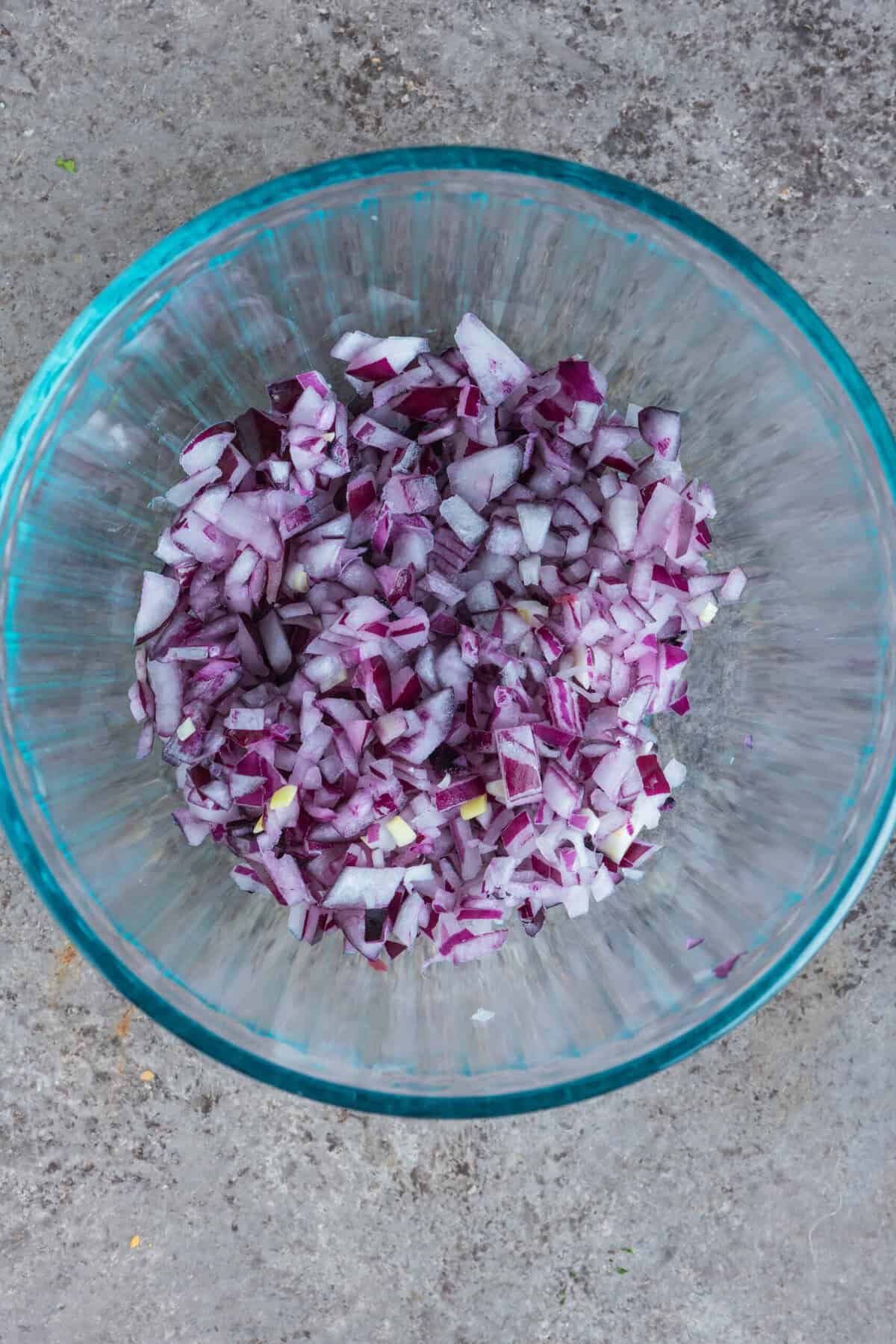
- Step 1: Add the onions: In another bowl, add the finely chopped onions.
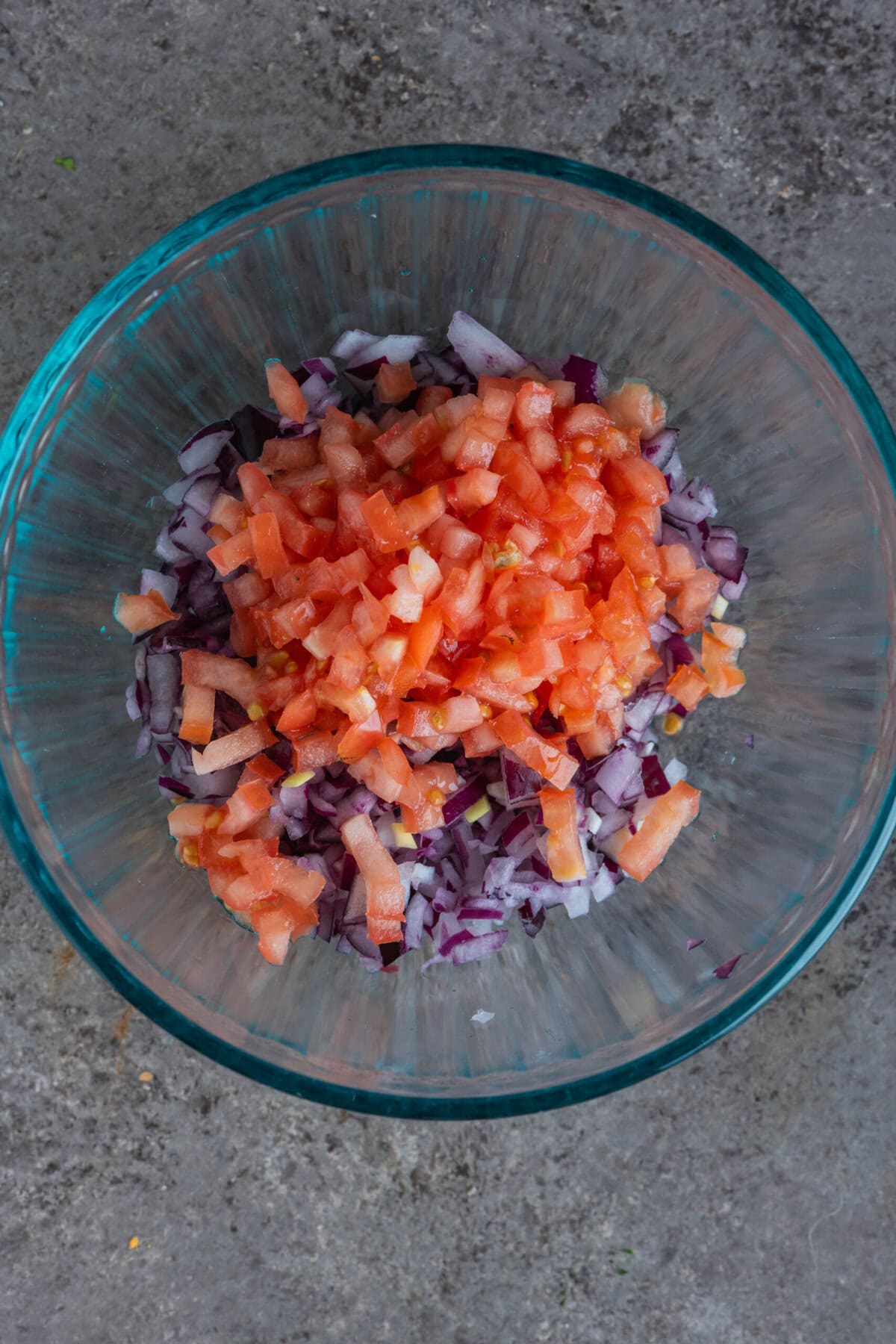
- Step 2: Add the tomato: Add the finely chopped tomato.
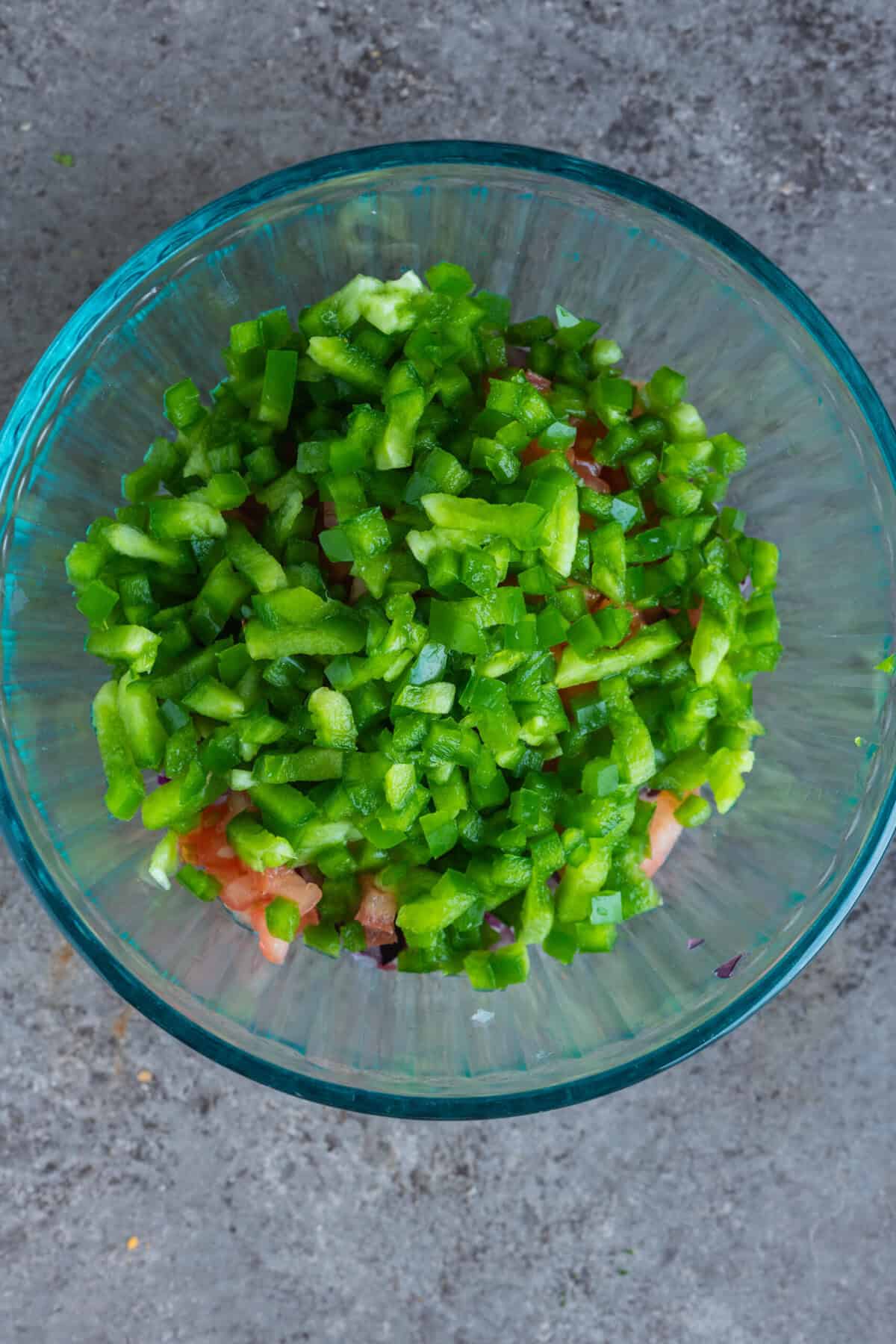
- Step 3: Add the bell pepper: Add the finely chopped bell pepper. Priya's tip: Mix red, yellow and green bell peppers for a more colorful uttapam.
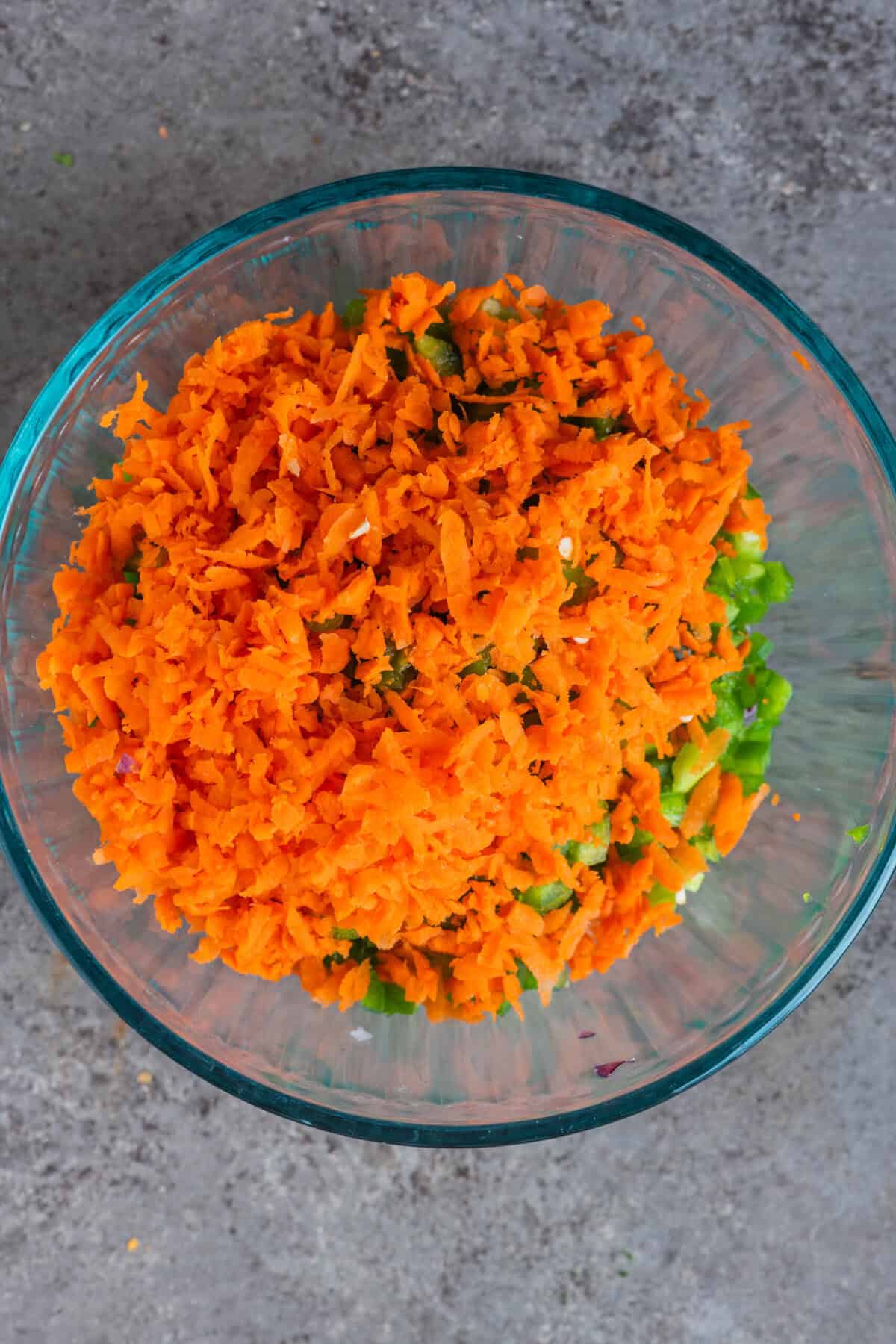
- Step 4: Add the carrot: Add the grated carrot.
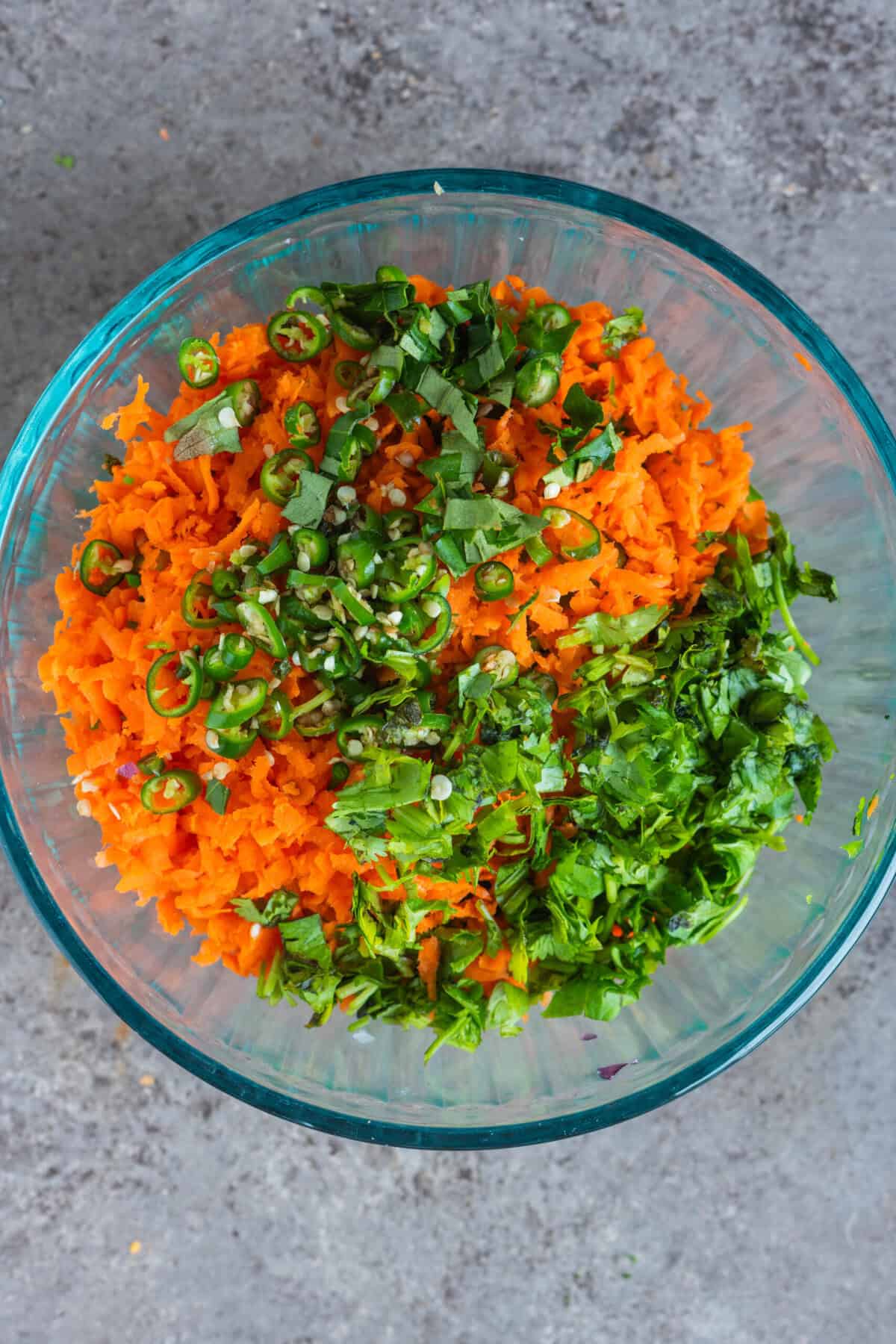
- Step 5: Add the herbs and chillies. Roughly tear the fresh curry leaves and add them to the bowl with the chopped cilantro and finely chopped green chillies. Priya's tip: For extra flavor, sizzle the curry leaves and green chillies in a little hot oil first, then pour the tempering over the vegetables.
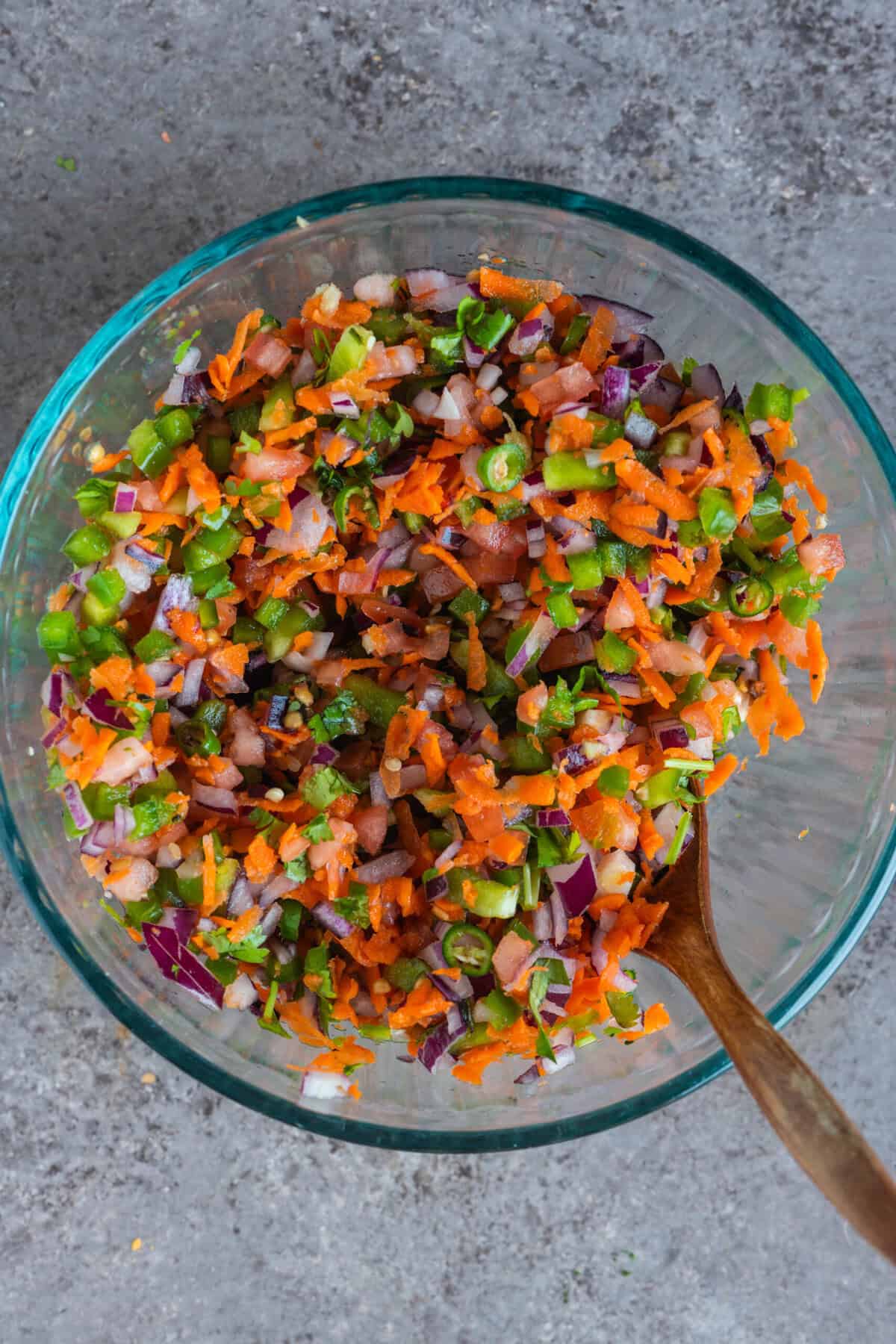
- Step 6: Mix: Season with a little salt. Toss everything together. Your colorful vegetable uttapam toppings are ready. Priya's tip: Chop or grate the vegetables finely so they stick to the batter and cook through quickly.
To Make Vegetable Uttapam
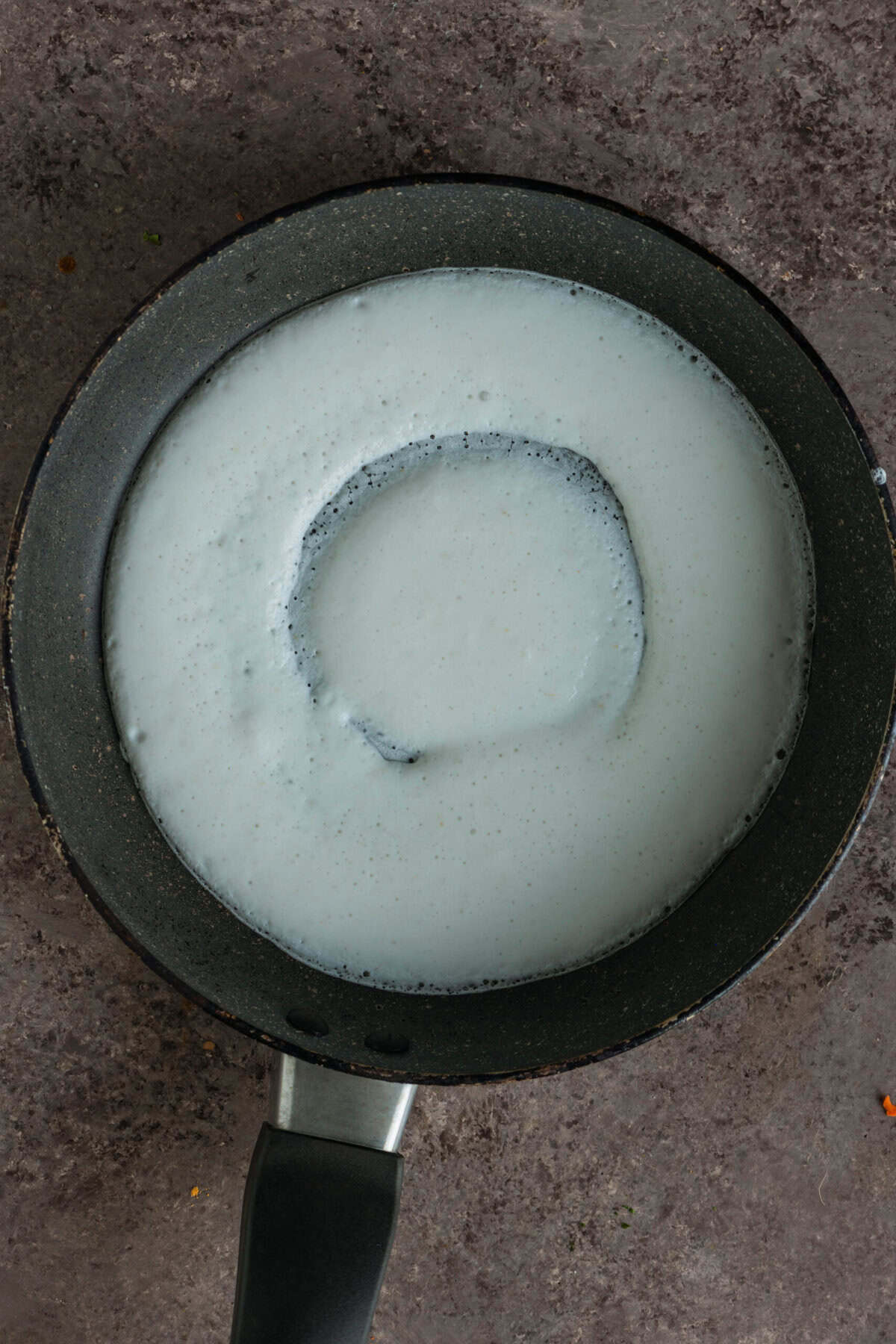
- Step 1: Pour the batter. Heat a small skillet or pancake pan. Once it's hot, lower the heat to medium. Pour a ladleful of batter in the center and spread it gently into a thick round. Drizzle a little oil around the edges.
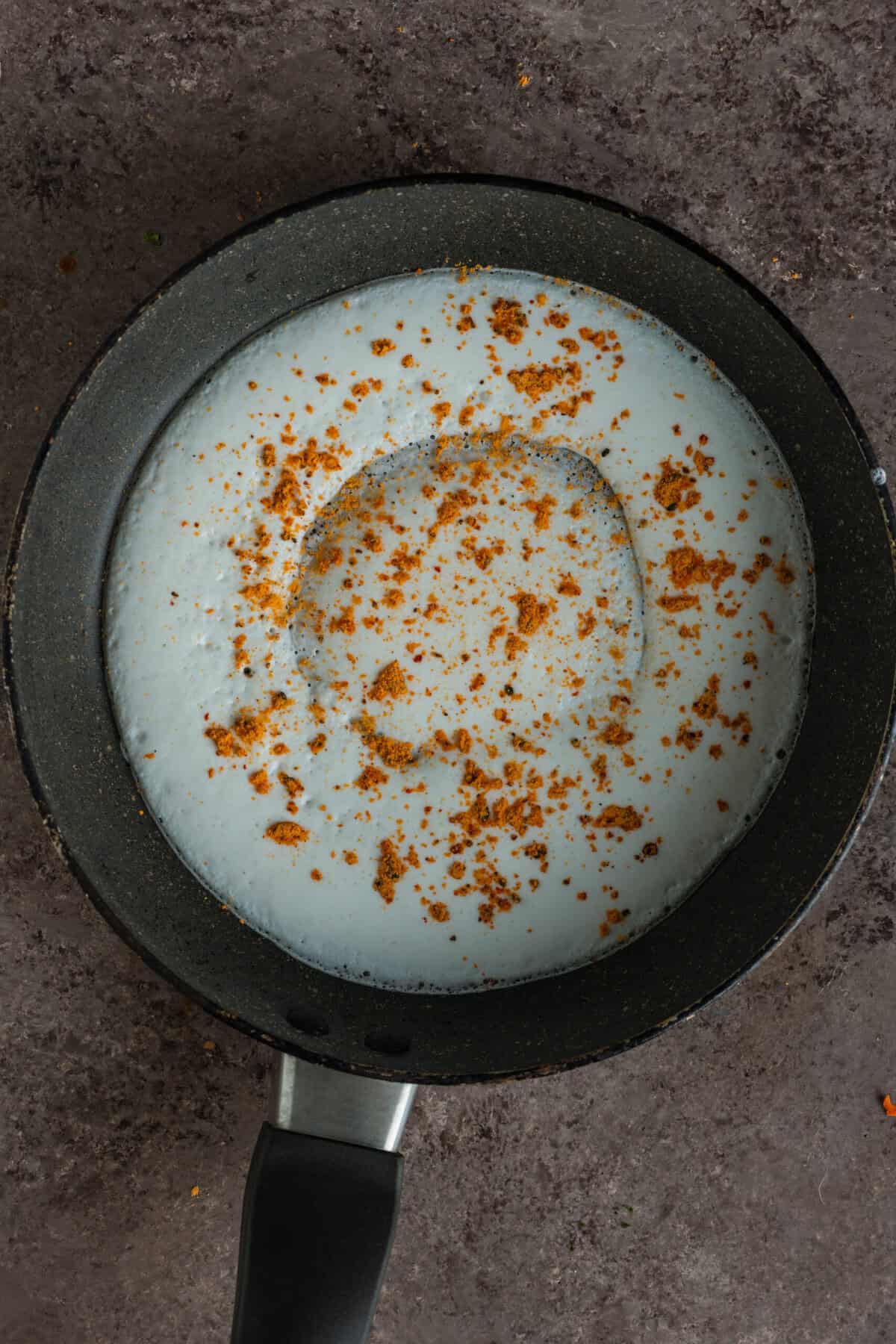
- Step 2: Add the podi. Sprinkle idli podi generously over the top for a spicy kick. Priya's tip: Skip this step if you don't have the podi or don't want that extra spice.
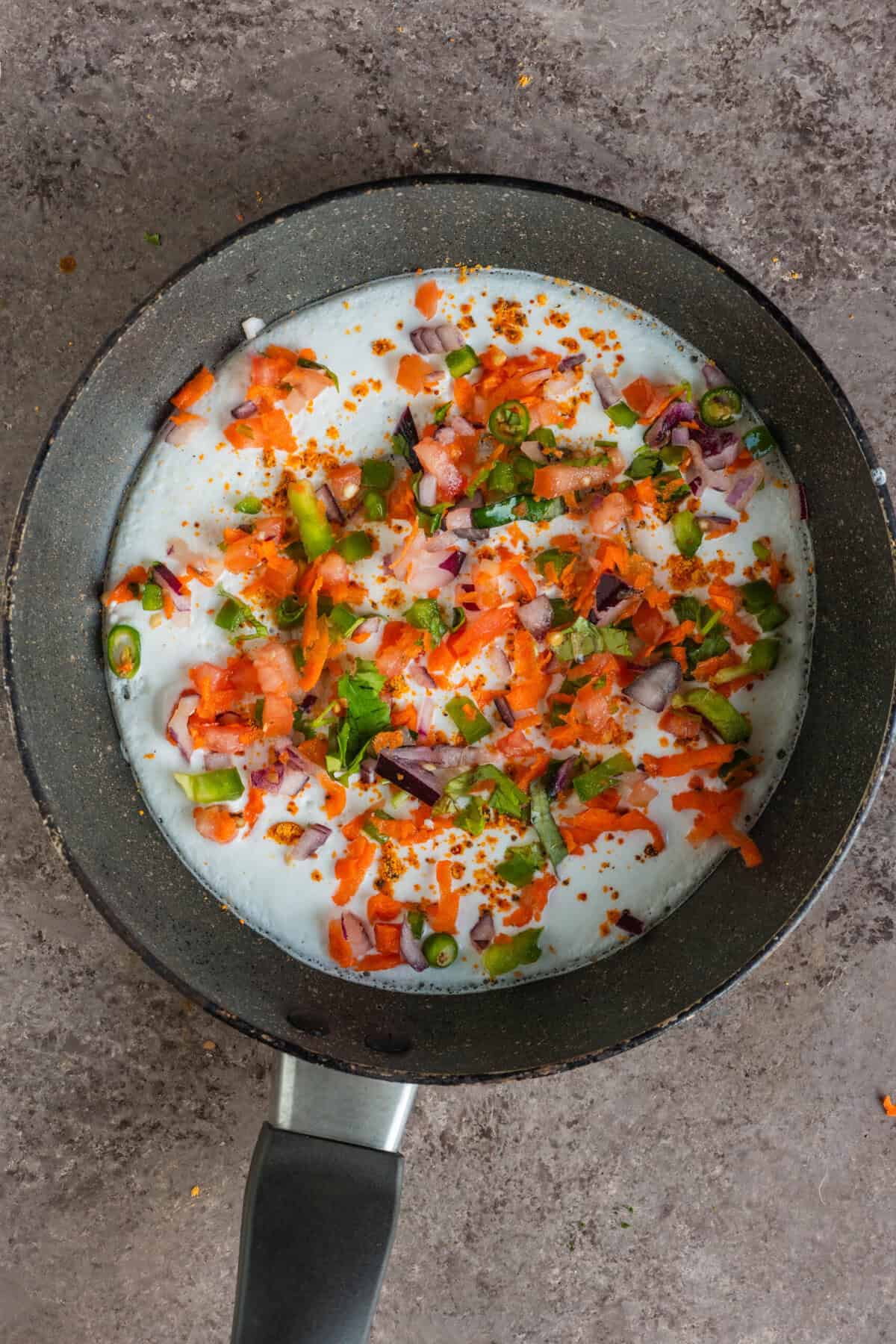
- Step 3: Add the toppings. Scatter a generous handful of the vegetable toppings over the batter. Priya's tip: Press them in gently with a spatula so they stick to the uttapam when you flip it.
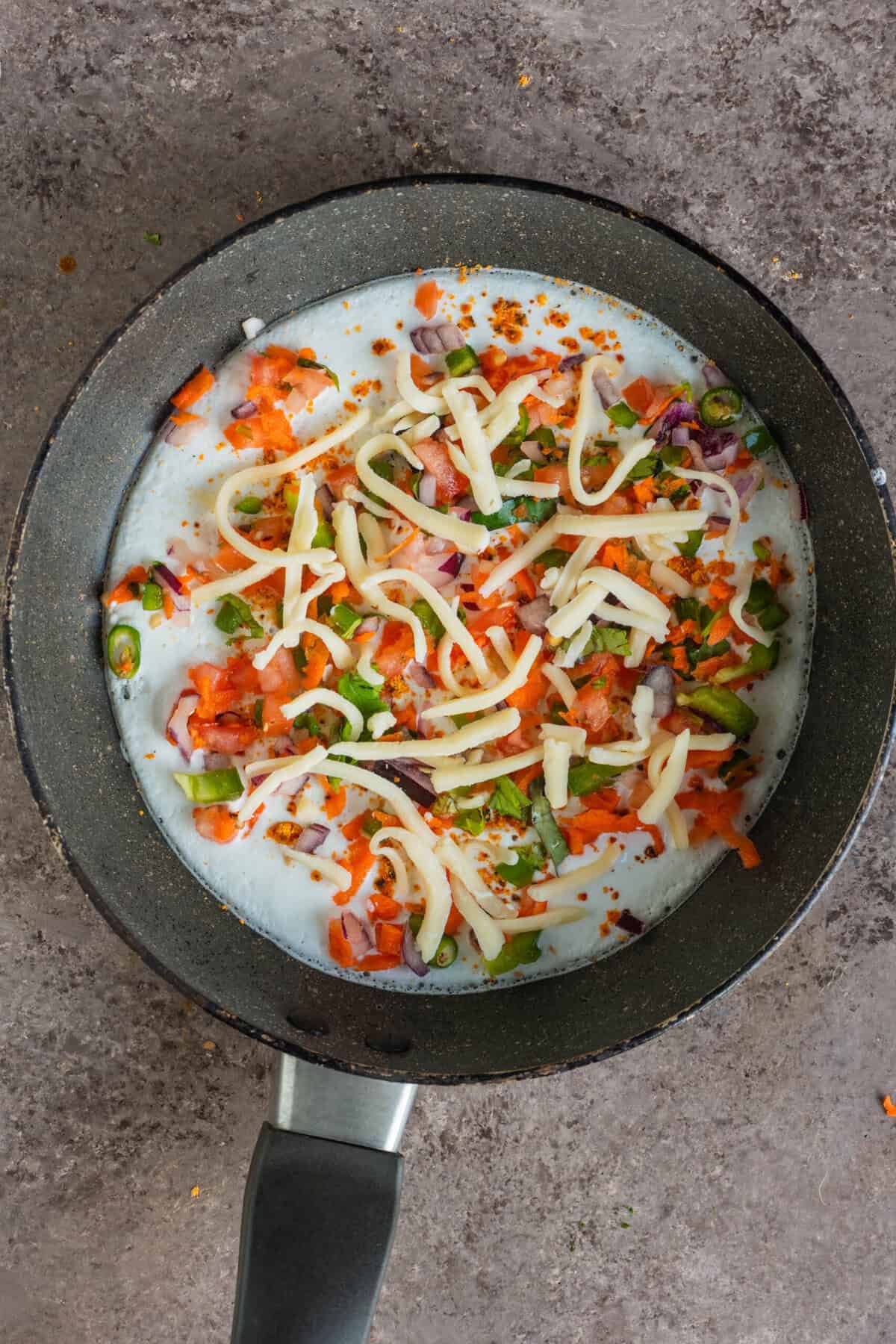
- Step 4: Add the cheese (optional). Top with grated cheese, if using.
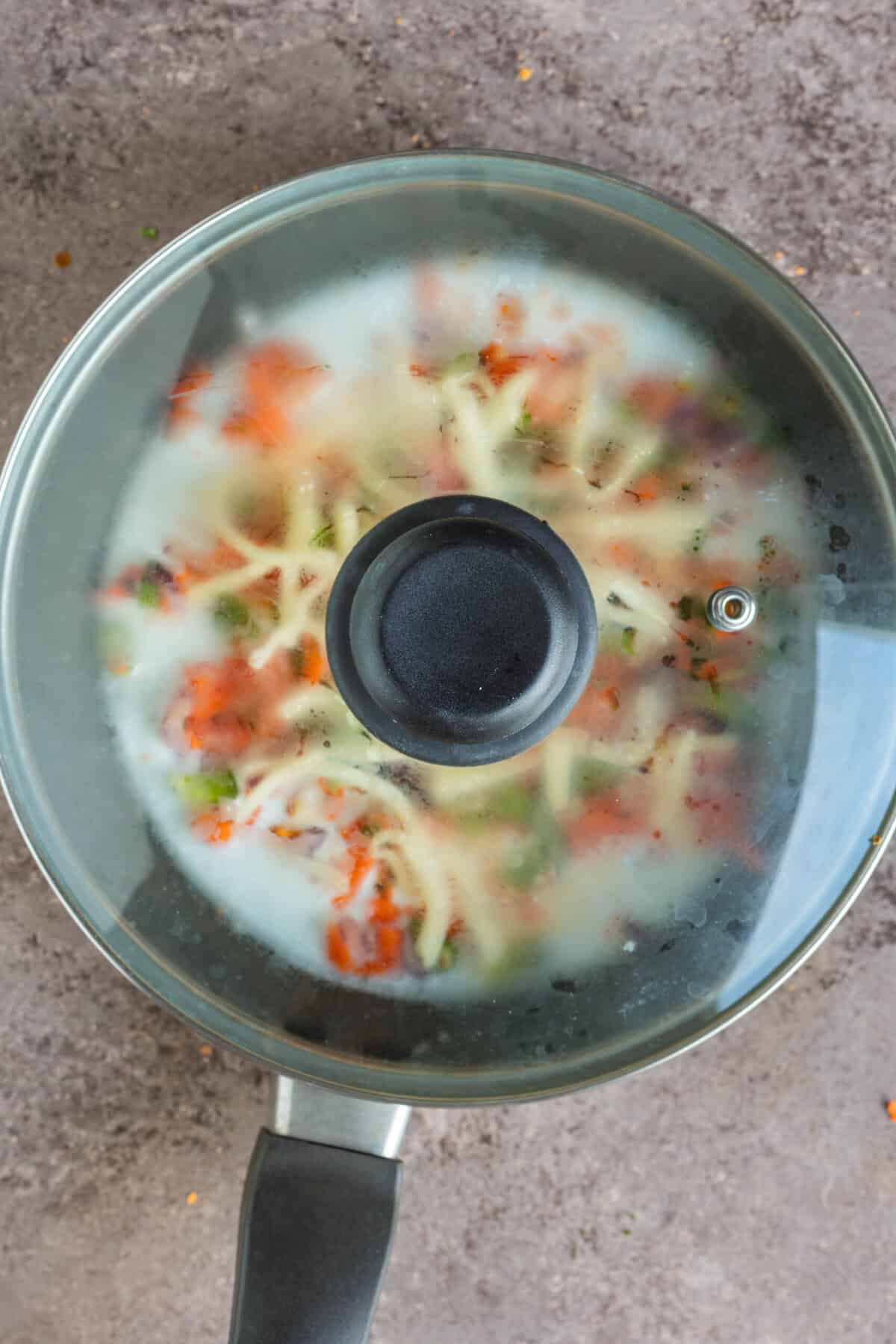
- Step 5: Cover and cook. Cover the pan with a lid and cook for 1-2 minutes, until the edges turn golden brown, the cheese melts and the uttapam lifts away from the pan. Priya's tip: Keep the heat on medium and don't rush to flip it. If it sticks, give it a few more seconds, and it'll come away on its own once it's cooked.
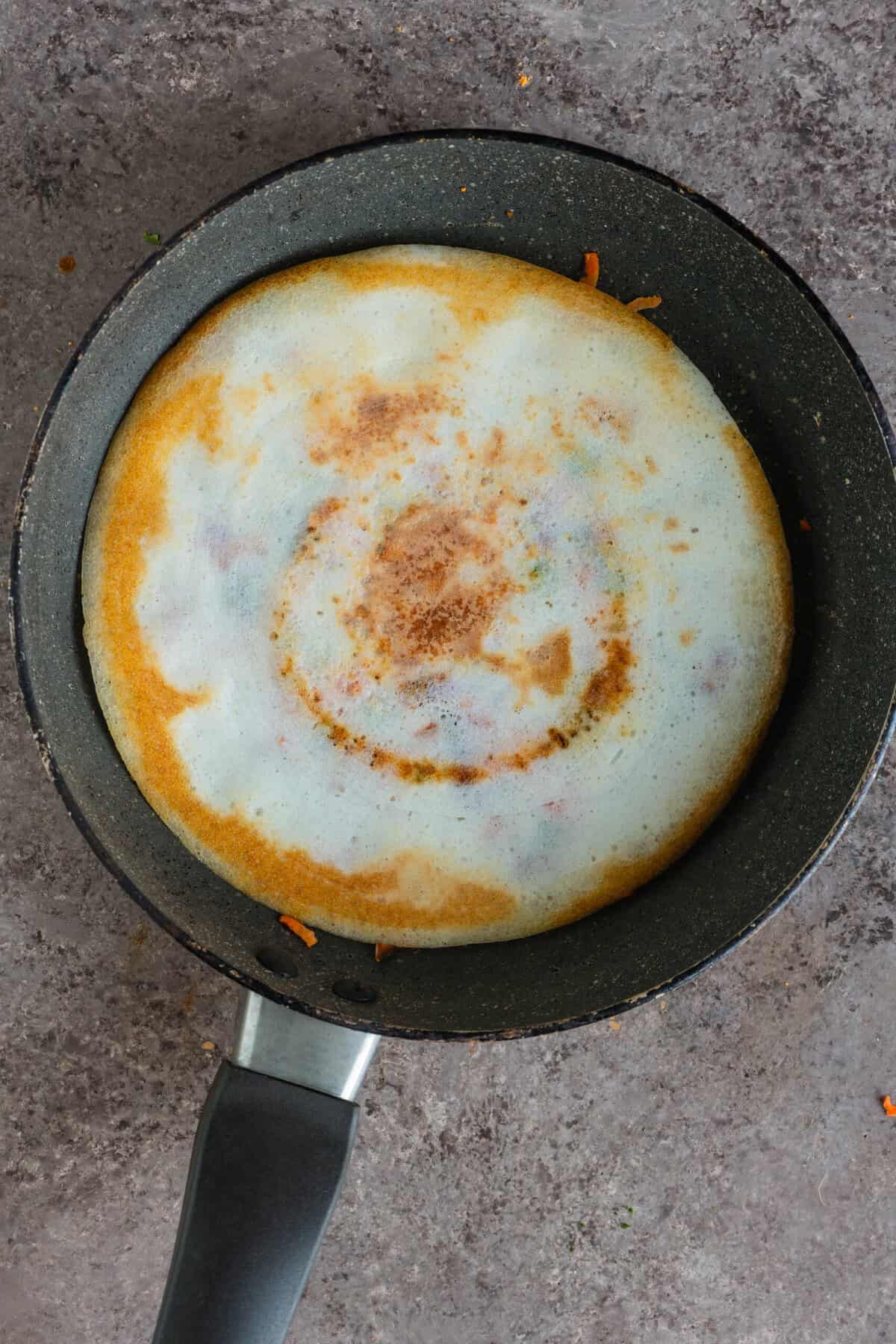
- Step 6: Flip and serve. Flip the uttapam and cook the other side for about a minute, until the vegetables are lightly charred. Transfer to a plate and repeat with the rest of the batter.

Want to save this recipe?
🍽 Serving Suggestions
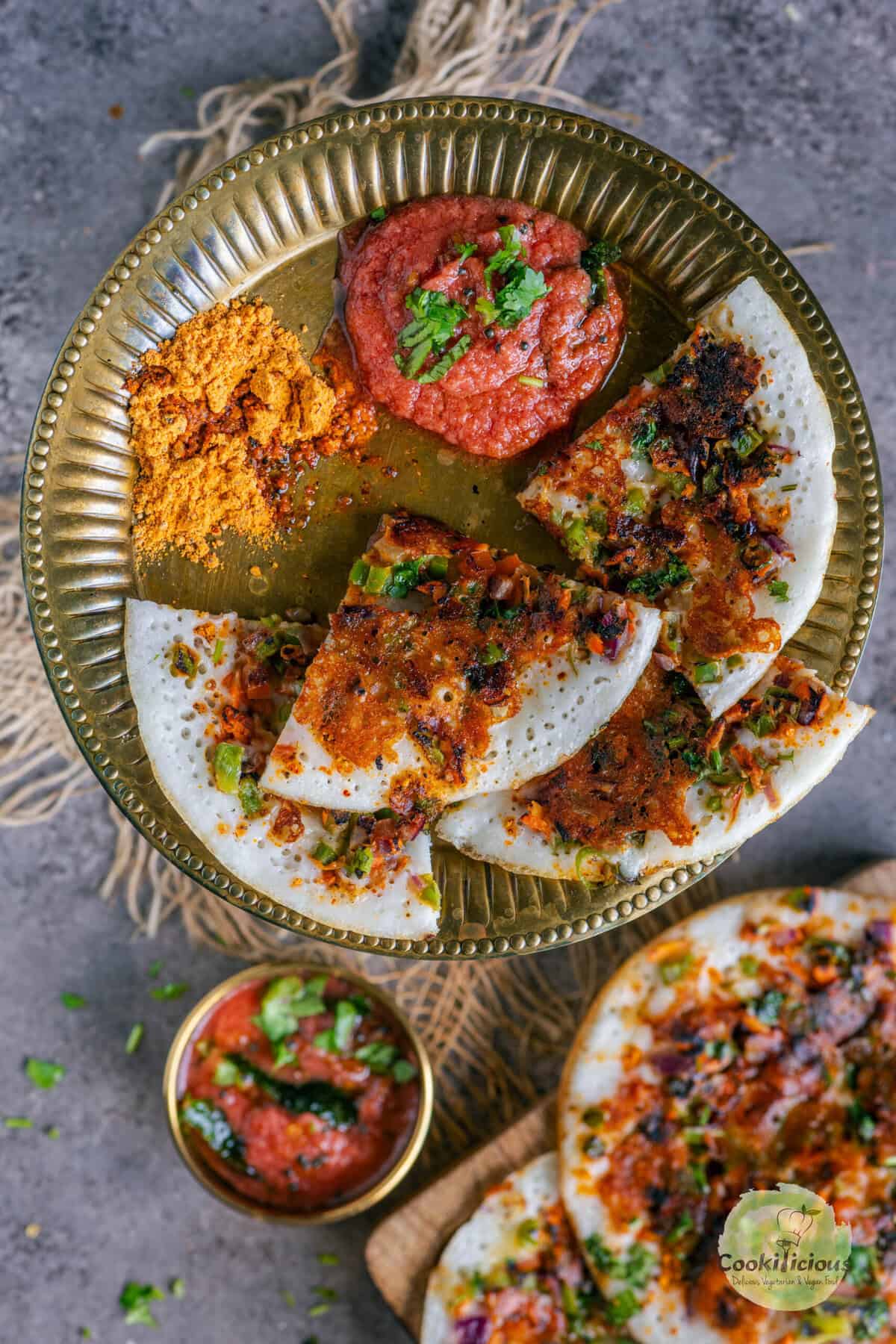
This vegetable masala uttapam is hearty enough to enjoy on its own, but it's even better with chutney. Pair it with coconut chutney, tomato onion chutney, Andhra peanut chutney or green chutney, with a little idli podi on the side. Mix the podi with a drizzle of gingelly oil or ghee for the classic South Indian way.
At home, we also love dipping our uttapams in hot sambar or tomato rasam, which turns them into a filling lunch or dinner. Serving them for breakfast or as an evening snack? Pair them with a cup of Madras filter coffee or masala chai.
Uttapams also pack well for lunchboxes. Cut them into wedges and add a small container of podi or chutney. Kids love the veggie-loaded onion uttapam as a fun, pizza-like treat.
🥞 More Dosa Recipes to Try
If you love this uttapam, there's a whole world of dosas to explore. Start with my mother-in-law's staple homemade dosa batter, then make a masala dosa with sweet potato or a crisp, lacy onion rava dosa.
On busy mornings, instant dosas save the day: try wheat dosa (godhuma dosa), instant potato dosa or oats dosa with carrot. For a protein boost, there's instant quinoa dosa, buckwheat crepes (kuttu dosa), lentil-rich kara adai and Andhra-style pesarattu.
💭 Priya's Recipe Tips

- Two ways to add toppings: You can mix the vegetables straight into the uttapam batter, or sprinkle them on top as it cooks, like I've shown here. Mixing them in is quicker, while topping gives you prettier, crispier uttapams.
- Season the pan first: If using a cast-iron tawa, rub a little oil over the hot pan before pouring the first uttapam. If the batter sticks, sprinkle a few drops of water on the pan, wipe it with a paper towel and try again.
- Get the batter consistency right: Uttapam batter should be thicker than dosa batter and pour slowly off a ladle. If it's too runny, the uttapam spreads thin and won't stay soft and fluffy.
- Ferment in a warm spot: In colder months, keep the batter in the oven (turned off) with just the light on, or use the Instant Pot's yogurt setting. Well-fermented batter should double in size and smell pleasantly sour.
- Make mini uttapams or try a fun twist: Use a mini pancake pan to make coin-sized uttapams, perfect for kids' lunchboxes, brunch and party appetizers. Or pour the batter into a waffle iron to make savory dosa waffles, or into a paniyaram pan for kuzhi paniyaram!
📖 Uttapam Recipe FAQs
You can prepare the batter similar to my rava idli batter and use it to make instant uttapam. It won't have the tang of fermented uttapam, but it's a great shortcut for busy mornings.
In most South Indian homes, uttapam is made with leftover dosa batter that's a day or two old and slightly sour, which gives it a lovely tang. Dosa batter is often thinner, stir in a little oats powder or rice flour to thicken it before using. My mother-in-law sometimes finishes off leftover idli batter by making uttapams. So yes, you can use both these batters to make uttapams.
The usual causes are under-fermented batter, too little urad dal or cooking on high heat. Make sure the batter has risen and looks bubbly before you use it, and keep the heat on medium. Spreading it too thin also turns it crisp like a dosa, so spread it thick.
Short or medium-grain rice, like idli rice or sona masoori, gives the softest uttapam. I've also made this uttapam batter with regular long-grain basmati, and it works well too. It's just slightly less fluffy.
This is Amma's secret! Poha soaks up water and makes the batter light and airy, so the uttapams turn out soft and spongy inside. She always added a handful of aval (poha) to her dosa and uttapam batter, and I follow it too.
Store the fermented batter in an airtight container in the fridge for up to a week. It gets a little more sour each day, which makes for even tastier uttapams. Don't use the batter straight from the fridge. Take out only what you need, stir it gently and let it come to room temperature for 15-20 minutes first, so the uttapams cook evenly and stay soft.
Yes. Freeze the batter in an airtight container for up to 1 month, then thaw it overnight in the fridge. These vegetable masala uttapams taste best fresh off the pan, though, so I recommend making only as many as you'll eat.
Leftover uttapams keep in the fridge for a day. They firm up as they cool, so reheat them on a hot pan with a sprinkle of water, covered with a lid, to soften them again.
To freeze cooked uttapams, cool them completely, stack them with parchment paper between each one and freeze. Reheat straight from frozen.
Yes, it's a wholesome, balanced meal. The batter is naturally fermented, and fermented foods like idli, dosa and uttapam have long been valued in South Indian homes for gut health. Urad dal adds plant-based protein, the vegetable toppings bring fiber and color, and it's cooked with just a little ghee or oil instead of deep-fried. Pair it with sambar for even more protein, and go easy on the cheese if you're keeping it light.
🥣 More Savory Pancake Recipes To Try


Recipe 📖

Veg Masala Uttapam (South Indian Uttapam Recipe)
Equipment
Ingredients
To Make The Uttapam Batter
- 1 cup rice
- ½ cup thin poha
- ¼ cup urad dal
- ¼ teaspoon methi seeds
- salt
- water as needed
For Uttapam Toppings
- 1 onion
- 1 tomato
- 1 carrot
- 1 bell pepper
- 10-12 fresh curry leaves
- 4-5 green chillies
- ½ cup cilantro
- 2 tablespoon Idli Podi optional
- ¼ cup cheese optional
For Cooking
- ¼ cup vegan ghee
Instructions
To Make The Uttapam Batter
- Rinse the rice and soak it in water. Soak overnight for best results. In a separate bowl, rinse and soak the urad dal with the methi seeds overnight as well.
- Drain the water from both the rice and the urad dal.
- Add the soaked urad dal and methi seeds to the blender jar with 2-3 tablespoons of water, and grind until smooth and fluffy. Priya's tip: Do not add more water. Just the amount specified. The batter needs to be thick.
- Add the ground urad dal to a mixing bowl.
- Transfer the rice to the same blender jar and add the dry thin poha. Priya's tip: You can also soak the poha in water for 10 minutes before adding it.
- Add about ¼ cup of water and blend until smooth. Then pour the ground rice and poha mixture into the same mixing bowl. Priya's tip: Use only as much water as you need to help it grind, because too much makes the batter runny.
- With clean hands, mix the two batters well. Priya's tip: The natural warmth of your hands helps kickstart fermentation. This is crucial.
- Cover the bowl and let the batter ferment overnight in a turned-off oven with just the light on. By morning, the batter will have risen and look bubbly. Add salt and mix gently. Add up to ¼ cup of water, a little at a time, until the batter is thick but pourable. Your homemade uttapam batter is ready!
For The Uttapam Toppings
- In another bowl, add the finely chopped onions.
- Add the finely chopped tomato.
- Add the finely chopped bell pepper. Priya's tip: Mix red, yellow and green bell peppers for a more colorful uttapam.
- Add the grated carrot.
- Roughly tear the fresh curry leaves and add them to the bowl with the chopped cilantro and finely chopped green chillies. Priya's tip: For extra flavor, sizzle the curry leaves and green chillies in a little hot oil first, then pour the tempering over the vegetables.
- Season it with a little salt. Toss everything together. Your colorful vegetable uttapam toppings are ready. Priya's tip: Chop or grate the vegetables finely so they stick to the batter and cook through quickly.
To Make Vegetable Uttapam
- Heat a small skillet or pancake pan. Once it's hot, lower the heat to medium. Pour a ladleful of batter in the center and spread it gently into a thick round. Drizzle a little oil around the edges.
- Sprinkle idli podi generously over the top for a spicy kick. Priya's tip: Skip this step if you don't have the podi or don't want that extra spice.
- Scatter a generous handful of the vegetable toppings over the batter. Priya's tip: Press them in gently with a spatula so they stick to the uttapam when you flip it.
- Top with grated cheese, if using.
- Cover the pan with a lid and cook for 1-2 minutes, until the edges turn golden brown, the cheese melts and the uttapam lifts away from the pan. Priya's tip: Keep the heat on medium and don't rush to flip it. If it sticks, give it a few more seconds, and it'll come away on its own once it's cooked.
- Flip the uttapam and cook the other side for about a minute, until the vegetables are lightly charred. Transfer to a plate and repeat with the rest of the batter.
Notes
- Two ways to add toppings: You can mix the vegetables straight into the uttapam batter, or sprinkle them on top as it cooks, like I've shown here. Mixing them in is quicker, while topping gives you prettier, crispier uttapams.
- Season the pan first: If using a cast-iron tawa, rub a little oil over the hot pan before pouring the first uttapam. If the batter sticks, sprinkle a few drops of water on the pan, wipe it with a paper towel and try again.
- Get the batter consistency right: Uttapam batter should be thicker than dosa batter and pour slowly off a ladle. If it's too runny, the uttapam spreads thin and won't stay soft and fluffy.
- Ferment in a warm spot: In colder months, keep the batter in the oven (turned off) with just the light on, or use the Instant Pot's yogurt setting. Well-fermented batter should double in size and smell pleasantly sour.
- Make mini uttapams or try a fun twist: Use a mini pancake pan to make coin-sized uttapams, perfect for kids' lunchboxes, brunch and party appetizers. Or pour the batter into a waffle iron to make savory dosa waffles, or into a paniyaram pan for kuzhi paniyaram!




Leave a Reply